

Our Verdict
Small pets can be genuinely rewarding companions for the right household, but they are not inherently low-effort. Their needs are simply different from a dog's or cat's - not lesser. Going in with realistic expectations is the single most important factor in a successful outcome for both owner and animal.
Ideal for adults or families with limited space, moderate budgets, and the patience to learn species-specific care - not for households seeking a hands-off or disposable pet.
What We Mean by 'Small Pets'
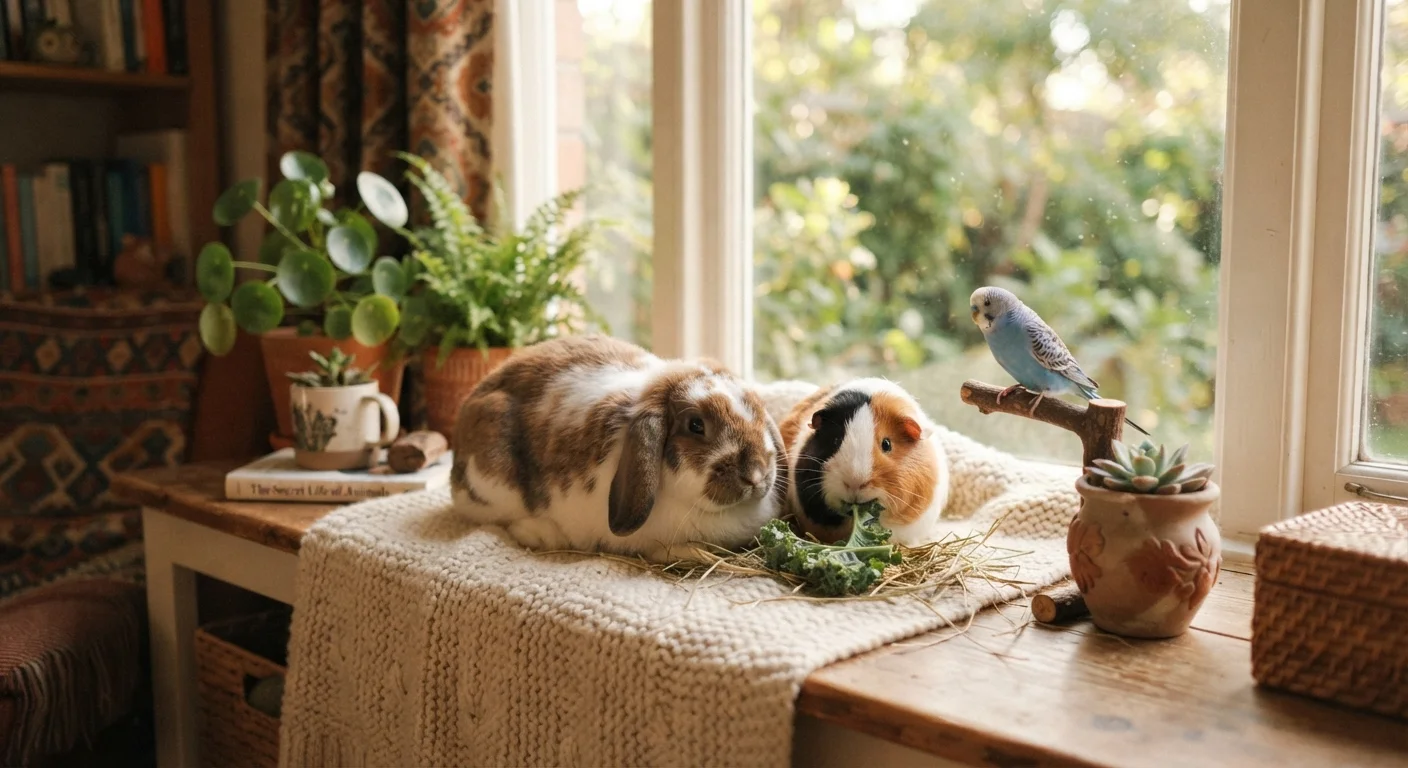
The term covers a wide range of companion animals: rabbits, guinea pigs, hamsters, gerbils, rats, mice, chinchillas, parrots, cockatiels, budgies, and even reptiles like bearded dragons or leopard geckos. What they share is compact size relative to dogs and cats - but beyond that, their temperaments, social needs, diets, and lifespans vary dramatically.
Before evaluating the pros and cons below, keep one principle in mind: the right small pet is the one you've researched thoroughly for your specific living situation, schedule, and expectations. If you're weighing dogs versus small pets, our dog care hub offers helpful context on what full-size pet ownership really involves.
The Real Advantages of Small Pet Ownership
Small pets offer genuine benefits that make them the right fit for many households - but these advantages come with important nuances.
Lower upfront and ongoing costs than dogs or cats
Initial setup and routine expenses - food, bedding, enclosures - are typically more manageable than those of larger pets, though vet costs for exotic-animal specialists can offset savings.
Suitable for smaller living spaces
Many small animals adapt well to apartments or homes without yards, making them accessible to renters and urban dwellers who can't accommodate a dog's outdoor needs.
Quieter household presence for most species
With the exception of some birds and vocal guinea pigs, small pets generally produce less noise than dogs - an important factor in shared living situations or noise-sensitive households.
Rich opportunity to observe natural animal behavior
Watching guinea pigs popcorn (jump with excitement), rabbits binky, or birds vocalize and forage can be genuinely engaging and educational for all ages.
Potentially shorter commitment for some species
Hamsters and gerbils typically live 2-4 years, which may suit families uncertain about a 10-15 year commitment - though this also means more frequent loss, which should be considered.
6.7M
Small animal pets in US households
According to the American Pet Products Association's National Pet Owners Survey, tens of millions of small animals are kept as pets across the United States.
8-12 yrs
Typical rabbit lifespan
Domestic rabbits commonly live 8-12 years with proper care - a longer commitment than many new owners realize when adopting from a pet store.
For apartment dwellers or renters with pet restrictions, small animals are often the most practical route to pet companionship. A well-kept rabbit or pair of guinea pigs can thrive in a modest space, provided they receive adequate exercise and mental enrichment. Birds, depending on species, can be particularly well-suited to apartment living, offering rich social interaction and personality in a compact package.
The Honest Challenges You Should Expect
Many of the difficulties new small-pet owners encounter stem from assumptions - that small means simple, inexpensive, or hands-off. The reality is more layered.
Many species are prey animals, not naturally cuddly
Rabbits, guinea pigs, and hamsters are hardwired to hide weakness and can become stressed when held. Owners expecting lap-pet behavior are often disappointed without proper expectation-setting.
Specialist veterinary care is harder to find
Exotic-animal and small-mammal vets are not universally available, and their fees can be comparable to or higher than standard vet visits for dogs and cats.
Enrichment and space needs are frequently underestimated
Many commercially sold enclosures are too small for the animals they're marketed for. Boredom in small mammals can cause stereotypic behaviors and genuine welfare harm.
Social species require companionship, not just human interaction
Guinea pigs and rabbits, in particular, are highly social and often suffer when housed alone. This adds cost and complexity that first-time owners don't always anticipate.
Short lifespans can mean repeated loss
While some see this as a benefit, smaller animals' shorter lives mean more frequent bereavement - a reality that can be especially difficult for children to navigate.
Nocturnal species may not suit family schedules
Hamsters are naturally nocturnal, meaning they are most active when families are sleeping. Disturbing their rest cycle causes stress; letting them run at 2 a.m. can disturb humans.
One underappreciated challenge is finding appropriate veterinary care. Small and exotic animals require vets with specialist training, and these professionals are not as widely available as general-practice vets. Emergency care can be costly, and many owners discover this too late. Review signs of illness in small pets so you're not caught off guard.
Species like hamsters are often marketed as beginner or children's pets, but this framing can be misleading. Our related article on why hamsters are not low-effort pets unpacks the common welfare problems that stem from underestimating their needs.
Small Pets and Children: Set Realistic Expectations
Small animals are often gifted to children as 'starter pets,' but most species are fragile, easily stressed by handling, and require consistent daily care that young children cannot reliably provide without adult support. Supervision and parental involvement are essential, not optional. A small pet should never be treated as a child's sole responsibility without an adult fully committed to the animal's welfare.
Choosing the Right Species for Your Household
Not all small pets suit the same lifestyle. Rabbits, for example, can live 8-12 years and need significantly more space and social interaction than most first-time owners anticipate. See our guide to rabbit housing beyond a basic cage for a detailed breakdown of what responsible rabbit keeping looks like.
If you're trying to decide between species, our comparison of guinea pigs versus rabbits weighs temperament, space, and care requirements side by side. And if you've already chosen and are preparing to bring a rabbit home, the new rabbit preparation checklist walks through every practical step before day one.
For households with nervous or rescued animals, building trust takes time and patience. Our guidance on socialising a timid or rescue small pet offers low-pressure techniques grounded in animal behavior.
This article is for general informational purposes only and does not constitute veterinary advice. Always consult a qualified exotic-animal veterinarian for guidance specific to your pet's health and care needs.
The content provided on our blog site traverses numerous categories, offering readers valuable and practical information. Readers can use the editorial team’s research and data to gain more insights into their topics of interest. However, they are requested not to treat the articles as conclusive. The website team cannot be held responsible for differences in data or inaccuracies found across other platforms. Please also note that the site might also miss out on various schemes and offers available that the readers may find more beneficial than the ones we cover.