

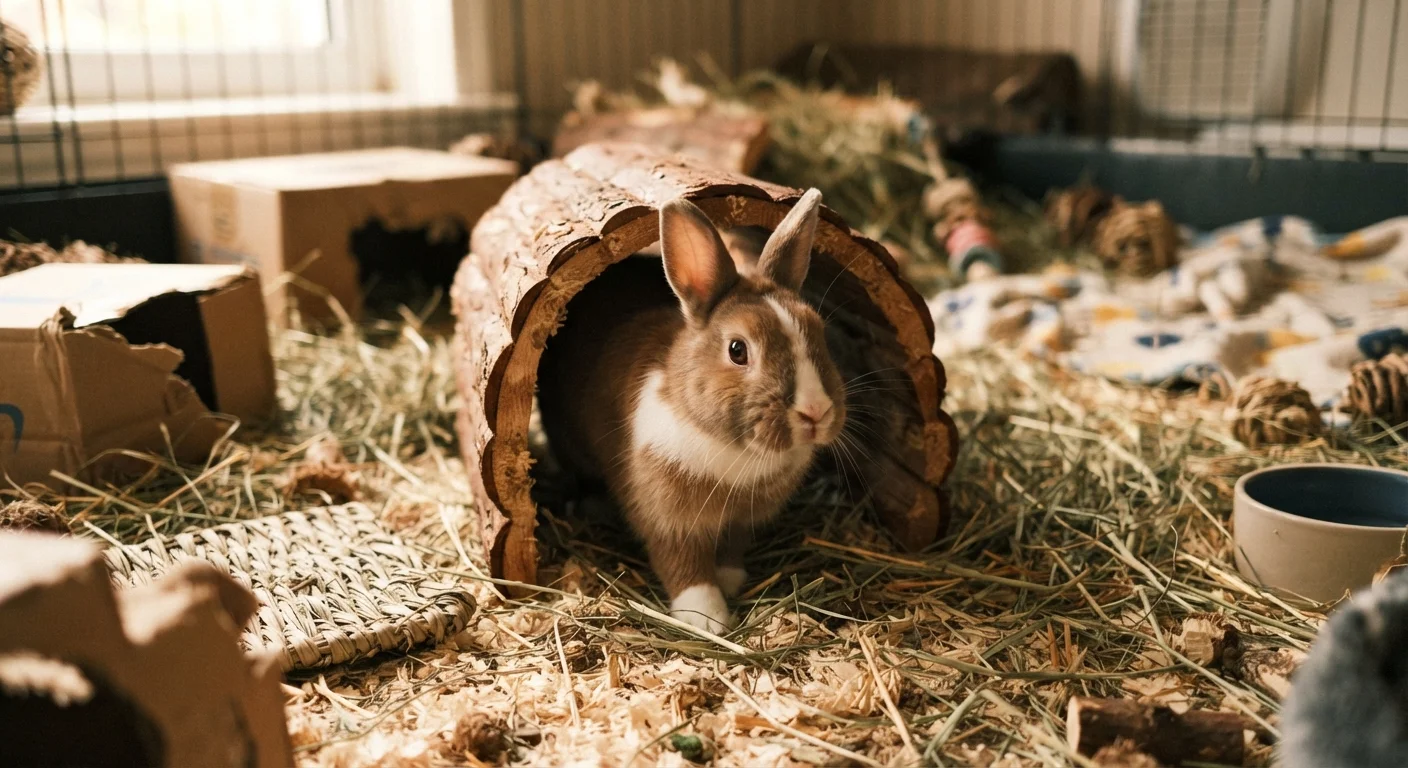
Boredom Is a Welfare Problem, Not a Personality Quirk
Small mammals are often marketed as low-maintenance pets, but the reality is more nuanced. Rabbits, guinea pigs, rats, and hamsters are all cognitively active animals with natural behaviours - foraging, exploring, gnawing, burrowing - that don't disappear simply because an animal lives in a home enclosure. When those behaviours have no outlet, stress accumulates.
Signs of under-stimulation vary by species but commonly include repetitive movements (bar-chewing, pacing, circling), over-grooming, lethargy, and increased aggression. These aren't character flaws; they're signals that an animal's environment isn't meeting its needs. Providing enrichment - objects, activities, and opportunities that encourage species-appropriate behaviour - is one of the most impactful things an owner can do. For broader context on what responsible small pet ownership actually involves, see our guide on the real responsibilities of keeping small companion animals.
Best Practices for Enriching Your Small Mammal's Life
Enrichment works best when it's tailored to what a species actually does in the wild. The following practices apply broadly across common small mammal species, with species-specific notes where relevant.
Design enclosures around natural behaviour, not just containment.
A cage that only prevents escape does not meet an animal's welfare needs. Every species has a behavioural repertoire - foraging, hiding, climbing, gnawing - and the enclosure should accommodate at least the most critical of these. Undersized or barren environments are a primary driver of stereotypic (repetitive, purposeless) behaviour.
Use foraging opportunities to replace bowl-fed meals.
In the wild, small mammals spend significant portions of their waking hours searching for food. Delivering all food in a bowl removes this activity entirely. Scatter-feeding, hiding food inside cardboard tubes, or burying pellets in hay reintroduces the foraging drive and extends meaningful engagement.
Rotate enrichment items on a regular schedule.
Animals habituate quickly to familiar objects, meaning something that was stimulating one week may be ignored the next. Rotating items - even reintroducing old ones after a break - restores novelty and keeps the environment engaging without requiring constant spending.
Prioritise same-species companionship for social species.
No amount of environmental enrichment fully compensates for the absence of conspecific (same-species) companionship in social animals. Guinea pigs, rats, and rabbits are all social species that demonstrate measurable stress when kept alone. Owners should understand this before acquiring a single animal.
Provide safe, species-appropriate chewing materials at all times.
Gnawing is not a destructive habit - it's a biological necessity for rodents and rabbits, whose teeth grow continuously throughout their lives. Appropriate chew items manage dental health and redirect gnawing away from cage bars or unsafe materials.
Introduce new enrichment gradually for timid animals.
For prey species especially, sudden changes to their environment can cause alarm rather than curiosity. Introducing new items slowly - placing them at the edge of the space before moving them closer - allows the animal to investigate at its own pace and builds positive associations.
Species-Specific Considerations
Rabbits
Rabbits are prey animals with strong foraging and digging instincts. They benefit enormously from hay-based foraging puzzles, tunnels, and safe items to chew and toss. Rabbits also need substantial space - enrichment placed in a cramped enclosure has limited effect. Our article on what rabbits truly need in their living space covers the space and environment requirements that make enrichment meaningful.
Guinea Pigs
Guinea pigs are highly social and communicate constantly through vocalisations and movement. Keeping a single guinea pig is widely considered a welfare concern in many countries. Enrichment for guinea pigs should include hiding spots (they feel safest when they can retreat), gentle handling, and variety in their fresh food offerings. Compare their needs with rabbits in our guinea pig vs. rabbit guide.
Rats
Domestic rats are among the most intelligent small mammals kept as pets. They respond well to problem-solving enrichment - food puzzles, rope climbs, and objects they can manipulate. Rats need companions of their own species, ample out-of-cage time, and regular novel experiences to thrive.
Hamsters
Hamsters are solitary and primarily nocturnal, which shapes their enrichment needs differently. A large wheel, deep bedding for burrowing, and a complex habitat layout matter more than social play. Don't be misled by their compact size - hamsters are not low-effort pets.
Enrichment Doesn't Have to Cost Money
Many of the most effective enrichment items are made from cardboard, paper bags, untreated wood, or repurposed household containers. The key is ensuring materials are free from inks, adhesives, or coatings that could be toxic if chewed. When in doubt about a specific material's safety, check with a veterinarian experienced with small mammals before offering it to your pet.
Start Simple: Quick Wins for Today
You don't need to overhaul your pet's entire setup to begin improving their daily experience. The quick wins below are low-cost, low-effort starting points that make a real difference.
This article is for general informational purposes only. For concerns about your pet's health or behaviour, consult a qualified veterinarian familiar with small mammals.
The content provided on our blog site traverses numerous categories, offering readers valuable and practical information. Readers can use the editorial team’s research and data to gain more insights into their topics of interest. However, they are requested not to treat the articles as conclusive. The website team cannot be held responsible for differences in data or inaccuracies found across other platforms. Please also note that the site might also miss out on various schemes and offers available that the readers may find more beneficial than the ones we cover.