

Summary
22 items · 45-90 minutes
Why Preparation Matters More Than You Might Expect
Rabbits are often described as low-maintenance pets, but that framing can be misleading. While they don't need walks or baths, rabbits are sensitive animals with specific housing, dietary, and social needs. Arriving home to an incomplete setup can cause unnecessary stress for both the rabbit and its new owner.
The good news is that thoughtful preparation - done in advance - makes the first days far smoother. This checklist walks you through every category, from enclosure setup and food supplies to vet registration and home safety. Work through it before pickup day, not after.
If you're also considering another small companion animal, our bird cage placement and setup guide demonstrates how much environment design matters across different species.
Enclosure Setup
Food and Water Supplies
Rabbit-Proofing Your Home
Health and Vet Preparation
Settling In
What You'll Need Before Your Rabbit Arrives
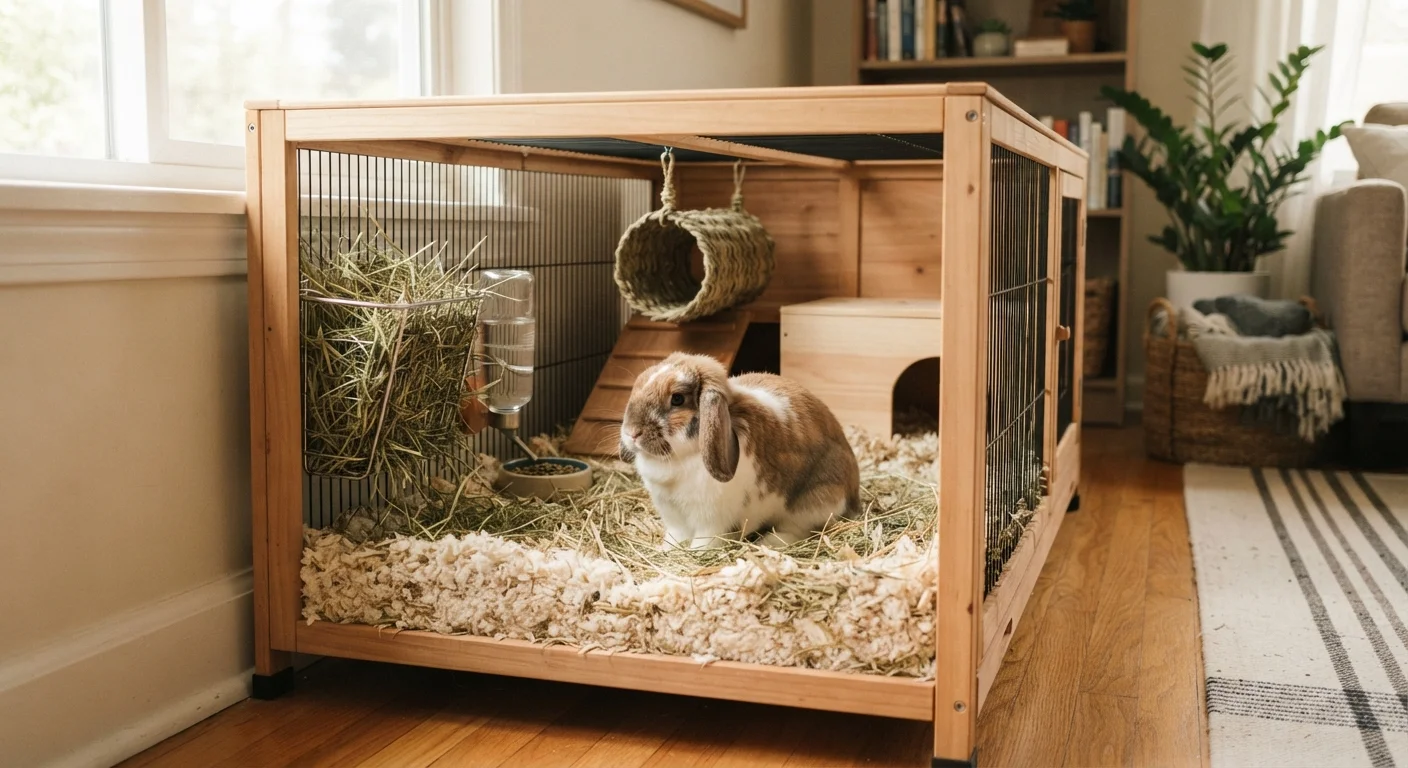
Having the right supplies on hand is non-negotiable. Below are the core tools and materials to gather in advance. Most are available at pet supply stores, but sourcing them early prevents last-minute scrambles.
Spacious indoor enclosure or exercise pen
Provides your rabbit with a safe, contained living space that allows natural movement and separation of activity zones.
Timothy hay (bulk supply)
The dietary foundation for adult rabbits; must be available continuously for digestive and dental health.
Paper-based litter
Used in the litter box to absorb waste safely; avoid clay-clumping or cedar-based products.
Heavy ceramic food and water bowls or bottle
Prevents tipping and keeps food and fresh water accessible and uncontaminated.
Rabbit-safe hiding house or tunnel
Gives your rabbit a retreat space inside the enclosure, which is essential for reducing stress.
Electrical cord covers or cable conduit
Protects cords from chewing and prevents electrical hazards during free-roam time.
Grooming brush (slicker or soft bristle)
Used for regular coat maintenance; especially important for long-haired breeds to prevent matting.
Secure transport carrier
Needed to bring your rabbit home safely and for future veterinary trips.
Unlike setting up for a dog or cat, rabbit preparation involves some species-specific items - particularly around hay storage and safe flooring. For comparison, see how the process differs in our first-time cat owner guide.
Avoid Wire-Floor Cages
Wire-bottom cages are still sold in some stores but are not suitable for rabbits. Prolonged contact with wire flooring can cause a painful condition called sore hocks (ulcerative pododermatitis) on the hind feet. Always provide a solid, cushioned floor surface or cover wire sections completely with non-slip matting or fleece.
Not All Vets See Rabbits
Rabbits are classified as exotic small mammals in many veterinary practices, meaning not every clinic is equipped or trained to treat them. Calling ahead to confirm rabbit care availability before your pet arrives - rather than in an emergency - is strongly advised.
Health, Safety, and the First 48 Hours
The first two days at home are a critical settling-in window. Rabbits are prey animals by instinct, which means they can experience significant stress when moved to a new environment. Keeping things calm, quiet, and consistent during this period helps your rabbit begin to feel secure.
Register with a rabbit-savvy vet before your rabbit comes home - not after. Many general veterinary practices do not see rabbits or other exotic small animals, so confirming this in advance is important. Schedule a wellness check within the first week.
GI Stasis Is a Medical Emergency
Gastrointestinal stasis - when a rabbit's digestive system slows or stops - is a life-threatening condition that can develop rapidly. If your rabbit stops eating, produces no droppings, or appears hunched and lethargic, contact a rabbit-savvy vet immediately. Do not wait to see if the situation improves on its own. This is one reason why identifying your vet before arrival, not after, is so important.
Once your rabbit has had a day or two to settle in its enclosure, you can begin supervised free-roam time in a rabbit-proofed space. Keep initial sessions short and observe body language - a relaxed rabbit will stretch out and move with curiosity rather than freezing or hiding continuously.
The content provided on our blog site traverses numerous categories, offering readers valuable and practical information. Readers can use the editorial team’s research and data to gain more insights into their topics of interest. However, they are requested not to treat the articles as conclusive. The website team cannot be held responsible for differences in data or inaccuracies found across other platforms. Please also note that the site might also miss out on various schemes and offers available that the readers may find more beneficial than the ones we cover.