

Why Small Prey Animals Are Wired for Wariness
Rabbits, guinea pigs, hamsters, and many bird species are prey animals. Their survival in the wild depends on detecting and fleeing threats quickly - which means anything large, sudden, or unfamiliar can trigger a genuine fear response, even in an otherwise healthy pet. Understanding this biology is the starting point for effective socialisation.
Unlike dogs, who are social hunters and generally orient toward humans as a source of safety, small prey animals must learn through repeated, positive experience that you are not a predator. That process cannot be rushed. It also cannot be faked: if your body language, timing, or tone is off - reaching over the animal, looming, making sudden sounds - the animal's instincts will override any progress made so far.
For rescue animals in particular, prior negative experiences with humans can heighten the baseline fear response significantly. Our guide to small pet ownership outlines what to realistically expect when taking on a rescue or rehomed animal, and is worth reading before you begin.
Reading Stress Signals Correctly
Fear in small pets often looks like stillness rather than obvious distress. A rabbit pressed flat to the floor, a guinea pig that won't eat when you're nearby, or a bird that constantly moves to the far side of the cage are all signalling discomfort. Learn your specific animal's calm baseline first - any sustained deviation from it is worth taking seriously.
What You'll Need Before You Begin
Getting the environment right before socialisation starts makes a meaningful difference. A well-designed living space gives your pet a sense of agency - somewhere to retreat to, something to hide behind, and enough room to move freely. For rabbits specifically, see our rabbit housing guide for details on what a welfare-appropriate enclosure actually involves.
What you will need
Appropriately sized, escape-proof enclosure
Provides the pet with a safe home base where they can retreat and feel in control.
Species-appropriate high-value treats
Used to build positive associations with your presence during taming sessions.
Low, non-slip mat or fleece liner
Lets you sit at floor level with the animal, reducing the intimidation of looming overhead.
Hideaway or tunnel inside the enclosure
Gives the animal a safe retreat so they never feel cornered during socialisation.
Notebook or phone app for logging progress
Tracking daily reactions helps you spot patterns and avoid pushing the pet too fast.
Step-by-Step: Building Trust at the Animal's Pace
The following steps apply broadly to rabbits, guinea pigs, and small companion birds, though the specific signals and timelines will vary by species and individual temperament. Follow them in order and resist the temptation to skip ahead.
Give them a decompression period first
Resist the urge to handle your new pet for the first several days. Place their enclosure in a calm part of the home, cover three sides if the animal appears very skittish, and allow them to eat, drink, and move freely without human interference. This decompression window - typically three to seven days, sometimes longer for rescue animals - lets the pet establish that their space is safe before you introduce yourself.
Establish a predictable routine
Nervous animals find comfort in predictability. Feed, clean, and interact with your pet at the same times each day. After a few days, your pet will begin to anticipate your arrival and associate it with good things rather than unpredictable events. Consistent routine is often underestimated as a socialisation tool - it lays the groundwork for everything else.
Introduce your scent before your hands
Before attempting to touch your pet, place a worn item of clothing - a soft t-shirt or sock - near or inside the enclosure. Many small mammals and birds use scent to assess safety. Letting them explore your smell in a low-pressure context helps them learn that you are not a threat. Replace the item every couple of days so the scent stays current.
Offer treats from an open, still hand
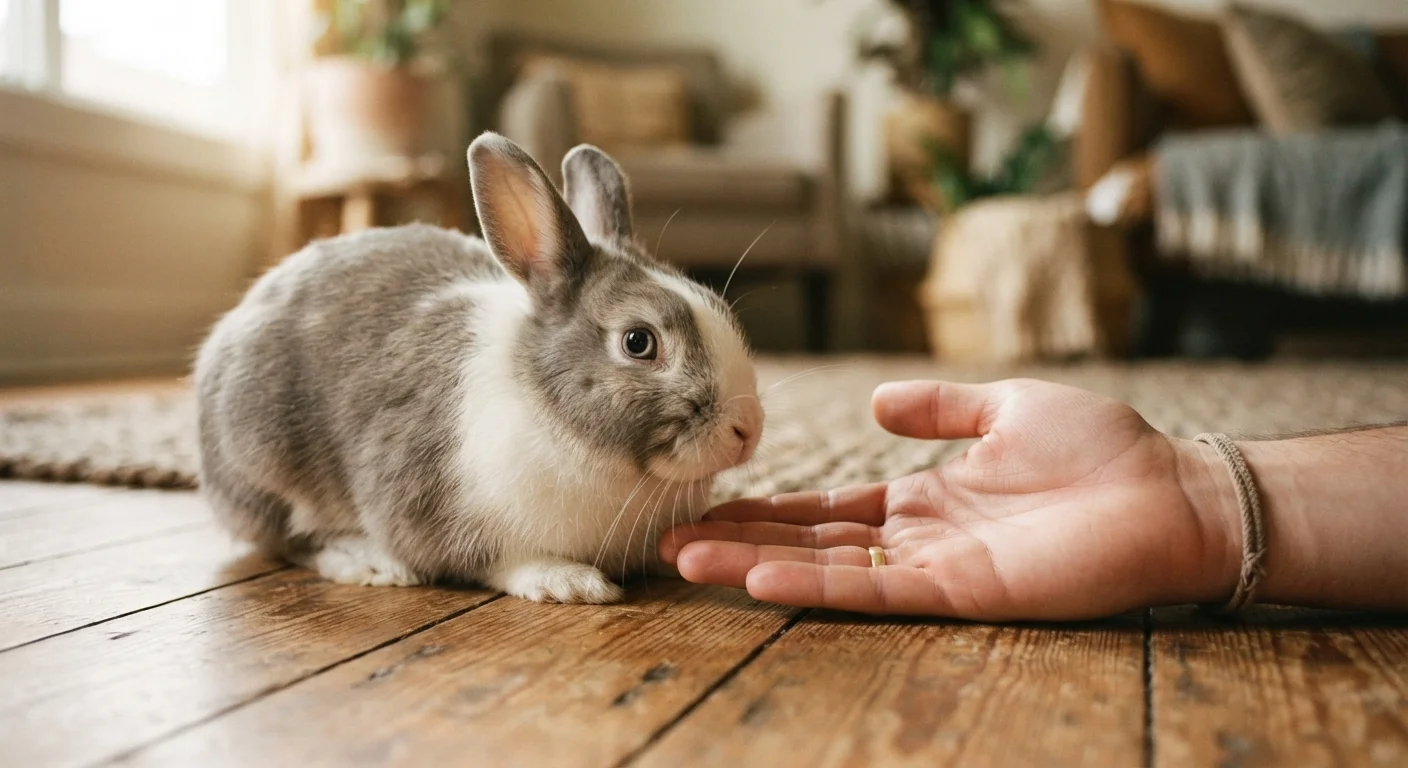
Sit or kneel beside the enclosure with the door open or your hand placed calmly inside. Offer a small, appropriate treat in your open palm - for rabbits, a small piece of fresh herb; for guinea pigs, a thin slice of bell pepper; for birds, a pinch of millet. Do not move your hand toward the animal. Let them decide whether to approach. If they don't, simply remove your hand calmly and try again the next day.
Progress to brief, supported handling
Once your pet reliably approaches your hand and takes treats calmly, you can begin gentle, supported handling - only when they are not already hiding or showing stress signals such as freezing, thumping (rabbits), teeth chattering (guinea pigs), or feather flattening (birds). Scoop rather than grab; support the body fully; keep contact brief. Place the animal back before they struggle to avoid reinforcing fear of handling.
Expand their world gradually
Once trust is established inside their enclosure space, allow supervised time in a safe, pet-proofed area outside it. Maintain the same calm energy, keep the space quiet, and let them explore at their own pace. Avoid introducing multiple new people, pets, or environments at the same time. Each new experience should be introduced in isolation so the animal can process it without becoming overwhelmed.
When Fear May Signal a Health Problem
Persistent hiding, refusal to eat, or sudden changes in behaviour in a previously relaxed animal can sometimes indicate illness rather than just anxiety. Small pets often mask symptoms until they are quite unwell. If you notice these signs alongside weight loss, changes in droppings, or laboured breathing, consult an exotic-animal veterinarian promptly rather than assuming it is a behavioural issue.
When Progress Stalls or Setbacks Happen
Setbacks are normal. A loud noise, a visitor, a change in routine, or an accidental scare can push a timid animal back several steps. When this happens, return to whichever earlier stage the animal is comfortable with and rebuild from there. Do not interpret regression as failure.
If your pet shows signs of illness alongside behavioural changes, do not delay seeking veterinary input. Our guide to recognising illness in small pets covers the subtle signs that owners most often overlook.
Rescue Animals May Need More Time
Animals rehomed from neglect, hoarding situations, or environments with repeated handling stress may take months - not days - to feel safe with humans. This is a normal response to their history, not a reflection of how well you are doing. Forcing the pace is counterproductive and can entrench fear responses. If progress stalls entirely after several months, a consultation with an exotic-animal behaviourist or vet may help identify an underlying barrier.
This article provides general information about small animal behaviour and is not a substitute for veterinary or professional behaviourist advice. If you have concerns about your pet's health or welfare, consult a qualified exotic-animal veterinarian.
The content provided on our blog site traverses numerous categories, offering readers valuable and practical information. Readers can use the editorial team’s research and data to gain more insights into their topics of interest. However, they are requested not to treat the articles as conclusive. The website team cannot be held responsible for differences in data or inaccuracies found across other platforms. Please also note that the site might also miss out on various schemes and offers available that the readers may find more beneficial than the ones we cover.