

Where the 'Easy Pet' Myth Comes From
Hamsters are small, quiet, and widely available. They don't need walks, they don't bark, and their initial purchase price is low. It's easy to see why they're often framed as an ideal first pet or a low-commitment option - but that framing leaves out most of what hamster ownership actually involves.
The reality is that hamsters have highly specific behavioral and environmental needs that, when unmet, lead to chronic stress, stereotypic behaviors (repetitive, compulsive movements), and shortened lifespans. Understanding what responsible care looks like begins with correcting the most persistent myths. For a broader view of what small pet ownership entails, see our honest look at small pet pros and cons.
Myth
A small cage is fine for a hamster - they're tiny animals and don't need much room.
Fact
Hamsters are highly active animals that can travel several miles per night in the wild; inadequate space causes chronic stress and stereotypic behaviors.
In their natural habitat, hamsters roam large territories nightly. Research published in animal behavior journals has linked small enclosures to stereotypic wire-chewing and repetitive pacing - reliable indicators of poor welfare. Most cages marketed as 'starter' or 'complete' hamster setups fall well short of the space welfare organizations now recommend.
Myth
Hamsters are great pets for young children because they're small and easy to handle.
Fact
Hamsters are crepuscular and nocturnal, bite when startled, and require careful, calm handling that most young children find difficult to sustain.
Young children are naturally active and loud during the hours when hamsters most want to sleep. Waking a hamster abruptly triggers a defensive bite response - not aggression, but a startled reflex. This often results in a frightened child and a hamster that becomes increasingly difficult to handle. Supervision from a knowledgeable adult is essential if children are involved in care.
Myth
Hamsters don't really need veterinary care - they're cheap pets and vets are for dogs and cats.
Fact
Hamsters develop illnesses including dental disease, wet tail, tumors, and respiratory infections that require prompt professional treatment.
Because hamsters have short lifespans (typically 2-3 years), illnesses progress quickly. Finding a vet experienced with exotic or small mammals before you need one is strongly advised. Emergency visits for a hamster can cost as much as those for larger pets, so financial planning is part of responsible ownership.
Myth
A wheel is enough enrichment - hamsters just run and sleep, so there's nothing else to provide.
Fact
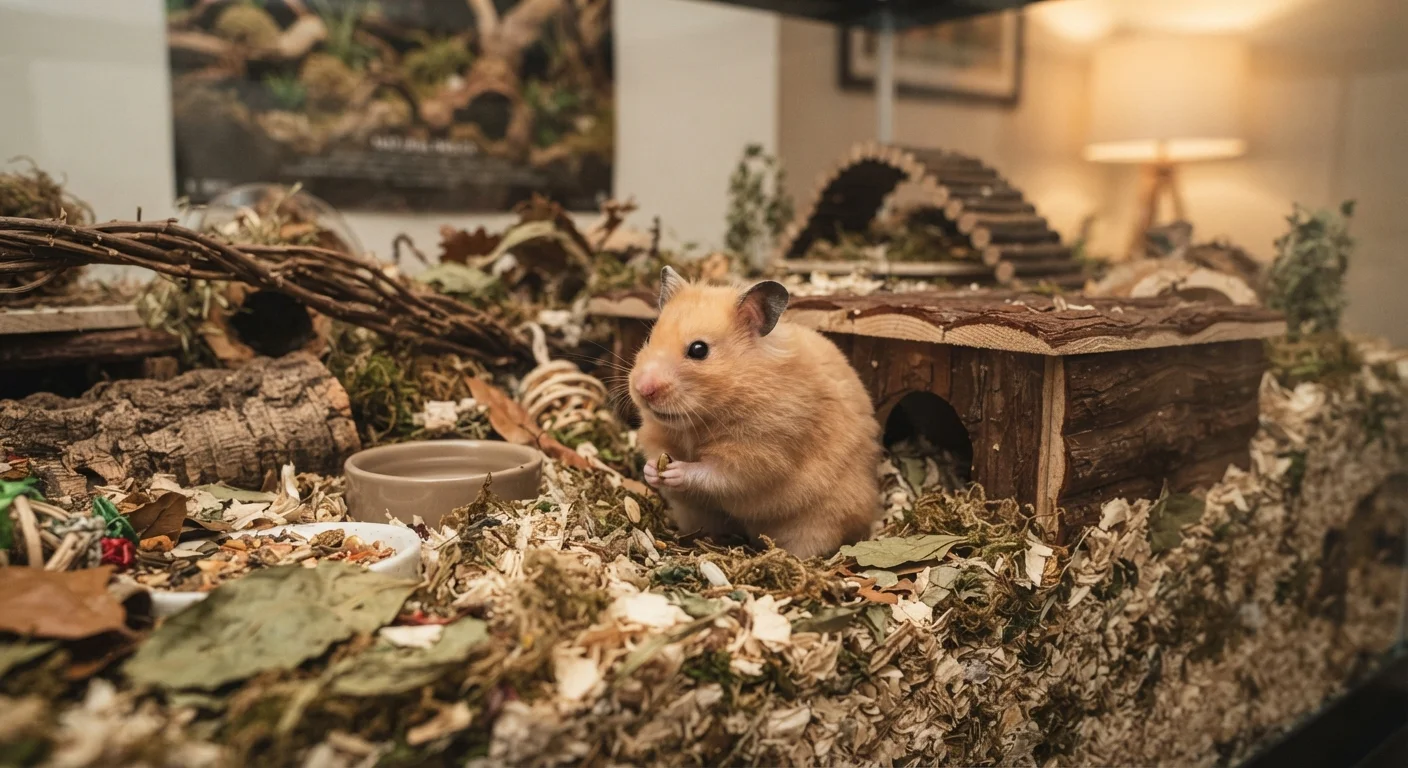
Hamsters need burrowing substrate, hides, foraging opportunities, and environmental variety in addition to a wheel.
Running is just one behavioral need among many. In the wild, hamsters spend significant time digging complex burrow systems, caching food, and exploring. Without deep substrate for burrowing, multiple hides, and opportunities to forage, hamsters display signs of frustration and boredom that affect their long-term health. Regularly adding new items or rearranging the enclosure layout provides meaningful novelty.
Myth
Hamsters are solitary by nature, so they're easy to care for - no social needs to worry about.
Fact
While most hamster species are solitary and should not be housed with others of their kind, their need for environmental enrichment and human-provided stimulation remains significant.
Solitary doesn't mean low-maintenance. It means most hamsters (especially Syrians) will fight if housed together - but it says nothing about their need for a stimulating, species-appropriate environment. An owner's role is to provide variety, safe exploration, and attentive observation in place of the social complexity other species experience with companions.
What Good Hamster Care Actually Requires
Once the myths are cleared away, a clearer picture of responsible ownership emerges. Meeting a hamster's needs isn't complicated, but it does require consistent effort, appropriate housing, and a willingness to observe your animal's behavior closely.
5+ miles
Distance wild hamsters may travel nightly
Behavioral studies of wild European hamsters document extensive nightly roaming, which informs minimum enclosure and wheel requirements for captive animals.
2-3 years
Average captive hamster lifespan
The short lifespan means illness can escalate rapidly, making early veterinary relationships and routine observation especially important.
6+ inches
Recommended minimum bedding depth
Multiple small animal welfare organizations recommend at least 6 inches of loose substrate to allow natural burrowing behavior in captive hamsters.
Enclosure size matters most. Many welfare organizations now recommend a minimum floor space of 775-1,000 square inches for Syrian hamsters, with deep substrate (at least 6 inches) to allow burrowing. Standard pet store cages rarely meet this threshold. Bar spacing is also critical - gaps wider than half an inch risk injury or escape.
Enrichment is not optional. A solid-surface wheel (at least 10-11 inches in diameter for Syrians), multiple hides, foraging opportunities, and regular cage reconfiguration help prevent boredom-related stress. Our guide on enrichment for small mammals covers this in depth.
Handling requires patience and timing. Forcing interaction during the day disrupts sleep and erodes trust. If you have a timid or newly adopted hamster, gentle, low-pressure techniques make a real difference - the approach outlined in socialising a nervous small pet applies well here.
Stereotypic Behavior Is a Welfare Warning Sign
Repetitive behaviors like bar-chewing, corner-digging against glass, or pacing the same route are not 'quirky habits' - they are recognized indicators of chronic stress in captive hamsters. If you observe these behaviors consistently, the enclosure, enrichment, or both likely need significant changes. Consult a vet with small mammal experience if the behavior persists after environmental improvements.
Is a Hamster Right for Your Household?
Hamsters can be genuinely rewarding pets for the right owner - someone who is active in the evening, has space for a proper enclosure, and finds satisfaction in observing animal behavior rather than cuddling on demand. They are not well-suited to households expecting a hands-on companion available during daytime hours, or to young children without close adult supervision.
Before bringing a hamster home, it's worth comparing the commitment honestly with other small pets. Rabbit housing needs, for example, are similarly misunderstood. The goal isn't to discourage ownership - it's to ensure the animal you choose matches your actual lifestyle, not an idealized version of it.
This article is for general informational purposes only. For concerns about your hamster's health or behavior, consult a veterinarian with experience in exotic or small mammal care.
The content provided on our blog site traverses numerous categories, offering readers valuable and practical information. Readers can use the editorial team’s research and data to gain more insights into their topics of interest. However, they are requested not to treat the articles as conclusive. The website team cannot be held responsible for differences in data or inaccuracies found across other platforms. Please also note that the site might also miss out on various schemes and offers available that the readers may find more beneficial than the ones we cover.