

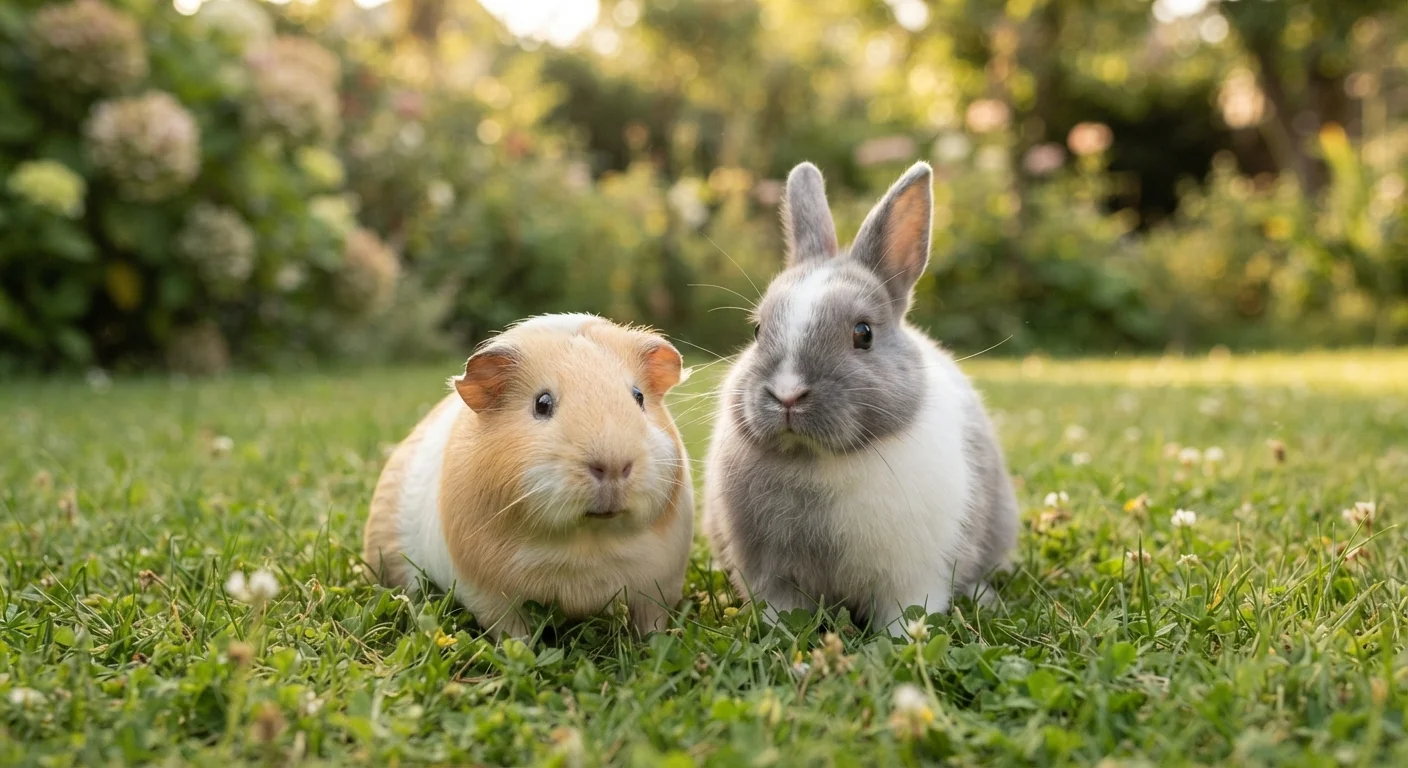
Option A
Guinea Pig
The gentle, vocal companion that thrives on routine.
Best for: Families with children or first-time small-pet owners who want a sociable, manageable animal.
Option B
Rabbit
The active, curious pet with more complex needs.
Best for: Owners who can provide ample space, daily free-roam time, and patient, consistent handling.
Temperament and Handling: Day-to-Day Personality
Guinea pigs are vocal, expressive animals that communicate through a range of sounds - from the distinctive "wheek" of excitement to quiet purring when content. They rarely bite and, once accustomed to handling, tend to sit calmly in a person's lap. This predictability makes them particularly suitable for households with children, though adult supervision is always important.
Rabbits have more complex personalities. They can be affectionate and curious, but they are also prey animals with strong instincts. A rabbit that feels threatened may scratch, kick, or bite - not out of aggression, but fear. Building trust takes time and a calm environment. That said, a well-socialized rabbit can form a genuinely close bond with its owner. For guidance on earning trust at an animal's own pace, see socialising a timid or rescue small pet.
Both species are social animals and generally do best when kept with at least one companion of the same species. Keeping either animal in isolation can lead to stress and behavioral problems over time.
| Criterion | Guinea Pig | Rabbit |
|---|---|---|
| Average lifespan | 4-7 years | 8-12 years |
| Minimum enclosure size (pair) | ~7.5 sq ft | ~60 sq ft (living + run) |
| Daily free-roam exercise | Recommended but flexible | Several hours daily - essential |
| Handling ease for beginners | Generally easier | Requires patience and trust-building |
| Vitamin C requirement | Yes - via fresh food | No |
| Trainability | Limited | Higher - litter training, name recall |
| Social needs | Same-species pair strongly advised | Same-species pair strongly advised |
| Noise level | Vocal - wheeking, purring | Mostly quiet; thumps when alarmed |
Space, Housing, and Exercise Needs
Space is one of the most important differences between these two species. Guinea pigs need a roomy enclosure - a minimum floor area of around 7.5 square feet for a pair is a commonly cited guideline, though more is always better. They appreciate consistent access to their space rather than extended free-roam sessions.
Rabbits have much higher exercise demands. Most veterinary and welfare organizations recommend a minimum combined living and exercise area of 60 square feet, and rabbits should have several hours of free-roaming time each day outside their enclosure. Indoor setups need to be rabbit-proofed, as rabbits chew cables, baseboards, and furniture instinctively. For a thorough look at what a rabbit's living environment should include, our article on rabbit housing beyond a basic cage covers the essentials in detail.
60 sq ft
Minimum recommended rabbit living and exercise space
The Rabbit Welfare Association & Fund recommends a combined minimum of 60 square feet for a bonded pair of rabbits.
80%+
Proportion of diet that should be hay
Veterinary guidance consistently places unlimited grass hay as the dietary foundation for both guinea pigs and rabbits.
4-7 yrs
Typical guinea pig lifespan
With appropriate husbandry and veterinary care, guinea pigs commonly live between four and seven years.
Both animals need enrichment to stay mentally healthy. Boredom is a genuine welfare concern - learn more in our guide to enrichment for small mammals.
Diet, Lifespan, and Veterinary Considerations
The core diet for both guinea pigs and rabbits is unlimited grass hay, which should make up roughly 80% or more of their daily intake. Fresh leafy greens and a small amount of species-appropriate pellets round out a balanced diet. There is one critical difference: guinea pigs, like humans, cannot produce their own vitamin C and must get it through fresh vegetables such as bell pepper and leafy greens. Rabbits do not have this requirement.
Lifespan is another key factor. Guinea pigs typically live 4-7 years, while rabbits commonly reach 8-12 years with proper care. Both species benefit from spaying or neutering, which reduces certain health risks and can improve behavior. Both also require veterinary care from a vet experienced with exotic or small animals - not all general practice vets have this specialty.
Exotic Vet Care Matters for Both Species
Guinea pigs and rabbits are classified as exotic pets in many veterinary practices, meaning not every clinic has the expertise to treat them. Before bringing either animal home, identify a vet in your area who regularly sees small mammals. Routine health checks, dental assessments, and spay/neuter procedures all require species-specific knowledge that a general practice vet may not always have.
If you are still weighing whether a small pet is right for your household at all, our overview of small pet ownership pros and cons offers a balanced starting point before you commit.
This article provides general educational information about guinea pigs and rabbits and is not a substitute for advice from a qualified veterinarian familiar with your specific animal's health and circumstances.
The content provided on our blog site traverses numerous categories, offering readers valuable and practical information. Readers can use the editorial team’s research and data to gain more insights into their topics of interest. However, they are requested not to treat the articles as conclusive. The website team cannot be held responsible for differences in data or inaccuracies found across other platforms. Please also note that the site might also miss out on various schemes and offers available that the readers may find more beneficial than the ones we cover.