

Our Verdict
No-dig gardening is a well-grounded approach rooted in sound soil science, and it delivers real benefits for soil health, weed suppression, and workload over time. However, the upfront investment in organic matter, the patience required for results, and some limitations with compacted or problem soils mean it isn't a perfect fit for every situation.
Gardeners who can source bulk compost affordably, are willing to invest in setup now for easier maintenance later, and want to grow vegetables or perennials without relying on mechanical soil disturbance.
What No-Dig Gardening Actually Means
No-dig gardening - sometimes called no-till gardening - is a method that avoids disturbing the soil through digging, forking, or rotary tilling. Instead of turning the earth to improve it, you build fertility from the surface downward by layering organic matter, primarily compost, directly onto the ground.
The core idea is that soil is a living ecosystem. It contains fungal networks, earthworms, bacteria, and billions of other organisms that create structure and cycle nutrients. When you dig, you physically disrupt those networks, expose buried weed seeds to light, and accelerate the breakdown of organic matter faster than it can be replaced. No-dig gardening argues that leaving the soil undisturbed and feeding it from the top is a more effective long-term strategy.
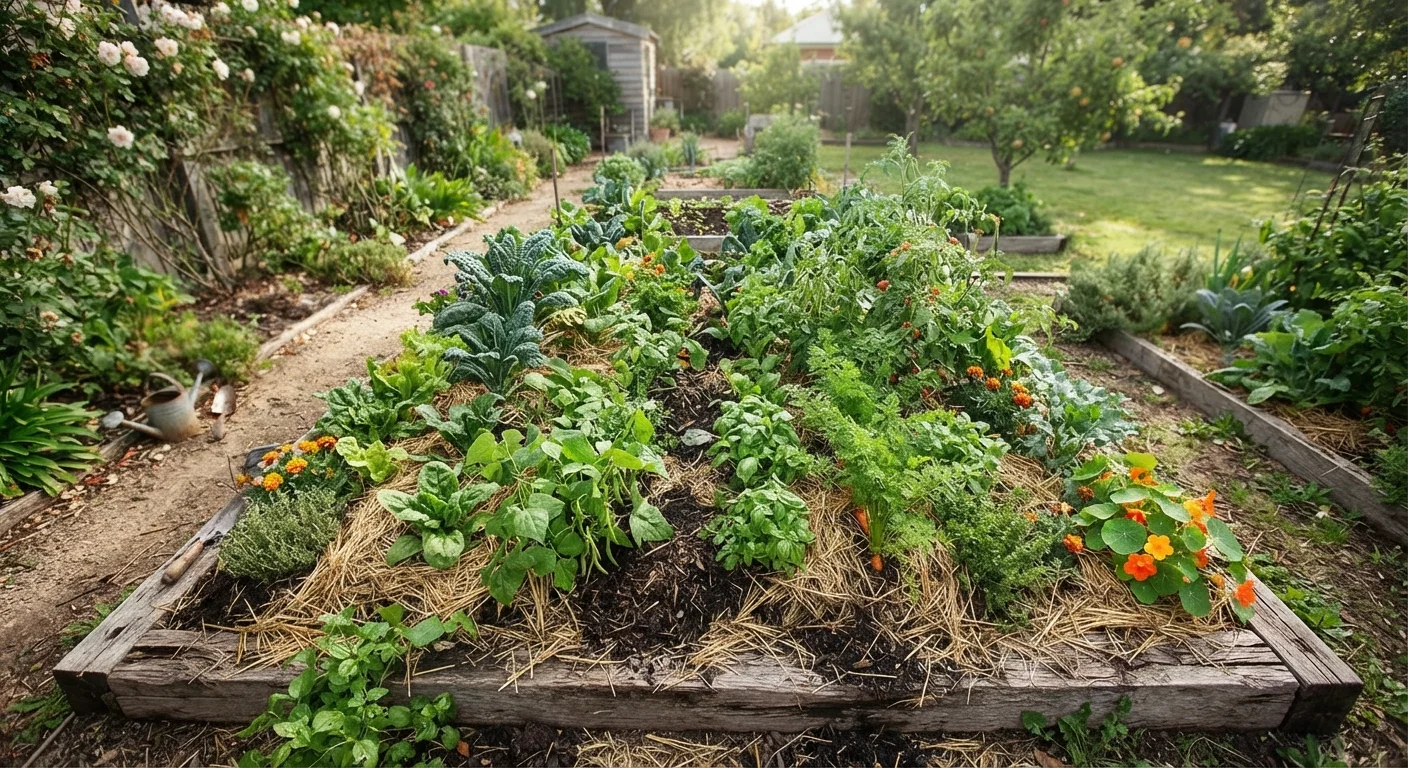
In practice, starting a no-dig bed typically means laying cardboard or newspaper directly over existing vegetation to suppress it, then covering that base with several inches of compost. Seeds and transplants go into that top layer. Over time, the cardboard degrades, the organic matter integrates with the soil beneath, and the underlying earth improves without a single spade stroke.
It's worth noting that no-dig is a management approach, not a guarantee. Results depend heavily on the quality and quantity of organic material you apply, your starting conditions, and what you're growing. If you're planning a new growing space from scratch, our guide to starting a vegetable garden from scratch covers site selection and soil preparation in more detail.
Advantages of the No-Dig Approach
The benefits of no-dig gardening are well-documented among gardeners and supported by a growing body of horticultural research. Here's what the method genuinely does well.
Protects and builds living soil structure
Avoiding tillage preserves the fungal networks and earthworm channels that create soil porosity and nutrient cycling. Over several seasons, no-dig beds typically develop a richer, more biologically active profile than tilled equivalents.
Reduces weed germination over time
Digging brings dormant weed seeds to the surface where light triggers germination. By leaving soil undisturbed and smothering the surface with compost, no-dig significantly reduces the weed seed bank available to sprout.
Lower physical labor once established
Without annual digging, double-digging, or rotary tilling, ongoing bed maintenance becomes lighter work. This makes no-dig particularly practical for gardeners with limited mobility or those maintaining large growing areas.
Improves moisture retention
A consistent layer of compost and mulch on the soil surface reduces evaporation and moderates temperature swings, often meaning less frequent watering is needed during dry spells.
Works well on existing grass or weedy ground
The cardboard-and-compost method allows you to convert a patch of lawn or overgrown ground into a productive bed without stripping turf or using herbicides - the suppressed vegetation breaks down in place.
One practical advantage worth highlighting: because no-dig beds rely on surface compost rather than turned soil, they pair naturally with perennial plantings that dislike root disturbance. If you're considering adding long-lived plants alongside your edibles, see our overview of low-maintenance perennials worth knowing about.
Disadvantages to Weigh Honestly
No-dig gardening has genuine limitations, and it's worth understanding them before committing to the method - especially if you're working with a challenging site or limited budget.
High upfront compost requirement
To properly establish a no-dig bed, you typically need 4-6 inches of quality compost at the outset. For larger gardens, sourcing sufficient organic matter can be expensive or logistically challenging, especially if you don't produce your own.
Results take time to fully develop
The soil improvement benefits of no-dig accumulate over multiple seasons. Gardeners expecting immediate transformation - particularly on heavy clay or nutrient-poor soil - may find the first year underwhelming.
Not a solution for severely compacted soil
On heavily compacted ground, surface applications of compost alone may not be sufficient to break up the subsoil compaction that restricts root growth and drainage. In such cases, a single initial loosening before starting no-dig may be warranted.
Perennial weeds can persist
Deep-rooted perennial weeds like bindweed or couch grass can push through cardboard and compost layers. These may require targeted removal by hand before converting a bed, or repeated intervention during the first season.
Ongoing material sourcing is necessary
The system works only as long as compost inputs continue. Gardeners without reliable access to compost - whether homemade, municipal, or purchased - may find it difficult to sustain the method consistently year after year.
Severely Compacted Soil: An Exception
No-dig works best when the underlying soil, however poor in fertility, at least has some basic drainage and structure. On heavily compacted clay - such as subsoil exposed during construction - one careful initial loosening pass before applying compost may be more practical than relying entirely on surface layering. After that single intervention, the no-dig approach can take over for all subsequent seasons.
For context on how soil health connects to plant performance more broadly, our article on soil pH and why your plants care about it explains an important related factor that no-dig alone doesn't address.
Making No-Dig Work in Practice
Success with no-dig gardening comes down to a few consistent habits. The most important is maintaining a steady supply of quality compost - ideally 2-4 inches applied to beds annually. Home composting is the most cost-effective source for many gardeners; our guide to composting at home walks through setting up and maintaining a practical system.
Mulching between plants is equally important. A generous mulch layer retains moisture, moderates soil temperature, and continues suppressing weeds as it breaks down. The type of mulch you use matters for long-term soil outcomes - our comparison of organic vs. inorganic mulch explains what each type contributes below the surface.
25-30%
Potential reduction in weed emergence
Research from horticultural studies suggests that maintaining undisturbed soil surfaces can reduce weed seedling emergence significantly compared to regularly cultivated plots.
4-6 inches
Compost depth for initial bed setup
Most no-dig practitioners recommend this starting depth to effectively suppress existing vegetation and provide adequate growing medium for transplants and seedlings.
No-dig also pairs well with thoughtful watering. Since the surface layer stays loose and moisture-retentive, most no-dig beds benefit from slow, deep watering rather than frequent shallow applications. For a comparison of delivery methods, see our garden watering methods overview.
Finally, if you're weighing no-dig against other structural approaches, it's useful to consider how it compares to raised beds. Our article on raised beds vs. in-ground planting covers the practical trade-offs across soil control, drainage, and cost.
The content provided on our blog site traverses numerous categories, offering readers valuable and practical information. Readers can use the editorial team’s research and data to gain more insights into their topics of interest. However, they are requested not to treat the articles as conclusive. The website team cannot be held responsible for differences in data or inaccuracies found across other platforms. Please also note that the site might also miss out on various schemes and offers available that the readers may find more beneficial than the ones we cover.