

Start here
Choosing the Right Spot
Next
Deciding on a Growing Method
Then
Preparing and Improving Your Soil
Ready to plant
Choosing What to Grow
Get growing
Sowing, Planting, and Early Care
Keep it going
Managing Your Garden Through the Season
Choosing the Right Spot
Before you buy a single seed, find where your garden will live. Sunlight is non-negotiable: most vegetables need at least six hours of direct sun daily, and eight is better for heat-loving crops like tomatoes and peppers. Walk your yard at different times of day and observe where shadows fall from fences, trees, or the house itself.
Beyond sun, consider these factors:
- Proximity to water: A spot close to an outdoor faucet makes consistent watering far more likely to happen.
- Level ground: Slopes cause runoff and uneven moisture. Flat or gently graded ground works best.
- Away from large trees: Tree roots compete aggressively for water and nutrients, and overhanging canopy blocks light.
- Good drainage: Avoid low-lying areas that pool after rain - waterlogged soil suffocates roots.
Start smaller than you think necessary. A 4×8-foot bed produces a meaningful harvest while keeping weeding, watering, and harvesting manageable. You can expand once you understand the rhythm of a growing season.
Direct sowing
Planting seeds directly into the garden bed where they'll grow, rather than starting them indoors and transplanting later.
Last frost date
The average calendar date after which freezing temperatures are unlikely in your area - a key marker for when warm-season crops can safely go outside.
Thinning
Removing extra seedlings so the remaining plants have enough space, light, and nutrients to develop properly.
Soil pH
A measure of how acidic or alkaline your soil is, on a scale of 0-14. Most vegetables prefer a slightly acidic to neutral range of about 6.0-7.0.
Organic matter
Decomposed plant or animal material - like compost - that improves soil structure, fertility, and the microbial life that supports plant growth.
Hardiness zone
A USDA geographic classification based on average annual minimum temperatures, used to indicate which plants are likely to survive winter in a given location.
Deciding on a Growing Method
New gardeners face an early choice: grow directly in the ground or build raised beds. Both work well, and the right answer depends on your soil, budget, and physical comfort.
In-ground planting costs less to set up and works well if your native soil is reasonably workable. It suits larger plots and crops with deep root systems. The downside is that poor native soil - heavy clay or compacted fill - requires significant work to improve.
Raised beds give you complete control over soil quality from day one, warm up faster in spring, and drain better than most native soils. They also reduce bending and kneeling, which matters for gardeners with mobility concerns. The trade-off is the upfront cost of materials and fill.
See our detailed comparison in Raised Beds vs. In-Ground Planting to weigh those trade-offs against your specific situation. If space is genuinely tight, our guide on growing food in small spaces explores container and balcony options.
Preparing and Improving Your Soil
Healthy soil is the engine of a productive garden. Vegetables grow best in loose, well-draining soil rich in organic matter, with a pH roughly between 6.0 and 7.0. Most extension services offer inexpensive soil testing kits that tell you pH and basic nutrient levels - a worthwhile $15-$20 investment before your first season.
To improve native soil or fill a raised bed, work in generous amounts of compost. Compost improves drainage in clay soil, helps sandy soil retain moisture, feeds soil microbes, and gradually releases nutrients plants need. Aim to incorporate two to four inches of compost into the top 8-12 inches of soil.
Get a Soil Test Before You Amend
Adding fertilizer or lime without knowing your soil's actual condition is guesswork that can make problems worse. A basic soil test from your local cooperative extension service costs very little and tells you exactly what amendments your plot needs. Many extension offices also offer gardening advice specific to your county's soil types and climate.
Making your own compost is one of the most cost-effective habits a gardener can build. Our companion guide on composting at home covers setting up a system from kitchen and garden waste.
If your soil test reveals significant deficiencies, work in the amendments it recommends before planting. Avoid the temptation to over-fertilize - too much nitrogen, for instance, produces lush foliage at the expense of fruit.
Choosing What to Grow
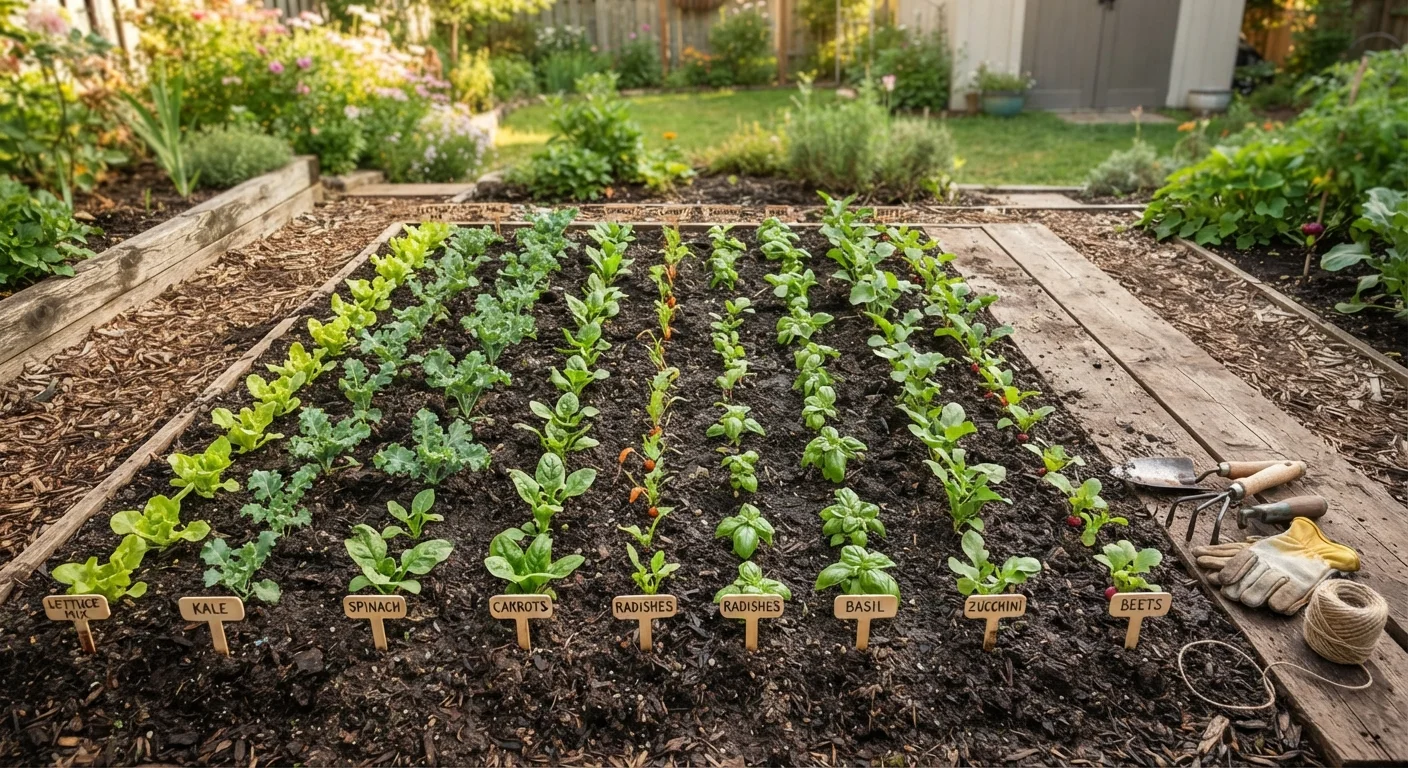
Choose vegetables your household actually eats, then filter that list by what's realistic for a beginner. Some crops are forgiving; others require precision timing, pest management, or space that a first-season gardener may not be ready for.
Reliable beginner crops:
- Lettuce and salad greens - fast, shade-tolerant, can be harvested repeatedly
- Radishes - mature in as little as 25 days, great for learning spacing and thinning
- Green beans - prolific producers with minimal fuss
- Zucchini - so productive it almost grows itself
- Cherry tomatoes - more forgiving than large-fruited varieties
- Herbs (basil, parsley, chives) - small-space-friendly and immediately useful in the kitchen
Think about companion planting from the start. Certain plant combinations deter pests, attract beneficial insects, or improve each other's growth. Our article on companion planting explains which pairings have real evidence behind them.
USDA Plant Hardiness Zone Map
Enter your ZIP code to find your official hardiness zone and understand which plants are suited to your climate - an essential first reference for any US gardener.
Local Cooperative Extension Service
Your state's land-grant university extension service offers free, region-specific guidance on soil testing, planting calendars, pest identification, and vegetable growing - tailored to your actual climate.
Home Composting Guide
Learn how to turn kitchen scraps and garden waste into rich compost that improves your vegetable beds year after year, reducing costs and waste simultaneously.
Sowing, Planting, and Early Care
Most vegetables can be direct-sown (seeds planted straight into the garden bed) or started indoors and transplanted. Direct sowing suits crops that dislike root disturbance - beans, carrots, radishes, and squash. Starting indoors gives tomatoes, peppers, and eggplant the longer growing season they need in most US climates.
Follow seed packet instructions for depth and spacing - they're written for your specific crop, not as a general suggestion. Thin seedlings as directed; overcrowding restricts airflow and invites disease. Water gently at the soil level rather than overhead to reduce fungal problems.
Don't Plant Too Early
Planting warm-season vegetables before your last frost date is one of the most common and costly beginner mistakes. Even a single overnight frost can kill tomato, pepper, and squash seedlings that took weeks to establish. Check your USDA hardiness zone and local last-frost calendar before transplanting any frost-sensitive crops outdoors.
Once seedlings are established, apply two to three inches of mulch (straw, shredded leaves, or wood chips) around - not touching - plant stems. Mulch slows moisture loss, moderates soil temperature, and suppresses weeds significantly.
Managing Your Garden Through the Season
Consistency beats intensity. A garden visited briefly every two or three days stays far healthier than one neglected for weeks and then frantically addressed. On each visit, look for wilting (watering signal), yellowing leaves (possible nutrient or disease issue), or pest activity, and act before small problems escalate.
Weeds compete directly with your vegetables for water and nutrients. Remove them while they're small - before they flower and set seed. A sharp hoe used regularly is faster and less tiring than hand-pulling established weeds.
Harvest regularly. Leaving ripe vegetables on the plant often signals the plant to slow production. Picking promptly encourages continued fruiting throughout the season.
As summer winds down, begin thinking about end-of-season care. Our winter garden prep guide walks through plant protection, soil care, and tool storage to set your garden up for a strong return next spring. You might also explore the no-dig gardening method as a lower-effort approach for future seasons.
Frequently Asked Questions
Most vegetables need a minimum of six hours of direct sunlight per day to produce well. Eight hours is better for fruiting crops like tomatoes, peppers, and squash. Leafy greens such as spinach and lettuce tolerate some shade and are more forgiving in partially shaded spots.
Timing depends on your USDA hardiness zone and last frost date. Cool-season crops like peas and lettuce can go in four to six weeks before the last frost. Warm-season crops - tomatoes, cucumbers, beans - should wait until after frost risk has passed. Check your local cooperative extension office for zone-specific planting calendars.
Most vegetable gardens need about one inch of water per week, from rainfall or irrigation. Rather than watering lightly every day, aim for deep, less frequent sessions that encourage roots to grow downward. Stick your finger two inches into the soil - if it's dry at that depth, it's time to water.
No. A basic set - trowel, garden fork or spade, hoe, and watering can or hose - covers most first-season tasks. Buy durable basics rather than a large quantity of cheap tools. You can always add specialty items as your needs become clearer.
Radishes, lettuce, zucchini, green beans, and cherry tomatoes are reliably forgiving for first-time gardeners. They germinate quickly, tolerate minor mistakes, and produce results fast enough to keep you motivated. Avoid starting with notoriously difficult crops like celery or artichokes in your first season.
Absolutely. Containers, grow bags, and small raised beds allow edible gardening on patios, balconies, and narrow urban plots. Our guide on <a href="/home-garden/garden-outdoors/growing-food-in-a-small-space-balconies-courtyards-and-narrow-plots">growing food in a small space</a> covers practical strategies for limited areas.
The content provided on our blog site traverses numerous categories, offering readers valuable and practical information. Readers can use the editorial team’s research and data to gain more insights into their topics of interest. However, they are requested not to treat the articles as conclusive. The website team cannot be held responsible for differences in data or inaccuracies found across other platforms. Please also note that the site might also miss out on various schemes and offers available that the readers may find more beneficial than the ones we cover.