

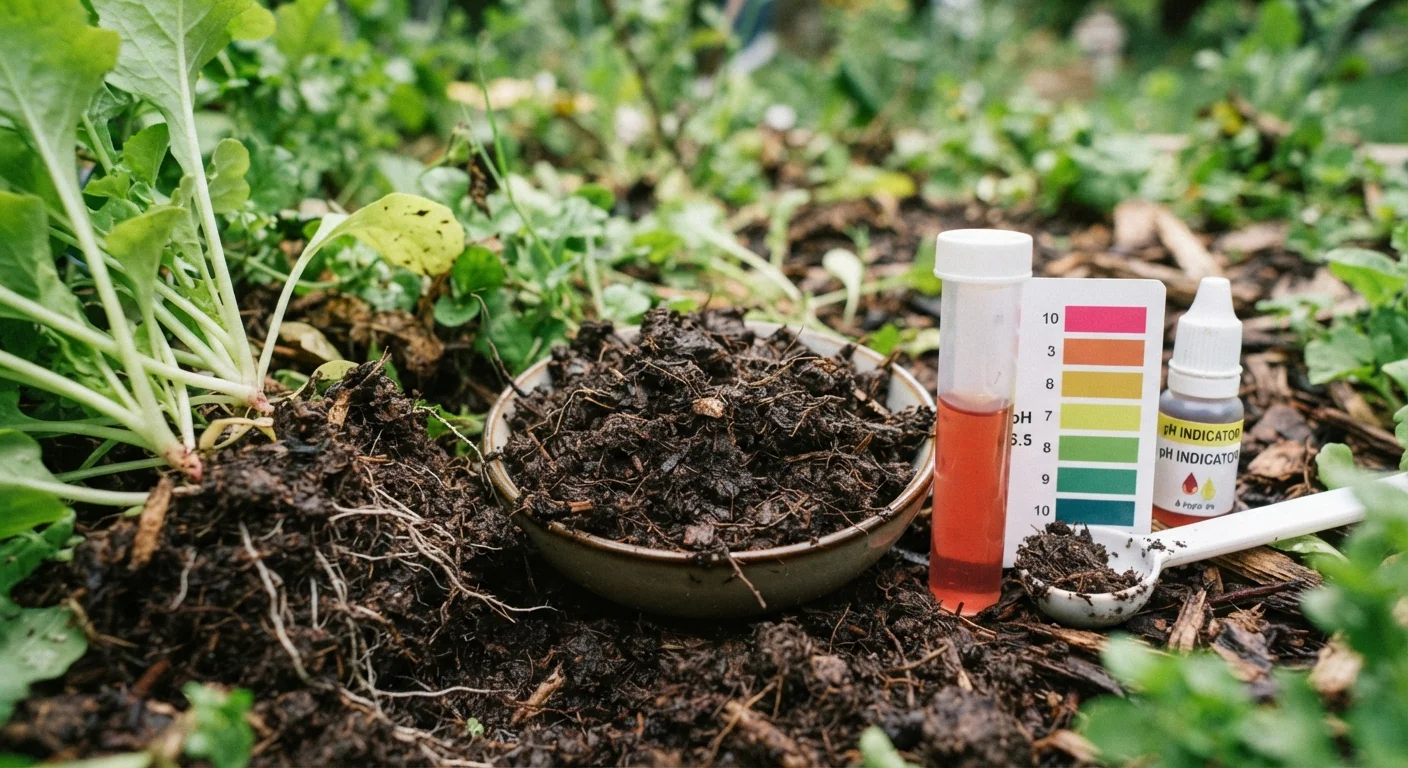
The Scale Explained
The pH scale runs from 0 to 14, but garden soil almost always falls somewhere between 4.5 and 8.5. Strongly acidic soils (below 5.5) are common in the Pacific Northwest and parts of the Southeast, often in areas with high rainfall that leaches away alkaline minerals. Alkaline soils (above 7.5) are more typical in arid regions like the Southwest, where mineral salts accumulate near the surface.
Understanding where your soil sits on this scale matters because it determines which nutrients stay dissolved in the soil water - and therefore which ones plant roots can actually absorb. A nutrient that's chemically bound to soil particles at the wrong pH might as well not be there at all.
pH and Soil Type Both Matter
Sandy soils and clay soils with the same pH can behave very differently. Clay holds more nutrients and resists pH change; sandy soil is easier to amend but also more prone to drift. When interpreting test results, consider your soil texture alongside the pH reading. Your local cooperative extension service can help interpret results in the context of your specific region.
Why pH Controls Nutrient Availability
Here's the part that surprises many gardeners: fertilizing without addressing pH can be a waste of effort. Most major nutrients - nitrogen, phosphorus, and potassium - are most available to plants in a slightly acidic to neutral range. When soil becomes too acidic, phosphorus binds tightly to iron and aluminum compounds, making it unavailable. In very alkaline soil, iron, manganese, and zinc become insoluble, leading to deficiency symptoms even in well-amended beds.
This explains why plants sometimes yellow or stall despite being fertilized regularly. If you're noticing unexplained poor growth, a pH test is often the right first step before reaching for more fertilizer. For a broader look at how fertilizer myths can complicate garden decisions, see common fertilizer misconceptions.
6.0-7.0
Optimal pH range for most vegetables
Soil science guidelines broadly supported by university extension programs across the US recommend this range for maximum nutrient availability in food gardens.
10×
Acidity difference per pH unit
Each whole number on the pH scale represents a tenfold change in hydrogen ion concentration, meaning pH 5 is ten times more acidic than pH 6.
4.5-5.5
Preferred pH for acid-loving plants
Plants such as blueberries, azaleas, and rhododendrons require a strongly acidic range to absorb iron and other micronutrients efficiently.
How to Test and Interpret Your Results
Testing your soil pH is straightforward. Basic home test kits provide a ballpark reading using color indicators. For a more detailed analysis - including nutrient levels and amendment recommendations - many US cooperative extension services offer affordable lab tests, often tailored to your state's soil types and climate conditions.
Once you have a number, compare it against the preferred range for what you're growing. Most vegetables and annual flowers target 6.0-7.0. Blueberries and azaleas prefer 4.5-5.5. Lilacs and clematis do well in slightly alkaline conditions around 7.0-7.5. If your soil pH is significantly off from your plants' preferences, amendments are worth considering.
Test Before You Amend
Never add lime or sulfur based on guesswork - over-correcting pH can be as problematic as leaving it unchanged. Take a baseline test, amend conservatively, then retest after several months. Most extension services recommend testing every two to three years as part of routine garden maintenance.
Adjusting pH: What Actually Works
Raising soil pH (making it less acidic) is typically done with ground limestone, commonly called agricultural lime. Calcitic lime adds calcium; dolomitic lime adds both calcium and magnesium, which may be useful if your soil is also deficient in magnesium. Application rates depend on your current pH, your target pH, and your soil texture - clay soils require more amendment than sandy ones to shift the same number of points.
Lowering pH (making soil more acidic) is usually accomplished with elemental sulfur, which soil bacteria convert into sulfuric acid over weeks or months. Acidic organic materials like pine bark or peat moss can help maintain lower pH over time, though they won't produce dramatic swings on their own.
Whichever direction you need to go, patience is essential. Plan amendments several months ahead of planting, and retest before making additional changes. If your native soil pH is very far from your target, it's often more practical to grow pH-sensitive plants in containers or raised beds where you have more control. See our look at raised beds vs. in-ground planting for more on that trade-off.
Working With Your Natural pH
One underappreciated approach is to choose plants that match your existing soil pH rather than trying to alter it dramatically. Native plants and locally adapted varieties are often selected precisely because they suit regional soil chemistry. If your soil tests at 5.5, growing blueberries, rhododendrons, or ferns may be far simpler than trying to raise pH for vegetable crops that only barely tolerate those conditions.
Understanding your soil's natural character also connects well to other garden fundamentals - like how companion planting and hardiness zone selection shape which plants will genuinely thrive in a given spot. Soil pH is one piece of a larger puzzle, but it's foundational - getting it right underpins nearly everything else you do in the garden.
Frequently Asked Questions
Most common vegetables - including tomatoes, beans, and lettuce - prefer a slightly acidic pH between 6.0 and 6.8. This range allows the widest range of nutrients to stay soluble and accessible to roots. Some exceptions, like potatoes, prefer slightly more acidic conditions around 5.0-6.0.
Inexpensive test kits are available at garden centers and use a color-change reaction on a soil sample. For greater accuracy, consider sending a sample to your local cooperative extension service, which can also recommend specific amendments for your region.
Meaningful pH changes typically take several months as amendments integrate into the soil. It's best to test and amend in fall for spring planting. Applying lime or sulfur just before planting is unlikely to shift conditions enough to matter.
Yellowing despite fertilizing is a classic sign of a pH problem. If the soil is too acidic or alkaline, nutrients like iron, manganese, or phosphorus can become chemically locked and unavailable - even when they're physically present in the soil.
Raised beds give you more control over starting pH since you can fill them with a known mix. However, pH still drifts over time due to rainfall, organic matter breakdown, and plant uptake. Regular testing applies to raised beds just as it does to in-ground planting.
The content provided on our blog site traverses numerous categories, offering readers valuable and practical information. Readers can use the editorial team’s research and data to gain more insights into their topics of interest. However, they are requested not to treat the articles as conclusive. The website team cannot be held responsible for differences in data or inaccuracies found across other platforms. Please also note that the site might also miss out on various schemes and offers available that the readers may find more beneficial than the ones we cover.