

Our Verdict
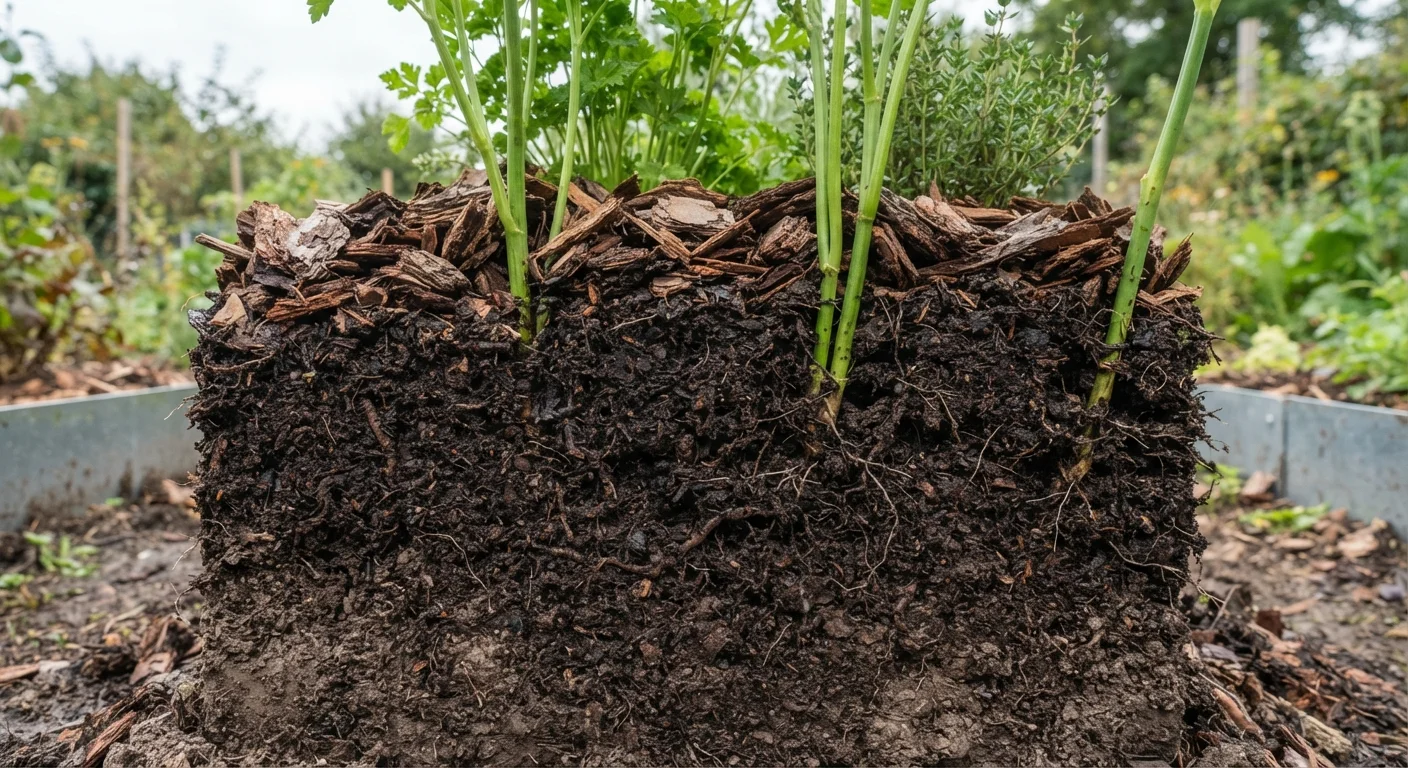
Organic mulches are the stronger long-term investment for soil health, feeding microbial life and improving structure with each season. Inorganic options earn their place in low-maintenance landscapes, paths, and arid climates where permanence matters more than fertility. The smartest gardens often use both strategically.
| Best for | Recommended |
|---|---|
| Gardeners prioritizing soil improvement and plant nutrition | Organic mulch (bark chips, compost, straw) |
| Pathways, driveways, and decorative landscape areas | Inorganic mulch (gravel or crushed stone) |
| Vegetable beds and annual planting areas | Straw or shredded leaf mulch |
| Low-water xeriscape or desert-style gardens | Gravel or decomposed granite |
Why Mulch Choice Matters More Than You Might Think
Most gardeners think of mulch as a finishing touch - something that tidies up a bed and keeps weeds down. But what you spread across your soil surface sets off a chain of biological and physical events that shapes everything from root development to drought resilience. The distinction between organic and inorganic mulch is not just about materials; it's about two fundamentally different relationships with your soil.
Organic mulches - bark chips, straw, shredded leaves, wood chips, and compost - are derived from plant or animal matter. They decompose. Inorganic mulches - gravel, crushed stone, landscape fabric, and rubber crumb - do not. That single difference drives almost every other contrast between them. Understanding it helps you choose not just what looks right, but what actually works for your garden's long-term goals.
For gardeners already thinking about soil structure and biology, this choice connects directly to practices like no-dig gardening, where surface layering is the primary tool for soil improvement.
How Organic Mulch Transforms Soil Over Time
When bark chips or straw sit on the soil surface, they begin breaking down through microbial activity - fungi, bacteria, and invertebrates colonize the material from below. This decomposition does several things simultaneously:
- Feeds soil biology: Earthworms and beneficial microbes multiply as organic matter becomes available, improving nutrient cycling and aeration naturally.
- Improves soil structure: As material breaks down and gets incorporated, it adds humus - the stable, spongy component that helps soil hold water and resist compaction.
- Moderates temperature extremes: A 3-inch layer of wood chip mulch can buffer soil temperature significantly, protecting roots in both summer heat and winter cold.
- Gradual nutrient release: Decomposing organic matter releases nitrogen, phosphorus, and trace minerals slowly - though the rate and quantity vary by material.
The trade-off is that organic mulches require replenishment - typically once or twice a year depending on the material. Fine mulches like straw break down faster than hardwood bark. This ongoing cycle is a feature, not a bug, for beds where you want continuous soil improvement. Pairing mulching with home composting creates a near-closed loop of organic inputs.
Keep Mulch Away From Plant Stems
One of the most common mulching mistakes is piling material directly against tree trunks or plant stems - sometimes called 'volcano mulching.' This traps moisture against bark, encouraging rot and pest activity. Keep a 2-4 inch gap around stems and trunks, and aim for a consistent 2-4 inch depth across the rest of the bed.
What Inorganic Mulch Does - and Doesn't Do
Gravel, pea stone, and landscape fabric deliver real benefits: they suppress weeds effectively, don't need seasonal replacement, and can dramatically reduce evaporative water loss in the right conditions. In arid climates or xeriscaped areas, stone mulch actually stores heat during the day and releases it at night, which can extend the growing season for heat-loving plants.
But the soil beneath inorganic mulch tells a different story over years of use. Without decomposing organic matter reaching the soil surface, microbial populations tend to decline. Compaction can increase. Landscape fabric in particular is frequently cited by experienced gardeners as a long-term problem: it restricts gas exchange, can become matted with roots, and gradually fills with debris that supports weed growth anyway - while becoming nearly impossible to remove cleanly.
Landscape Fabric Has Real Long-Term Drawbacks
Despite being widely sold as a permanent weed solution, landscape fabric often creates more problems than it solves in planted areas. Over time, it restricts beneficial soil organisms, traps debris that supports weed seed germination on top of the fabric, and becomes entangled with plant roots - making removal difficult without disturbing the entire bed. Reserve it for truly permanent non-planted zones, if at all.
Gravel and stone, used without landscape fabric over well-prepared soil, tend to perform better long-term than fabric alone. They allow some rainfall infiltration and don't physically block root and worm movement in the same way fabric does.
| Bark Chips | Straw | Gravel / Stone | Landscape Fabric | |
|---|---|---|---|---|
| Soil health impact | Improves over time | Improves moderately | Neutral to slight decline | Can decline with long use |
| Weed suppression | Good (2-4 inch depth) | Moderate | Good with depth | Good initially, degrades |
| Moisture retention | Very good | Good | Good in arid climates | Good short-term |
| Longevity | 1-3 years | 3-12 months | Indefinite | 5-10 years |
| Annual maintenance | Top-up required | Frequent replacement | Minimal | Low until it fails |
| Best application | Trees, shrubs, borders | Vegetable beds | Paths, xeriscaping | Non-planted zones only |
Matching Mulch to Your Garden's Actual Needs
The right choice depends on what you're trying to achieve in a specific area of your garden, not across the entire yard uniformly.
Vegetable and annual beds benefit most from fast-decomposing organics - straw, shredded leaves, or even a thin layer of finished compost. These replenish nutrients through the growing season and are easy to incorporate at season's end. This pairs well with thinking about raised bed versus in-ground growing, since each setup has different moisture and organic matter needs.
Established ornamental beds and trees are ideal candidates for hardwood bark chips or shredded bark. These break down slowly enough to last a full season while still feeding soil life beneath.
Pathways and non-planting zones are where gravel and crushed stone genuinely shine - zero maintenance, no annual top-up, and excellent drainage underfoot.
Slopes and erosion-prone areas often do better with heavier organic materials like wood chips, which interlock and stay put better than lightweight straw, or with stone that anchors into place.
2-4 inches
Recommended mulch depth for most beds
University cooperative extension programs across the US generally recommend this depth range to balance weed suppression, moisture retention, and gas exchange.
25-50%
Potential reduction in soil moisture loss
Research from various horticultural studies suggests organic mulch layers can substantially reduce evaporative water loss compared to bare soil, with results varying by climate and material.
The content provided on our blog site traverses numerous categories, offering readers valuable and practical information. Readers can use the editorial team’s research and data to gain more insights into their topics of interest. However, they are requested not to treat the articles as conclusive. The website team cannot be held responsible for differences in data or inaccuracies found across other platforms. Please also note that the site might also miss out on various schemes and offers available that the readers may find more beneficial than the ones we cover.