

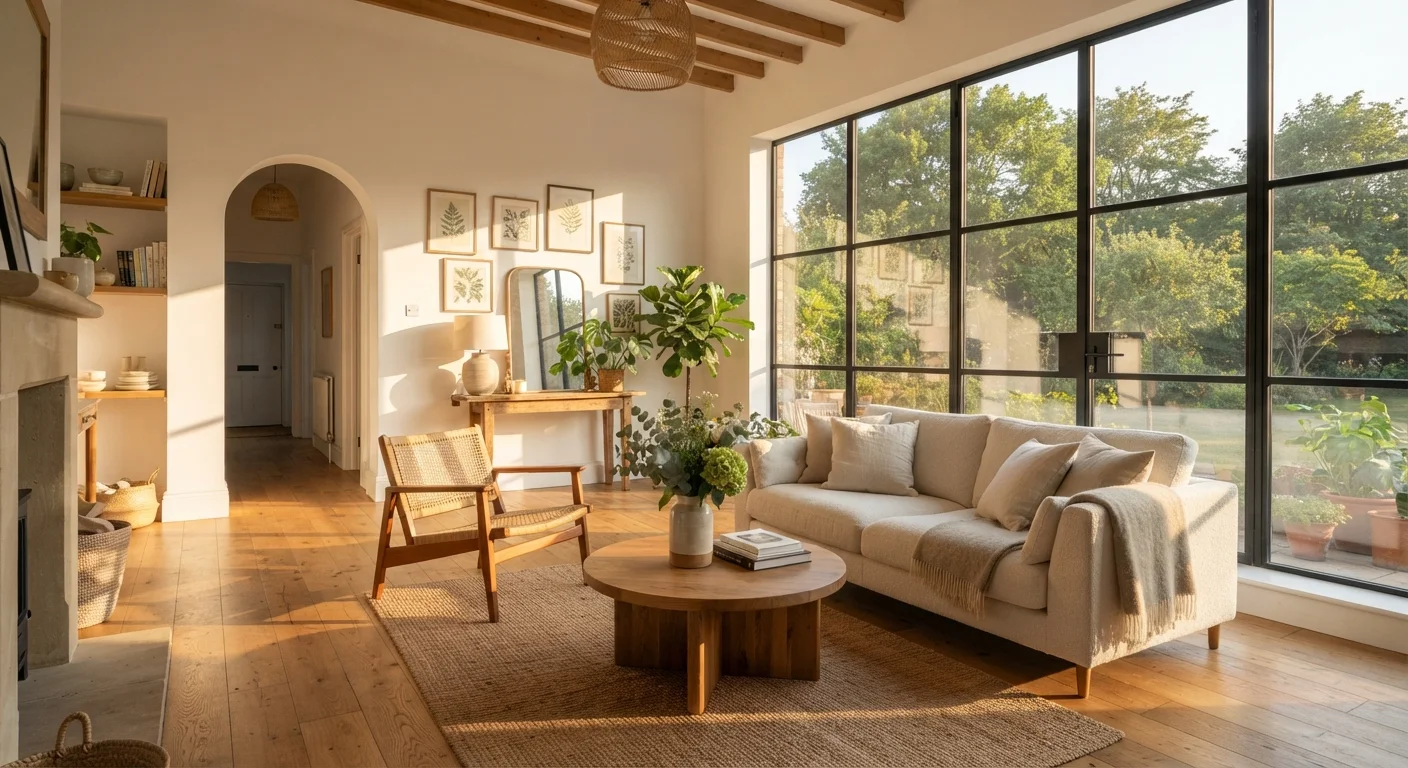
Why Window Direction Changes Everything
Before you choose a paint colour, a sofa fabric, or a rug, it's worth understanding what kind of natural light actually enters your room. The compass direction your windows face is the single biggest determinant of your room's light character - and it's fixed. You can't change it, but you can design around it intelligently.
North-facing rooms receive indirect, diffused light throughout the day. The light is consistent but cool, with a bluish or gray quality that can make colours read differently than they would in a showroom. South-facing rooms enjoy the longest daily sun exposure and the warmest, most reliable light - ideal conditions for almost any colour palette. East-facing rooms get warm, low-angle morning light that shifts to shadow by early afternoon, making them excellent for bedrooms and breakfast spaces. West-facing rooms are dim in the morning but fill with warm, golden light in the late afternoon, which can be dramatic and flattering - or overwhelming, depending on the season.
Understanding this foundation is the starting point for every design decision that follows. For a broader grounding in how light fits into the bigger picture, see our guide to core interior design concepts.
~30%
Of home energy used for lighting
According to the U.S. Department of Energy, lighting accounts for roughly 15-30% of home electricity use, making natural light a meaningful factor in energy efficiency considerations.
2,000-6,500K
Natural daylight colour temperature range
Daylight shifts from warm amber at sunrise to cool blue-white at midday - a range that directly impacts how interior colours and materials appear throughout the day.
How Natural Light Interacts with Colour
Paint companies print their chips under controlled lighting - your room isn't controlled. Every wall colour shifts in appearance depending on the light it receives, and that shift can be subtle or striking. A warm greige can look muddy and cold in a north-facing room; the same tone glows in a south-facing one. A crisp white can appear lavender under cool indirect light or cream-yellow in late afternoon western sun.
This is why interior designers consistently advise testing large paint samples - at least 12 by 12 inches - on your actual walls before committing to a full room. Observe each sample across morning, midday, and evening light. What you're looking for isn't just a colour you like in one moment; you're looking for a colour that works across the full range of your room's daily light cycle.
Test Paint in Real Conditions
Always paint large test swatches - at least a foot square - directly on your walls rather than relying on small chips or phone photos. Observe the samples at three different times: morning, midday, and evening with artificial light on. This simple step prevents costly repaints and reveals how a colour truly lives in your specific space.
The relationship between light and colour also extends to your furnishings. Warm wood tones absorb and soften cool light; high-gloss surfaces bounce and amplify whatever light hits them. If you're weighing palette options, our article on warm versus cool colour directions goes deeper into how these choices ripple through a space.
Practical Ways to Work With - and Amplify - Your Light
Once you understand your room's light profile, you can make deliberate choices that enhance its best qualities and soften its limitations.
- Use mirrors strategically. A mirror placed on a wall perpendicular to a window reflects daylight back into the room, effectively doubling its reach. This is especially valuable in hallways or north-facing rooms where light is limited.
- Choose window treatments that serve the light. Heavy drapes block light even when pulled to the sides. Sheer linen panels filter and diffuse without sacrificing much brightness. Cellular shades allow you to manage glare without eliminating the light itself.
- Consider reflective surfaces. Glossy or semi-gloss paint finishes, light-coloured flooring, and furniture with glass or metallic elements all help circulate daylight around a room.
- Don't block windows with furniture. Tall bookshelves or the backs of sofas pushed against windows interrupt the light path. Even modest repositioning can improve how light spreads across the room - a point worth revisiting with our furniture layout guidance.
And for the hours after sundown, natural light's partner matters just as much - see artificial lighting strategies for how to maintain atmosphere when daylight fades.
Light, Space, and the Rooms That Surprise You
One of the most common misconceptions in home design is that dark rooms can't be stylish, or that the only fix for a dim space is to paint everything white. In reality, the relationship between light and spatial perception is more nuanced. A north-facing room with limited windows might actually benefit from a rich, deep wall colour that leans into the room's moody character rather than fighting it.
“Light is not so much something that reveals as it is itself the revelation. The best rooms I've ever been in weren't about the furniture or the finishes - they were about how the light moved through them.”
— A practising interior designer, Residential interior design professional with over two decades of experience
Similarly, a bright, south-facing room doesn't automatically look good with every light colour - too much reflectivity can feel clinical or harsh. The goal isn't maximum brightness; it's balance and intentionality. If you've been avoiding darker tones out of fear of making a room feel smaller, our piece on why dark paint colours deserve more credit may shift your perspective. Understanding your room's natural light is what allows you to make these bolder choices with confidence rather than guesswork.
Frequently Asked Questions
Paint colours react to the specific light in your room, which is shaped by window direction, time of day, and surrounding surfaces. A swatch tested under store fluorescent lighting will look very different from the same colour on a north-facing wall in afternoon shade. Always test large painted samples on your actual walls and observe them at different times of day before committing.
In the Northern Hemisphere, south-facing rooms receive the most consistent natural light throughout the day and across seasons. North-facing rooms get indirect, cooler light with fewer dramatic shifts. East-facing rooms are bright in the morning and dim by afternoon; west-facing rooms do the opposite.
Mirrors placed opposite or adjacent to windows reflect light deeper into a room. Choosing lighter wall colours, furniture, and flooring bounces existing light around. Trimming outdoor vegetation that blocks windows and switching to sheer window treatments instead of heavy drapes can also make a noticeable difference.
Research in environmental psychology broadly supports the idea that daylit spaces tend to feel more uplifting and less fatiguing than artificially lit ones. Bright, well-lit rooms are often perceived as more spacious and welcoming, while low-light rooms can feel intimate or, if poorly designed, gloomy.
Yes - window orientation is one of the most practical factors to consider when selecting paint. Cool-toned rooms (north or east-facing) can feel harsh with stark whites or grays; warmer hues tend to counterbalance the coolness. South and west-facing rooms can handle cooler tones more gracefully because the warmth of their sunlight brings balance.
The content provided on our blog site traverses numerous categories, offering readers valuable and practical information. Readers can use the editorial team’s research and data to gain more insights into their topics of interest. However, they are requested not to treat the articles as conclusive. The website team cannot be held responsible for differences in data or inaccuracies found across other platforms. Please also note that the site might also miss out on various schemes and offers available that the readers may find more beneficial than the ones we cover.