

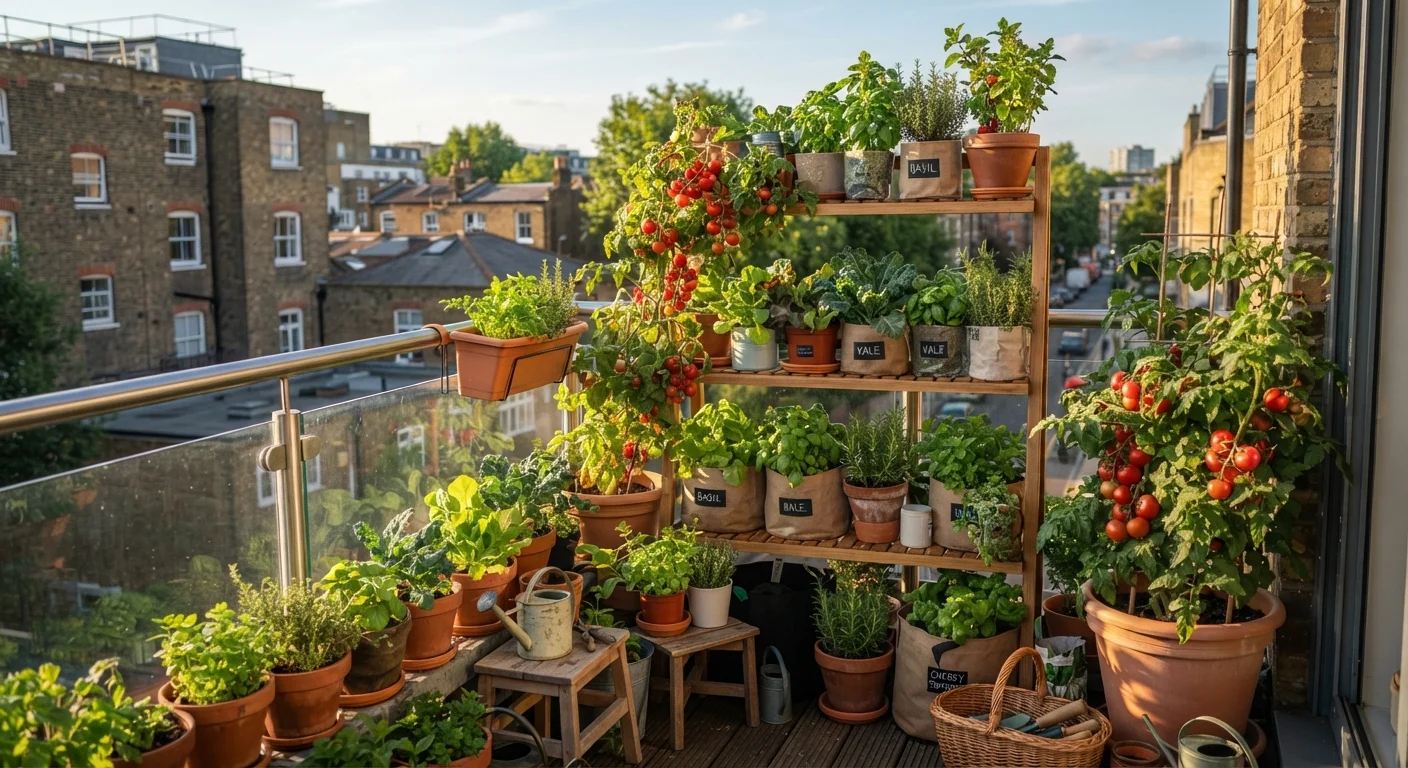
Why Small Spaces Can Still Grow Real Food
The assumption that food growing requires a large backyard is one of the most common barriers urban gardeners face - and one of the easiest to overcome. Balconies, narrow side yards, courtyard corners, and even well-lit stairwells have all been used successfully to grow meaningful quantities of herbs, salad greens, and fruiting vegetables.
The key shift is thinking in volume and layers rather than surface area. A single square meter of balcony, used with tiered shelving and vertical supports, can realistically host a dozen different edible plants. The goal isn't to replace grocery shopping entirely - it's to cultivate fresh produce on demand and connect more directly with what you eat. If you're also looking to make better use of what you grow, eating well on a tight schedule offers practical ideas for incorporating home-grown ingredients into weekday meals.
What you will need
Before gathering materials, you'll also want to consider whether companion planting strategies could improve your small-space yield. Our guide on companion planting principles explains which plant combinations are worth trying and why.
Containers (various sizes)
Used to grow crops without ground access - choose depths appropriate to each plant type.
High-quality potting mix
Provides adequate drainage, aeration, and nutrients for container-grown edibles.
Watering can or drip irrigation kit
Ensures consistent moisture, which is critical for container crops in warm weather.
Wall-mounted or freestanding plant shelving
Expands vertical growing space on balconies and narrow plots.
Slow-release fertilizer or liquid feed
Replenishes nutrients that drain away with frequent container watering.
Trellis or bamboo canes
Supports climbing crops like beans, cucumbers, and indeterminate tomatoes vertically.
Step-by-Step: Setting Up Your Small-Space Food Garden
Check Weight Limits Before You Start
Balconies and rooftop spaces have structural weight limits that vary by building. A collection of large, soil-filled containers can easily exceed safe load ratings when wet. Before purchasing containers or shelving, consult your building manager or a structural professional if you are uncertain about your balcony's capacity. This is especially important in older apartment buildings.
Follow these steps in order - skipping the sunlight assessment or drainage setup in favor of buying plants first is the most common cause of early failure in container gardens.
Assess your sunlight honestly
Before buying a single seed or pot, spend a full day observing how sunlight moves across your space. Most food crops need at least 6 hours of direct sun daily. Mark which zones receive full sun, partial shade, and deep shade at different times of day.
South- and west-facing balconies and courtyards generally receive the most sun in the US. North-facing spaces or those heavily shaded by buildings can still support leafy greens and herbs like mint, parsley, and chives, which tolerate lower light than fruiting crops.
Choose crops that suit your conditions
Match plants to your assessed light levels and available container depth. Shallow containers (6-8 inches deep) work well for lettuce, radishes, herbs, and green onions. Medium containers (10-12 inches) support bush beans, beets, and spinach. Deeper containers (14 inches or more) are needed for tomatoes, peppers, and cucumbers.
For beginners, herbs are an excellent starting point - they produce quickly, tolerate some neglect, and integrate well into everyday cooking. If your goal is to supplement meals meaningfully, prioritize high-yield crops like cherry tomatoes, cut-and-come-again lettuce, and climbing beans. See our introduction to growing vegetables from scratch for a broader crop overview.
Set up containers with proper drainage
Fill containers with a quality potting mix - never garden soil, which compacts in pots and restricts root growth. Ensure each container has drainage holes; standing water is the leading cause of root rot in container gardens. Elevate pots slightly on pot feet or bricks to allow free drainage.
For balconies, be mindful of drainage runoff affecting neighbors below. Use saucers where needed, but empty them after heavy rain to avoid waterlogging roots. Raised beds vs. in-ground planting explores how drainage principles compare across different growing setups.
Maximize space with vertical growing
Wall-mounted planters, tiered shelving, hanging baskets, and trellises transform flat footprint into productive growing volume. Install a simple trellis against a sunny wall to train climbing beans, peas, or cucumbers upward - these crops produce abundantly without sprawling outward.
Stagger container heights on shelving to ensure lower plants still receive adequate light. This also improves air circulation, which reduces the risk of fungal issues in humid conditions. If you're designing the broader space around your food garden, our article on designing an outdoor living area that gets used covers how to balance planting zones with seating and flow.
Establish a watering and feeding routine
Container plants dry out far faster than in-ground beds, especially in warm weather or on exposed balconies. Check moisture by pressing a finger an inch into the soil - water when it feels dry at that depth. In summer, daily watering is often necessary for larger containers.
Nutrients leach out with each watering, so supplement with a balanced liquid feed every one to two weeks during the growing season, or incorporate a slow-release granular fertilizer at planting time. To further enrich your potting mix over time, composting kitchen scraps at home can produce a nutrient-rich amendment to add each season.
Harvest regularly to encourage continued production
Many crops produce more when harvested consistently. Cut-and-come-again lettuces, herbs, and beans all benefit from regular picking that prevents the plant from going to seed. Harvest in the morning when possible, as produce is freshest after a cool night.
Keep a small notebook or phone note tracking what you planted, when it germinated, and how it performed. This seasonal record becomes invaluable for refining your choices next year - which varieties thrived, which containers were too small, and which spots were shadier than expected.
Start Small, Then Expand
Beginning with just three to five containers lets you learn your space's quirks - sun movement, wind exposure, and drainage behavior - before investing heavily. Most experienced small-space gardeners recommend mastering a handful of reliable crops first, then adding variety in subsequent seasons as confidence grows.
Once your setup is working well, you might consider how your food garden fits into the broader outdoor space. Our piece on designing an outdoor living area can help you balance planting zones with seating and everyday use.
The content provided on our blog site traverses numerous categories, offering readers valuable and practical information. Readers can use the editorial team’s research and data to gain more insights into their topics of interest. However, they are requested not to treat the articles as conclusive. The website team cannot be held responsible for differences in data or inaccuracies found across other platforms. Please also note that the site might also miss out on various schemes and offers available that the readers may find more beneficial than the ones we cover.