

Our Verdict
DIY car maintenance works best when limited to inspection, fluid top-ups, and straightforward part swaps that carry minimal risk if done incorrectly. Anything touching safety-critical systems - brakes, steering, suspension, electrical - should be handled by a qualified mechanic. The goal isn't to do everything yourself; it's to do the right things yourself and know when to hand the job over.
| Best for | Recommended |
|---|---|
| Drivers comfortable with basic tools and light upkeep | DIY maintenance for fluid checks, filters, and wipers |
| Safety-critical repairs or unfamiliar systems | Qualified mechanic |
| New or time-pressed vehicle owners | Professional servicing with owner oversight |
The Case for Knowing Your Limits
There's real value in understanding what goes on under your hood. Drivers who engage with basic maintenance tend to catch problems earlier, spend less on reactive repairs, and feel more confident on the road. But not every task belongs in the home driveway - and misjudging your skill level on the wrong job can create genuine safety risks.
The line between DIY-friendly and mechanic-required isn't always obvious. It depends on the task's complexity, the tools required, and - critically - the consequences if something goes wrong. New drivers especially benefit from understanding this distinction early, before an overconfident repair leads to a bigger problem.
Start With Your Owner's Manual
Your vehicle's owner's manual is the most reliable guide to maintenance intervals, fluid specifications, and component locations for your exact model. Before attempting any DIY task - or evaluating whether to try one - check what the manufacturer says. Many drivers overlook this resource entirely, then follow generic advice that doesn't match their vehicle's requirements.
Tasks Most Drivers Can Handle Safely
Several routine maintenance jobs are genuinely low-risk for attentive owners willing to read their owner's manual and work carefully. These tasks typically require basic tools, carry minimal safety consequences if performed slightly imperfectly, and are well-documented for most vehicles.
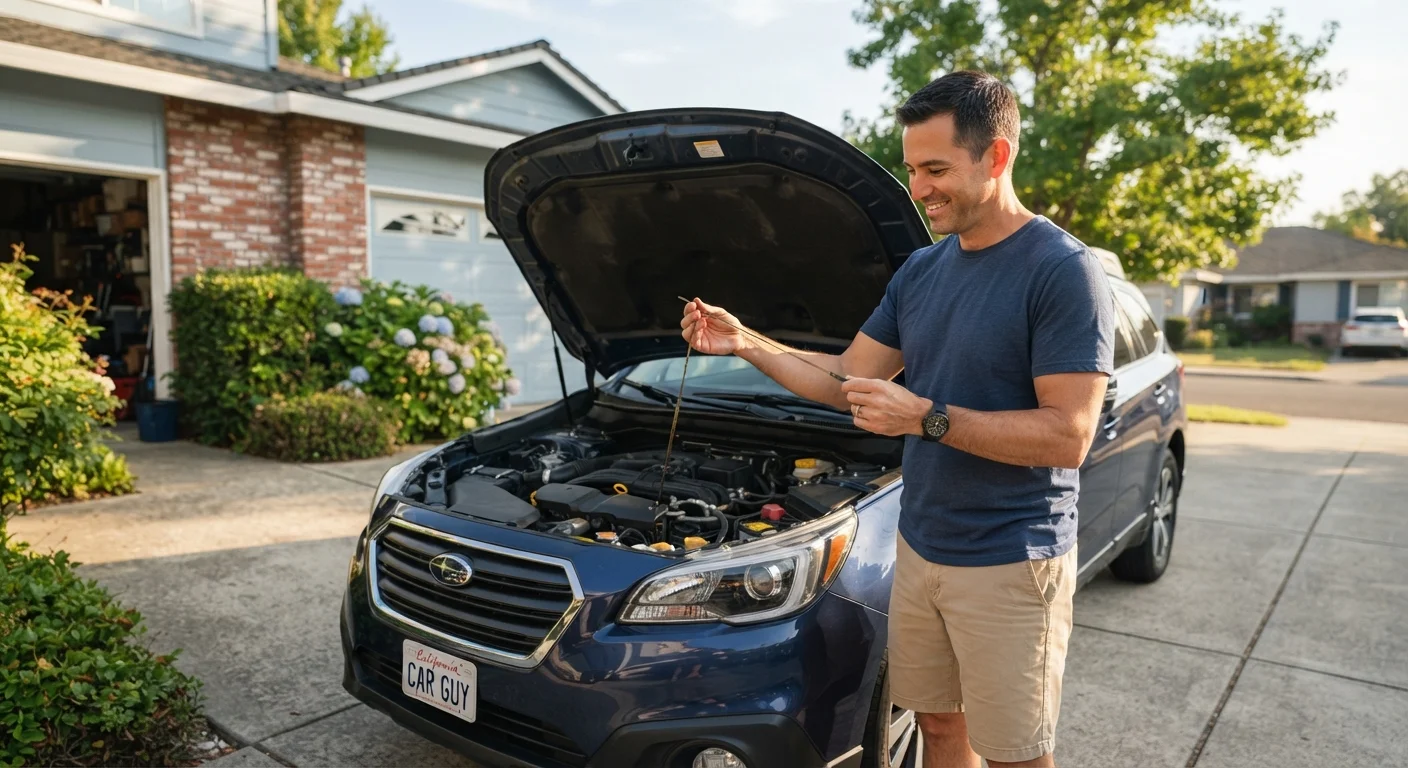
- Checking and topping up fluids: Engine oil, coolant, washer fluid, and brake fluid levels are designed to be checked by the vehicle owner. Understanding what each fluid does helps you spot irregularities before they escalate. Always use the type and grade specified in your owner's manual.
- Replacing wiper blades: Most wiper blades clip on and off without tools. Replacement intervals vary by climate and usage.
- Swapping cabin and engine air filters: Both are typically accessible without specialized equipment. A clogged cabin filter affects interior air quality; a dirty engine air filter can reduce performance. Check your manual for location and the correct filter specification.
- Replacing a dead battery: Straightforward on most vehicles, though some modern cars with battery management systems may require a technician to register the new battery to the vehicle's computer. Battery health basics are worth understanding before you reach for the wrench.
- Checking tire pressure and tread depth: A tire pressure gauge costs a few dollars. Correct inflation improves fuel economy and handling; tread depth affects wet-weather safety. The penny test is a widely used rough check for tread wear.
| Task | DIY-Friendly | Requires a Mechanic | |
|---|---|---|---|
| Engine oil check / top-up | Yes - owner's manual guidance | Only if leak suspected | |
| Wiper blade replacement | Yes - clips on easily | Not typically needed | |
| Air filter replacement | Yes - accessible on most vehicles | Not typically needed | |
| Tire pressure check | Yes - gauge required | If TPMS sensor fault present | |
| Brake pad replacement | Risky without proper tools | Recommended | |
| Suspension / steering parts | Not recommended | Required - alignment needed | |
| Timing belt / chain | Not recommended | Specialized tools required | |
| Airbag system | Never - serious injury risk | Required by regulation |
Tasks That Belong With a Qualified Mechanic
Some jobs look approachable in a video tutorial but carry real risk when performed without proper training, calibrated tools, or a controlled environment. Getting these wrong doesn't just mean a wasted afternoon - it can mean brake failure, steering loss, or an airbag deploying unexpectedly.
Don't Let Online Tutorials Overestimate Your Setup
Video tutorials make complex repairs look straightforward, but they rarely show the specialized tools, vehicle lifts, or diagnostic equipment used off-camera. Working without the right equipment on safety-critical components - especially brakes and steering - can create hazards that aren't immediately obvious. If you can't replicate the full setup shown, reconsider whether the job belongs in your driveway.
- Brake system repairs: Brake pad replacement may seem simple, but improper installation, incorrect torque on caliper bolts, or contaminated rotors can cause brake fade or failure. Hydraulic brake line work compounds the risk further.
- Suspension and steering components: Worn ball joints, tie rods, or struts require precise alignment after replacement. Incorrect assembly can make a vehicle handle unpredictably at speed.
- Timing belt or chain replacement: A mistimed engine can cause catastrophic internal damage. This job requires specialized tools and exact procedure.
- Airbag system work: Federal regulations and manufacturer guidance restrict airbag system repairs to trained technicians. The pyrotechnic charges involved can cause serious injury if mishandled.
- Transmission service beyond fluid changes: Internal transmission work requires specialized diagnostic equipment and expertise. Even fluid changes on some automatic transmissions require care to avoid overfill.
Skipping scheduled professional servicing to save money tends to compound into larger repair bills - a pattern worth avoiding.
Building a Smarter Maintenance Routine
The most effective approach combines owner vigilance with professional expertise. Regular visual inspections - checking for fluid leaks, unusual tire wear, or warning lights - give you early information that helps you have informed conversations with your mechanic.
A seasonal maintenance calendar helps ensure nothing gets overlooked across the year. Pairing that with consistent ownership habits - like monitoring tire pressure monthly and tracking fluid levels - keeps you ahead of most common failures.
Before attempting any DIY task, confirm the procedure in your vehicle's owner's manual, gather the correct tools and parts to specification, and be honest about whether you're set up to do it safely. If there's meaningful doubt, the cost of a professional service is almost always less than the cost of correcting a mistake on a safety-critical system.
~35%
Of vehicle breakdowns linked to neglected maintenance
Industry estimates from roadside assistance data consistently attribute a significant share of breakdowns to maintenance items owners could monitor regularly.
4 in 10
Drivers who check tire pressure monthly
Surveys by the US Tire Manufacturers Association have found that a substantial majority of drivers check tire pressure less often than recommended.
The content provided on our blog site traverses numerous categories, offering readers valuable and practical information. Readers can use the editorial team’s research and data to gain more insights into their topics of interest. However, they are requested not to treat the articles as conclusive. The website team cannot be held responsible for differences in data or inaccuracies found across other platforms. Please also note that the site might also miss out on various schemes and offers available that the readers may find more beneficial than the ones we cover.