

Why Fluids Matter More Than Most Drivers Realize
Your car is more than metal and rubber - it's a network of systems that depend on the right fluids flowing in the right places. Without adequate lubrication, cooling, and hydraulic pressure, even a well-built engine can fail within minutes. Yet fluid checks remain one of the most neglected parts of routine car ownership.
The good news: monitoring your vehicle's fluids doesn't require mechanical training. It requires only a few minutes, the right information, and a commitment to checking regularly. This guide covers every major fluid in plain language - what it does, where to find it, and when to act. For a broader pre-drive checklist, see our pre-journey vehicle check guide.
~40%
Engine failures linked to lubrication issues
Industry estimates suggest a significant proportion of premature engine failures involve inadequate or degraded oil - underlining the importance of regular checks.
2 years
Typical brake fluid replacement interval
Many vehicle manufacturers recommend replacing brake fluid every one to two years due to moisture absorption, regardless of mileage driven.
5 minutes
Time needed for a basic fluid inspection
A monthly check of oil, coolant, and washer fluid levels takes only a few minutes and can prevent costly mechanical failures.
Engine Oil: The Lifeblood of Your Powertrain
Engine oil lubricates hundreds of moving metal parts, reduces friction-generated heat, and carries microscopic debris away from critical surfaces. Without it, metal grinds on metal - and damage happens fast.
How to Check It
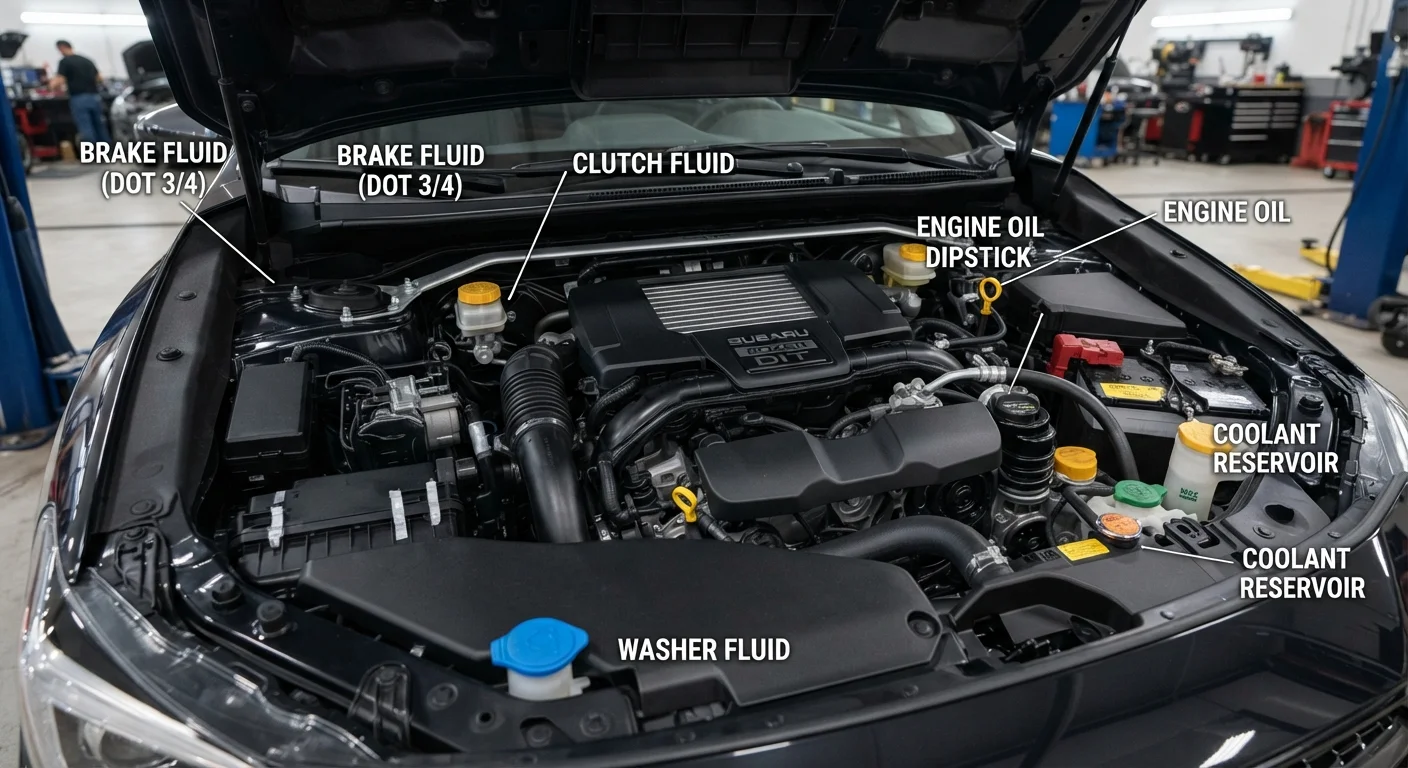
Park on level ground, let the engine cool for a few minutes, then pull the dipstick (usually marked with a yellow or orange ring). Wipe it clean, reinsert fully, then pull again. The oil should sit between the two marks on the dipstick and appear amber to dark brown. Black, gritty, or milky oil signals it's time for a change - or potentially something more serious.
When to Top Up or Change
Top up if the level is at or below the lower mark using the grade specified in your owner's manual - grades like SAE 5W-30 aren't interchangeable between vehicles. Change intervals vary widely by vehicle and oil type; always follow your manufacturer's recommendation rather than a generic mileage rule.
Check your oil when the engine is warm but not just switched off - give it five minutes to drain back into the sump for an accurate dipstick reading.
Oil checked immediately after switching off a hot engine may still be circulating through the system, giving a falsely low dipstick reading and leading to unnecessary top-ups.
Keep a small bottle of the correct engine oil in your trunk so you can top up confidently if a warning light appears on the road.
Using the wrong grade in an emergency can cause more harm than a slightly low level. Carrying the right oil eliminates the guesswork at a service station.
Coolant: Keeping Temperatures in Check
Engine coolant - also called antifreeze - circulates through your engine and radiator to absorb excess heat and release it to the air. It also contains additives that prevent corrosion and, depending on the mixture, protects against freezing in cold climates.
Where to Find It
Look for a translucent plastic reservoir near the radiator, usually marked with a min/max line. Never open the radiator cap on a hot engine - pressurized coolant can cause serious burns. Check the reservoir level when the engine is cold.
When to Act
If the level is consistently dropping, that's a potential leak - have it inspected by a qualified mechanic. Coolant degrades over time; most manufacturers recommend flushing and replacing it every two to five years. Check your owner's manual for the correct type, as mixing incompatible coolants can damage your cooling system.
Never Mix Coolant Types
Different coolant formulations - often distinguished by color - use chemically incompatible inhibitor packages. Mixing them can cause the inhibitors to gel, reducing cooling efficiency and potentially damaging seals and water pump components. Always confirm the correct type in your owner's manual before topping up.
Brake Fluid: The Pressure Behind Your Stopping Power
When you press the brake pedal, brake fluid transmits that force hydraulically to the brake calipers at each wheel. It's a safety-critical fluid - and one that quietly degrades even when you're not driving.
Brake fluid is hygroscopic, meaning it absorbs moisture from the air over time. As water content rises, the fluid's boiling point drops. In heavy braking situations, this can lead to a spongy or unresponsive pedal - a condition known as brake fade. Most manufacturers recommend replacing brake fluid every one to two years regardless of mileage.
The reservoir is typically a small translucent container near the firewall on the driver's side, with a min/max line. A low level can indicate worn brake pads (normal) or a leak (not normal). If you notice a soft pedal, pulling to one side, or unusual brake behavior, read our guide to changing brake feel before driving further.
Low Brake Fluid Can Signal a Serious Problem
A sudden or significant drop in brake fluid level is not always normal wear - it may indicate a hydraulic leak in the brake lines, calipers, or master cylinder. Do not simply top up the reservoir and drive on. Have the system inspected by a qualified mechanic before operating the vehicle if you cannot identify a clear, benign cause.
Other Essential Fluids at a Glance
Beyond the big three, several other fluids keep your car operating safely and comfortably.
- Power steering fluid: Found in vehicles with hydraulic power steering, this fluid transmits pressure from the pump to the steering rack. Low levels make steering heavy or noisy. Many newer vehicles use electric power steering and have no fluid to check.
- Transmission fluid: Lubricates and cools automatic or manual transmission components. It's often sealed and may not require regular DIY checks - consult your owner's manual. Dark or burnt-smelling fluid typically means a service is overdue.
- Windshield washer fluid: Not mechanically critical, but empty washer fluid in poor visibility is a real safety risk. Use a proper washer fluid - plain water can freeze and promote bacterial growth in the reservoir.
For a structured overview of these checks alongside other annual tasks, the annual car ownership checklist is a practical companion resource.
Building a Simple Fluid Check Routine
The most effective fluid maintenance strategy is one you'll actually follow. A monthly five-minute check - oil level and condition, coolant reservoir, washer fluid - catches the majority of problems before they escalate. Pair it with a more thorough review at every oil change to cover brake fluid, transmission fluid, and power steering.
If you're unsure whether a task is within your skill level, our DIY car maintenance guide outlines exactly where the sensible line sits between owner checks and work that needs a qualified mechanic. And for broader habits that extend your vehicle's life, see habits that keep a car running well.
Your owner's manual is always the authoritative reference for fluid types, capacities, and service intervals specific to your vehicle. Treat it as your first resource - not a last resort.
The content provided on our blog site traverses numerous categories, offering readers valuable and practical information. Readers can use the editorial team’s research and data to gain more insights into their topics of interest. However, they are requested not to treat the articles as conclusive. The website team cannot be held responsible for differences in data or inaccuracies found across other platforms. Please also note that the site might also miss out on various schemes and offers available that the readers may find more beneficial than the ones we cover.