

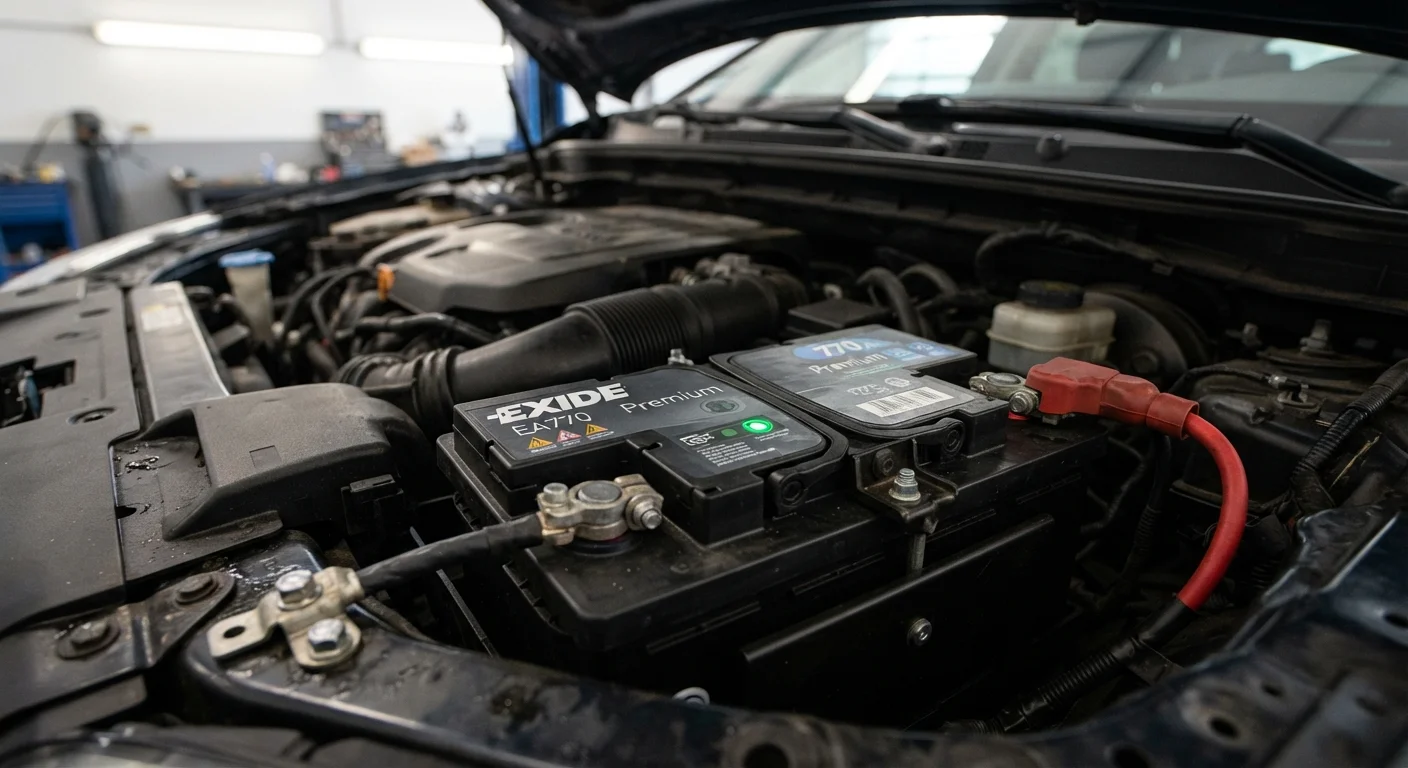
What Your Battery Actually Does
Your car's battery serves two primary roles: it provides the burst of power needed to start the engine, and it stabilises the electrical supply that runs everything from your headlights to your infotainment system. Once the engine is running, the alternator takes over generating power - but the battery remains the backbone of your vehicle's electrical system.
Modern vehicles rely on battery power more than ever. Advanced driver-assistance systems, electronic stability control, and multiple onboard computers all draw from the same source. A battery that's losing capacity can affect these systems in subtle ways long before it refuses to start the car altogether.
Battery vs. Alternator: Not the Same Thing
Drivers sometimes confuse battery problems with alternator problems because the symptoms can overlap. The alternator charges the battery while the engine runs - if it fails, even a new battery will drain quickly. A proper diagnostic test can tell the two apart, which is why professional testing is more reliable than guessing based on symptoms alone.
What Drains a Battery Faster Than You'd Expect
Battery drain doesn't always happen overnight. Several everyday habits quietly accelerate wear:
- Short, stop-start trips: If most of your driving is under 10 minutes, your alternator may never fully recharge the battery after each cold start.
- Extreme temperatures: Heat speeds up the internal chemical breakdown of battery components. Cold weather reduces the battery's ability to deliver power - even if the battery is otherwise healthy.
- Parasitic drain: Electronics that stay on when the ignition is off - a phone charger left plugged in, a faulty relay, or a poorly installed aftermarket accessory - can slowly drain a battery over hours or days.
- Age: Even with ideal driving habits, the internal chemistry of a lead-acid battery degrades over time. Capacity loss after three years is common and expected.
Being aware of these factors is the first step toward getting ahead of problems. For a broader view of seasonal effects on your vehicle, see the seasonal car maintenance calendar for a month-by-month breakdown.
3-5 years
Typical car battery lifespan
Industry guidance and battery manufacturers generally cite three to five years as the expected service life for a standard lead-acid car battery under normal conditions.
~50%
Drop in battery efficiency at freezing temps
At 32°F (0°C), a lead-acid battery may deliver only around half its rated capacity compared to performance at moderate temperatures, according to general electrochemical principles.
1 in 4
Vehicles with underperforming batteries
Various roadside assistance organisations have reported that a significant proportion of vehicles tested have batteries operating below optimal capacity, often without the driver's awareness.
Spotting the Warning Signs Early
Battery problems rarely announce themselves dramatically at first. Learning to recognise the early indicators gives you time to act before you're stuck in a parking lot:
- Slow engine crank: If the starter motor sounds laboured or the engine takes longer than usual to fire, the battery may be struggling to deliver sufficient current.
- Dimming lights: Headlights or interior lights that visibly dim when you start the car or at idle suggest the battery isn't holding charge well.
- Electrical gremlins: Intermittent issues - windows moving slowly, radio resetting, or inconsistent dashboard readings - can point to an unstable power supply.
- Battery warning light: This dashboard symbol should never be ignored. It can indicate a battery, alternator, or charging-system fault. Our guide to warning lights explains what different dashboard symbols mean.
Test Before You Replace
Don't assume a slow-starting car automatically means you need a new battery. A professional load test or conductance test can confirm whether the battery is genuinely failing or whether another part of the charging system is the culprit. Replacing a good battery when the alternator is the real problem wastes money and leaves the underlying issue unsolved.
If you notice any combination of these signs, having the battery professionally tested is worthwhile - especially before a long drive. The pre-journey vehicle check guide covers battery condition alongside other critical pre-trip inspections.
When to Call in a Professional
Some battery-related tasks - such as cleaning minor corrosion from terminals - are straightforward for most drivers. But battery testing, charging-system diagnosis, and replacement are best handled by a qualified mechanic. Modern vehicles with stop-start systems or battery management systems can require recalibration after a battery swap, a step that's easy to overlook and can cause ongoing electrical issues if skipped.
If your battery is approaching three to four years old, ask your mechanic to run a load test at your next service visit. Catching a weakening battery early is far less disruptive than an unexpected failure. For clarity on which maintenance tasks sit firmly in professional territory, see DIY car maintenance: what's safe to do yourself.
Staying on top of battery health is one of the simplest ways to keep your car dependable. It fits naturally into the broader routine described in the annual car ownership checklist.
“A car battery that passes a voltage check at rest can still fail under load - which is exactly how drivers get stranded. The only reliable test is one that simulates real starting conditions.”
— AAA Automotive Research, Automotive consumer safety and research organization
Frequently Asked Questions
Most car batteries last between three and five years, though this varies with climate, driving habits, and vehicle type. Hot climates tend to shorten battery life more than cold ones, due to heat accelerating internal corrosion. Regular testing after the three-year mark is a sensible precaution.
Common early signs include a slow or sluggish engine crank when starting, headlights that dim at idle, and intermittent electrical issues such as power windows responding slowly. A dashboard battery warning light is a more direct signal that deserves prompt attention.
Yes. Your alternator recharges the battery while you drive, and very short trips may not allow enough time to replenish what starting the engine uses. Over time, repeated shallow discharges can reduce a battery's overall capacity.
Jump-starting a car is generally straightforward, but it does carry risks - including sparks near the battery and potential damage to sensitive electronics if done incorrectly. If you're uncertain, consult your owner's manual or ask a qualified mechanic for guidance.
Cold temperatures slow the chemical reactions inside a battery, reducing its ability to deliver power - which is why cold mornings are a common time for battery failures. A battery that is already weakened is especially vulnerable in winter conditions.
Both can produce similar symptoms, such as a car that won't start or electrical issues. A mechanic can run a simple diagnostic test to distinguish between a failing battery, a faulty alternator, or another charging-system component - saving you from replacing the wrong part.
The content provided on our blog site traverses numerous categories, offering readers valuable and practical information. Readers can use the editorial team’s research and data to gain more insights into their topics of interest. However, they are requested not to treat the articles as conclusive. The website team cannot be held responsible for differences in data or inaccuracies found across other platforms. Please also note that the site might also miss out on various schemes and offers available that the readers may find more beneficial than the ones we cover.