

Start here
Why Maintenance Matters From Day One
Next
The Checks Every Driver Can Do Themselves
Then
Understanding Your Service Schedule
Important
When to Call a Mechanic
Make it routine
Building Habits That Stick
Why Maintenance Matters From Day One
Getting your licence is the milestone everyone focuses on. What happens next - keeping the car safe and reliable - often gets far less attention. For new drivers, that gap in knowledge can be costly.
A car is a mechanical system with parts that wear, fluids that deplete, and components that need periodic inspection. Neglecting routine care doesn't just increase repair bills; it can compromise your safety and the safety of others on the road. The encouraging news is that the foundation of good maintenance is simple, and starting early builds habits that pay off for years.
For a broader grounding in what car ownership actually involves, our practical day-one ownership guide is a useful companion to this article. And if you want to understand the missteps that catch many new owners out, what new car owners often get wrong in the first year is worth reading alongside this one.
The Checks Every Driver Can Do Themselves
You don't need mechanical experience to handle the most important routine checks. These are straightforward observations and simple top-ups that any driver can manage with a few minutes and their owner's manual.
Tread depth
The measurement of how much rubber remains on your tyre's surface. Most regions set a legal minimum - below it, the tyre cannot grip the road safely in wet conditions.
Dipstick
A long metal rod you pull out of the engine to check the oil level. Markings on its tip show you whether oil is at the correct level.
Coolant
A liquid that circulates through your engine to prevent it from overheating. It's usually stored in a plastic reservoir under the hood and needs to stay between minimum and maximum marks.
Service schedule
A manufacturer's timetable specifying when your car needs professional inspection and maintenance, usually based on mileage or time elapsed since the last service.
Tyre pressure
The amount of air inside your tyre, measured in PSI or bar. Incorrect pressure - too high or too low - affects handling, fuel efficiency, and tyre life.
Tyres
Check tyre pressure monthly using a gauge - available at most fuel stations. The correct pressure is on a sticker inside your driver's door frame, not on the tyre sidewall. While you're there, visually inspect each tyre for cuts, bulges, or uneven wear, and check that the tread depth meets your local legal minimum.
Engine Oil
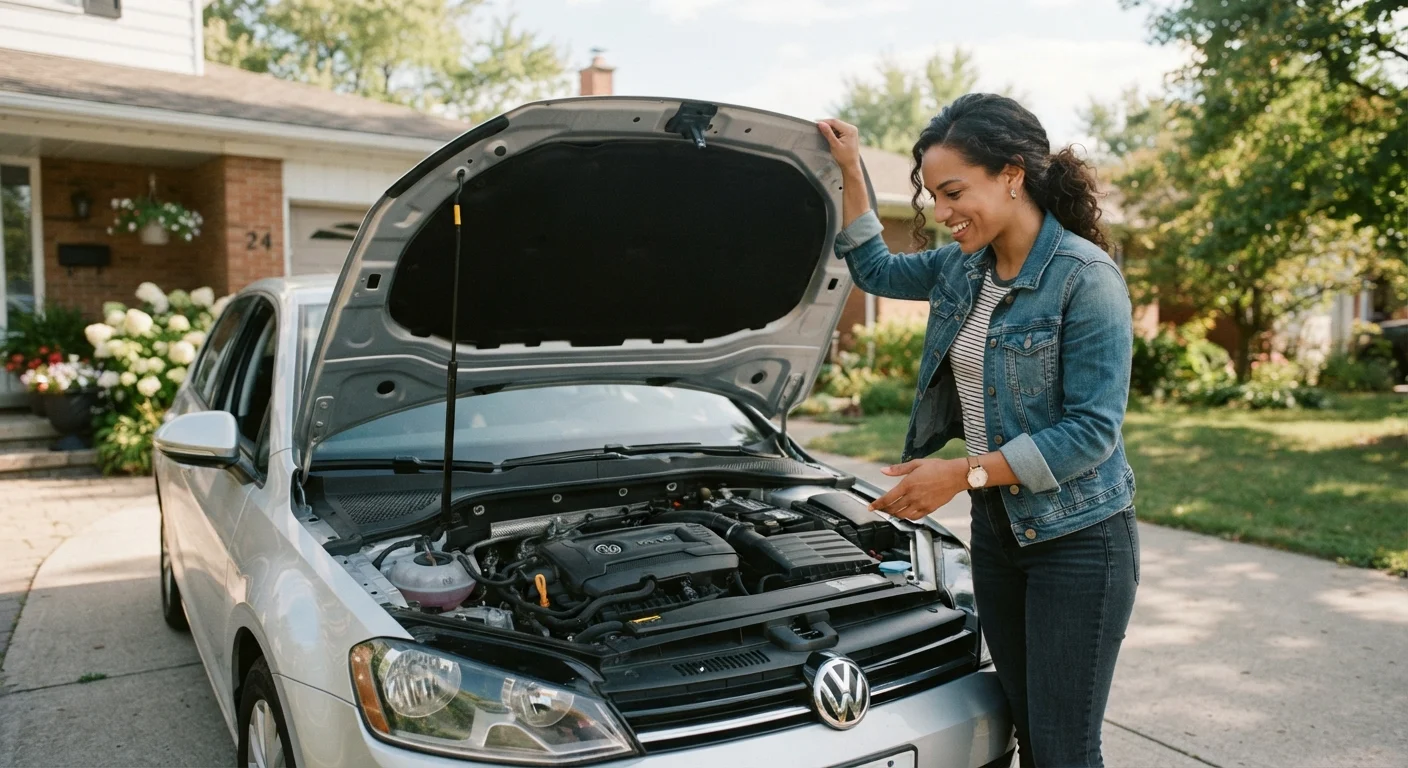
With the engine cold and the car on level ground, pull the dipstick, wipe it clean, reinsert it fully, then withdraw it again to read the level. Top up if it's below the minimum mark, using the grade specified in your owner's manual.
Other Fluids
Coolant, brake fluid, and windscreen washer fluid all have clearly marked reservoirs under the hood with minimum and maximum indicators. Check them monthly and top up as needed - again, using the correct fluid type for your vehicle.
Lights and Wipers
Walk around your car periodically with the lights on to confirm all bulbs are working. Replace any blown bulb promptly - driving with a faulty light is both unsafe and illegal in most jurisdictions. Check wiper blades for streaking or skipping, and replace them when they stop clearing the screen cleanly.
For clarity on which tasks are genuinely safe to DIY and which aren't, our DIY maintenance guide sets out the boundary clearly.
Understanding Your Service Schedule
Every vehicle comes with a manufacturer-recommended service schedule - typically outlined in the owner's manual or a separate service booklet. This schedule sets out which components need inspection, adjustment, or replacement at specific mileage or time intervals.
Find Your Schedule in Minutes
Your owner's manual is the definitive source for your car's service intervals - not generic online guides, which may not reflect your specific vehicle. If you've bought a used car without a manual, most manufacturers publish them online by make, model, and year, or your dealer can provide one.
Common service items include oil and filter changes, air filter replacement, spark plug inspection, brake checks, and timing belt or chain assessment. The intervals vary by vehicle, so always follow your specific car's schedule rather than generic advice.
Keeping up with scheduled servicing protects your vehicle's reliability, helps maintain any remaining warranty, and gives a mechanic the opportunity to spot developing problems before they become serious failures. Skipping services to save money in the short term often creates larger bills later. The annual car ownership checklist is a practical reference for staying on top of these recurring responsibilities.
When to Call a Mechanic
Knowing what to hand off to a professional is just as important as knowing what you can handle yourself. Certain systems - brakes, suspension, steering, fuel, electrical - involve safety-critical components or require specialist tools and knowledge. Attempting these without the right training can cause injury or make a problem worse.
Never Ignore a Warning Light
Dashboard warning lights are your car's way of flagging a problem it cannot fix itself. Driving with an active red warning light risks serious mechanical damage or a safety failure. Even amber lights shouldn't be deferred for long - book a mechanic inspection promptly rather than waiting until your next scheduled service.
Pay attention to warning signs: unusual noises (grinding, clunking, squealing), warning lights on the dashboard, pulling to one side during braking, vibration through the steering wheel, or any significant change in how your car drives. These are not things to monitor and hope improve - they warrant a prompt professional inspection.
When a dashboard warning light illuminates, your owner's manual is the first place to look. Red lights typically signal stop-now urgency; amber lights indicate a problem that needs attention soon. Don't ignore either.
Building Habits That Stick
The most effective maintenance strategy isn't a single annual event - it's a set of small, consistent habits woven into your regular routine. A monthly five-minute walk-around check of tyres, lights, and fluid levels catches most problems before they escalate.
Keep your owner's manual accessible and actually read the sections relevant to your car. Set calendar reminders for your service intervals. Note your mileage when you fill up - it helps you track when the next service is due.
For drivers who park on the street or without covered storage, keeping a car in good shape without a garage offers practical advice tailored to those conditions. And for the longer view, habits that keep a car running well and cut long-term costs shows how consistent upkeep translates into meaningful savings over time.
Starting these habits now - rather than after your first breakdown or expensive repair - is the clearest advantage any new driver can give themselves.
Frequently Asked Questions
Checking tyre pressure at least once a month is a widely recommended habit. You should also check before any long trip. The correct pressure for your vehicle is printed on a sticker inside the driver's door frame or in the owner's manual - not on the tyre itself.
The main fluids to monitor are engine oil, coolant, brake fluid, power steering fluid, and windscreen washer fluid. Engine oil typically needs checking monthly; others less frequently. Always consult your owner's manual for the correct fluid types and intervals specific to your vehicle.
Yes - tasks like checking tyre pressure, topping up washer fluid, testing lights, and inspecting wiper blades are safe and straightforward for any driver. More involved work such as brake, electrical, or suspension repairs should be left to a qualified mechanic.
Missing a service can allow minor issues to go undetected and worsen over time, potentially leading to larger repair costs or a roadworthiness failure. It can also affect your vehicle's warranty if it is still under one. Try to reschedule as soon as possible rather than skipping it entirely.
Red warning lights generally signal an immediate issue requiring you to stop safely and seek assistance. Amber or yellow lights indicate something that needs attention soon but is not necessarily an emergency. Never ignore a warning light - consult your owner's manual or a mechanic promptly.
Routine maintenance costs are generally modest and predictable. The bigger financial risk is neglecting upkeep, which tends to turn small problems into large ones. Building simple monthly habits keeps most maintenance costs manageable and avoids unwelcome surprises.
The content provided on our blog site traverses numerous categories, offering readers valuable and practical information. Readers can use the editorial team’s research and data to gain more insights into their topics of interest. However, they are requested not to treat the articles as conclusive. The website team cannot be held responsible for differences in data or inaccuracies found across other platforms. Please also note that the site might also miss out on various schemes and offers available that the readers may find more beneficial than the ones we cover.