

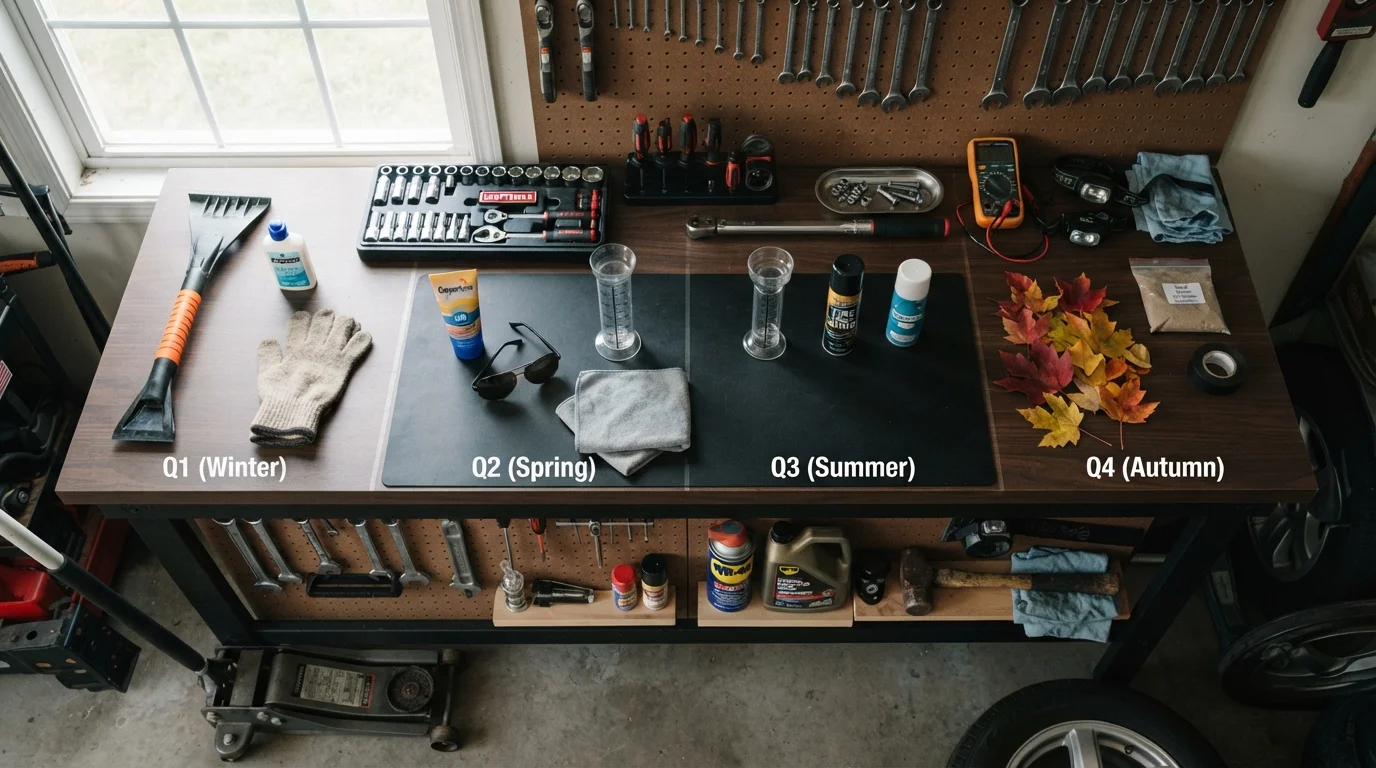
Why a Seasonal Maintenance Rhythm Matters
Most drivers wait for a warning light or an unusual noise before thinking about maintenance. By that point, a small issue has often become an expensive one. Organizing your car care around the calendar - rather than reacting to problems - helps you catch wear before it becomes failure, and keeps your vehicle ready for whatever conditions the next season brings.
Each season places distinct demands on your car. Freezing temperatures stress the battery and thicken fluids. Summer heat accelerates tire wear and strains the cooling system. A structured approach means nothing important gets overlooked. For a complete overview of ownership responsibilities beyond maintenance, see the annual car ownership checklist.
| Battery lifespan (typical) | 3-5 years (General industry guideline; varies by climate and usage) |
| Recommended tire pressure check frequency | Monthly (or with every 10°F temperature change) (NHTSA general guidance) |
| Minimum legal tire tread depth (US) | 2/32 inch (Federal Motor Vehicle Safety Standards) |
| Coolant flush interval (general guideline) | Every 30,000-50,000 miles or per manufacturer spec (Varies by vehicle; consult owner's manual) |
| Oil change interval (modern vehicles) | Every 5,000-7,500 miles (conventional) or 10,000+ miles (synthetic) (Manufacturer-specific; check owner's manual) |
Winter (December-February): Cold-Weather Priorities
Cold is hard on almost every system in your vehicle. Start winter by having your battery tested - batteries lose a significant share of their cranking power in freezing temperatures, and one that's already weak may not start a cold engine. Check that antifreeze concentration is sufficient for the coldest temperatures in your area; most owner's manuals specify the correct mixture ratio.
Inspect your tires carefully. Cold air causes pressure to drop roughly one PSI for every 10°F drop in temperature, so check and adjust weekly during hard freezes. If you live in a region with consistent snow or ice, winter tires offer meaningfully better traction than all-seasons - a qualified mechanic or tire shop can advise on fitment. Keep your washer fluid reservoir topped with a formula rated below freezing, and confirm that all lights are working since daylight is short. For guidance on what you can safely handle yourself versus what needs a professional, see DIY car maintenance guidance.
Coolant (Antifreeze)
A fluid circulated through the engine to regulate temperature. It prevents overheating in summer and freezing in winter. Most vehicles use a 50/50 mix of coolant concentrate and distilled water.
Battery Cold Cranking Amps (CCA)
A rating that measures a battery's ability to start an engine in cold conditions. Higher CCA ratings indicate better performance in low temperatures.
Tire Tread Depth
The measurement of the grooves on a tire's surface that channel water away and maintain grip. Federal law requires a minimum of 2/32 of an inch, though many safety experts recommend replacing tires at 4/32 for wet-weather performance.
Alignment
The adjustment of a vehicle's suspension so that tires make proper contact with the road. Poor alignment causes uneven tire wear and can make the car pull to one side.
Brake Fade
A temporary reduction in braking performance caused by heat buildup in the brake system. It can occur during extended heavy braking, particularly in summer or on mountain roads.
Spring (March-May): Post-Winter Recovery
Spring is the season to undo winter's damage and prepare for higher mileage months. Start with a thorough undercarriage wash to remove road salt, which accelerates rust on brake lines, exhaust components, and the frame. Inspect your wiper blades - winter streaking is a sign they need replacing before spring rains arrive.
This is also the right time to check brake pads and rotors. Cold-weather driving, especially on salted roads, wears brakes unevenly. Have a mechanic inspect them if you notice any squealing or pulsing under braking. Rotate your tires and check alignment if the car pulls to one side - potholes are common in spring and frequently knock wheels out of alignment. If you're planning summer road trips, spring is the ideal time to run through a pre-journey vehicle check to address any deferred issues.
Summer (June-August): Heat and High-Mileage Demands
Summer places the cooling system at the center of attention. Check your coolant level and condition - old coolant can become acidic and corrode internal components. If it hasn't been flushed in the interval your manufacturer recommends, summer is a practical time to do it. Inspect hoses and belts for cracking or swelling; heat accelerates rubber deterioration.
Tire pressure actually rises in hot weather, so check it regularly and don't over-inflate. High temperatures combined with under-inflation or over-inflation both increase the risk of a blowout. Keep your air conditioning system working efficiently by running it periodically - if airflow seems reduced or cooling is sluggish, have a technician check refrigerant levels. Drivers who park outdoors should take extra steps to protect their vehicle; keeping a car in good shape without a garage covers practical habits for street parkers.
~70%
Battery failures occur in extreme temperatures
According to AAA research, temperature extremes - both hot and cold - are the leading environmental cause of battery failure.
1 PSI
Tire pressure drop per 10°F temperature decrease
The U.S. Department of Transportation notes that seasonal temperature swings regularly push tires outside their optimal pressure range.
11,000+
Annual crashes linked to tire failure (estimated)
NHTSA data consistently identifies tire-related issues, including under-inflation and worn tread, as contributors to thousands of crashes each year.
Fall (September-November): Preparing for the Cold Ahead
Fall is your preparation window - the season where catching small issues before winter prevents big problems during it. Have your battery load-tested if it's more than three years old; replacing a marginal battery in October is far less stressful than a dead one in January. Check your heating and defrost systems now, not when you first need them.
Inspect tire tread depth across all four tires. The penny test is a common field check: insert a penny into the tread groove with Lincoln's head pointing down - if you can see the top of his head, tread is worn below 2/32 of an inch and replacement is needed. Also top off all fluids: engine oil, brake fluid, power steering fluid, and transmission fluid. For high-mileage vehicles that need extra attention heading into winter, maintenance habits for high-mileage vehicles offers evidence-informed guidance. Consistent seasonal habits are also covered in habits that keep a car running well.
When to Involve a Qualified Mechanic
Many seasonal checks - fluid top-offs, wiper replacements, visual tire inspections - are straightforward for most drivers. However, brake inspections, coolant system work, battery load testing, and suspension checks involve systems where incorrect handling can compromise safety. When in doubt, have a qualified mechanic perform or confirm the work. This is especially true before the start of winter and summer, when those systems face the greatest stress.
The content provided on our blog site traverses numerous categories, offering readers valuable and practical information. Readers can use the editorial team’s research and data to gain more insights into their topics of interest. However, they are requested not to treat the articles as conclusive. The website team cannot be held responsible for differences in data or inaccuracies found across other platforms. Please also note that the site might also miss out on various schemes and offers available that the readers may find more beneficial than the ones we cover.