

Our Verdict
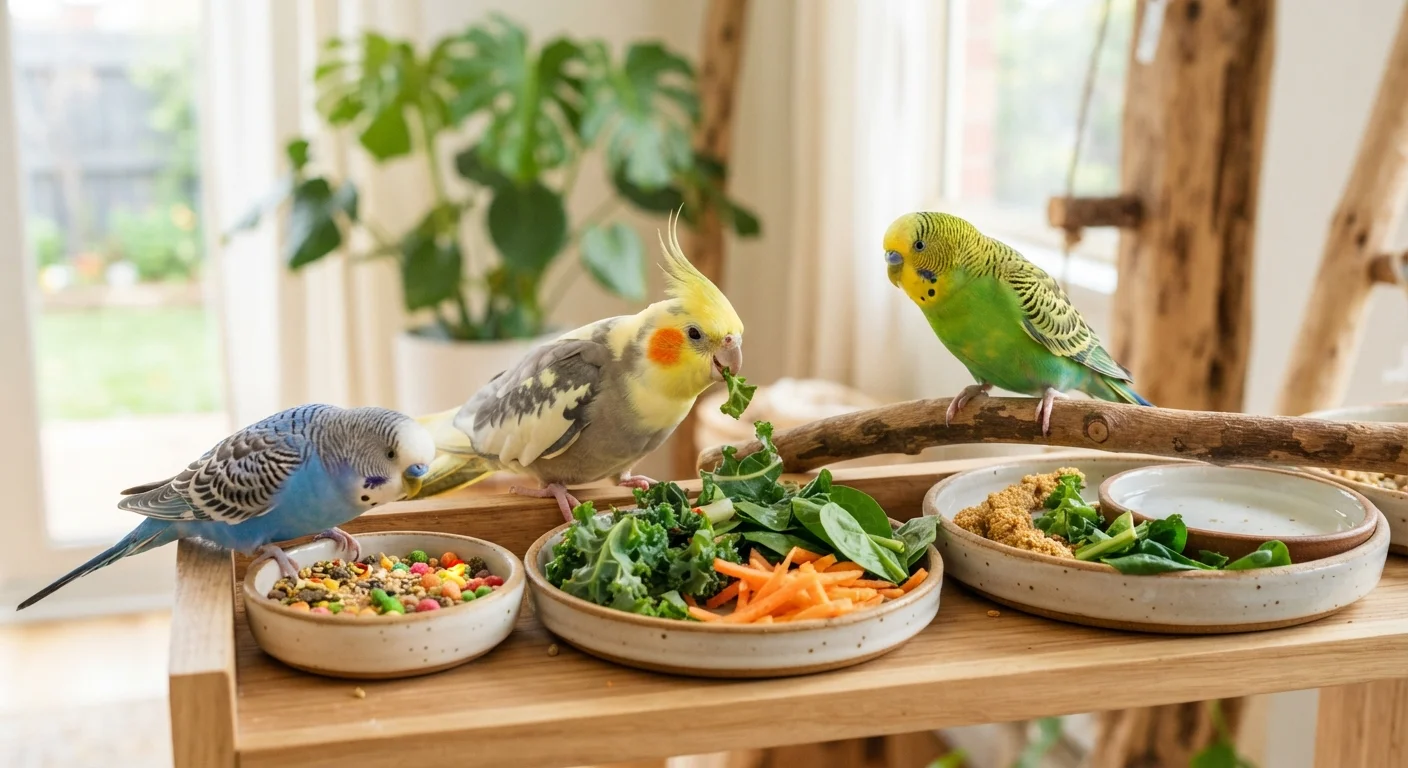
No single food type covers all of a companion bird's nutritional needs on its own. A diet anchored by quality pellets, supplemented with varied fresh produce and occasional seeds as enrichment, is the approach most avian veterinarians currently support. The ideal balance depends on your bird's species, health status, and individual preferences.
| Best for | Recommended |
|---|---|
| Owners seeking simplicity and baseline nutrition | Pellets as the dietary foundation |
| Birds transitioning from seed-heavy diets | Gradual pellet introduction alongside seeds |
| Owners wanting to maximize enrichment and micronutrients | Fresh foods as a daily supplement |
| Most companion birds as a long-term strategy | A combined pellet, fresh food, and limited seed approach |
Why Bird Nutrition Is More Complex Than It Looks
Walk into any pet store and you'll find seed mixes front and center, marketed as complete bird food. The reality is more nuanced. Companion birds - including parakeets (budgerigars), cockatiels, lovebirds, and conures - have dietary needs that evolved around a wide variety of wild plant foods, not a single seed blend.
Nutrition research on companion birds has grown considerably over the past few decades, and avian veterinarians now have a clearer picture of what deficiencies look like and how to prevent them. Understanding the three main diet categories - seeds, pellets, and fresh foods - is the starting point for any bird owner trying to do right by their pet. For more on understanding your bird's overall wellbeing, see our guide on what parakeets are actually trying to tell you.
Seed Mixes: Familiar but Nutritionally Limited
Seeds are palatable, easy to store, and birds tend to love them - which is precisely part of the problem. Most commercial seed mixes are high in fat and carbohydrates but low in essential vitamins (particularly vitamin A), calcium, and several amino acids. A bird that fills up on seeds often won't eat enough of anything else.
Vitamin A deficiency, in particular, is commonly seen in seed-fed birds and can lead to respiratory problems, poor feather condition, and immune suppression over time. Sunflower seeds and millet - popular mix ingredients - are especially high in fat relative to their other nutritional contributions.
That said, seeds aren't worthless. They can serve as enrichment, foraging tools, or training rewards, and sprouted seeds offer a meaningfully better nutritional profile than dry ones. The key distinction is using seeds as a supplement rather than the foundation of the diet.
Never Rely on Seeds Alone
A diet consisting only of commercial seed mixes is one of the most common preventable causes of nutritional disease in pet birds. Vitamin A deficiency, obesity, and fatty liver disease are all associated with long-term seed-only feeding. If your bird has eaten seeds exclusively for years, discuss a gradual transition plan with an avian veterinarian before making changes.
Pellets: Formulated Nutrition With a Learning Curve
Formulated pellets were developed specifically to address the gaps in seed-only diets. A quality pellet is nutritionally balanced - it provides protein, vitamins, minerals, and fiber in proportions calibrated for common companion bird species. Because each piece contains the same nutritional makeup, birds can't selectively eat only the parts they prefer, as they often do with mixed seeds.
The main challenge with pellets is acceptance. Many birds raised on seeds will initially refuse pellets outright. Transitioning typically requires patience: mixing pellets gradually into seed mixes over several weeks while reducing seed proportions. Never abruptly remove seeds without confirming your bird is actually eating the pellets - weight loss can happen quickly in small birds.
Pellet size matters too. Pellets designed for large parrots aren't appropriate for a budgie or finch; match the product to your bird's species and consult your avian vet for guidance.
Transitioning to Pellets Gradually
Start by replacing about 25% of your bird's seed mix with pellets for one to two weeks, then slowly increase the pellet ratio over the following weeks. Monitor body weight throughout - small birds can lose weight quickly if they aren't eating enough. If your bird consistently refuses pellets after several weeks of patient effort, your avian vet can suggest species-specific strategies.
Fresh Foods: Vitamins, Variety, and Enrichment
Fresh vegetables and some fruits are where companion bird diets gain real nutritional depth. Leafy greens such as kale, romaine lettuce, and spinach provide vitamin A precursors and calcium. Bell peppers are high in vitamin C and often eagerly accepted. Carrots, broccoli, and cooked sweet potato are other well-regarded options.
Fruits can be offered in smaller quantities due to natural sugar content. Berries, melon, and apple slices (seeds removed) tend to be good choices. Fresh foods also provide mental stimulation - varied textures and flavors keep birds engaged and reduce boredom-driven behaviors.
Some foods are toxic to birds and must never be offered: avocado, onion, garlic, chocolate, caffeine, alcohol, and fruit pits or apple seeds. Xylitol, a sweetener found in many human foods, is also dangerous. Always wash produce thoroughly and remove uneaten fresh food from the cage within a few hours to prevent bacterial growth.
If you're thinking broadly about your bird's environment and care, our overview on small pet ownership covers the fuller picture of what responsible bird keeping involves.
| Seed Mixes | Formulated Pellets | Fresh Foods | |
|---|---|---|---|
| Nutritional completeness | Incomplete - low in vitamins A, calcium | Generally balanced and consistent | Excellent micronutrients; not complete alone |
| Bird acceptance | High - most birds eat readily | Variable - may require transition | Moderate - depends on species and exposure |
| Fat content | Often high, especially sunflower seeds | Controlled and consistent | Generally low |
| Preparation effort | Minimal | Minimal | Daily washing and chopping required |
| Enrichment value | Moderate - good for foraging | Low - uniform texture | High - varied textures and flavors |
| Safety risks | Low if supplemented properly | Low when species-appropriate | Risk if toxic foods included |
| Cost | Generally low | Moderate | Variable; depends on produce |
Building a Practical Feeding Routine
Most avian veterinarians suggest that pellets form the bulk of a companion bird's diet - roughly 60-70% of food intake for many species - with fresh vegetables making up a significant daily portion and seeds reserved as occasional treats or enrichment. This mirrors the guidance offered by organizations such as the Association of Avian Veterinarians, though exact proportions vary by species.
Offer fresh foods in the morning when birds are most active and receptive to eating. Pellets can remain available throughout the day. Track your bird's weight periodically using a small gram scale; a consistent downward trend warrants a veterinary check.
Diet isn't separate from other aspects of care. A well-fed bird in a poorly placed cage may still show stress-related behaviors. Our article on bird cage placement and setup explains how environment interacts with health. For a parallel look at how diet debates play out in other pet species, see our piece on raw diet vs. kibble for dogs.
This article is for general informational purposes only and is not a substitute for advice from a qualified avian veterinarian. Always consult a vet familiar with birds before making significant changes to your pet's diet.
The content provided on our blog site traverses numerous categories, offering readers valuable and practical information. Readers can use the editorial team’s research and data to gain more insights into their topics of interest. However, they are requested not to treat the articles as conclusive. The website team cannot be held responsible for differences in data or inaccuracies found across other platforms. Please also note that the site might also miss out on various schemes and offers available that the readers may find more beneficial than the ones we cover.