

Our Verdict
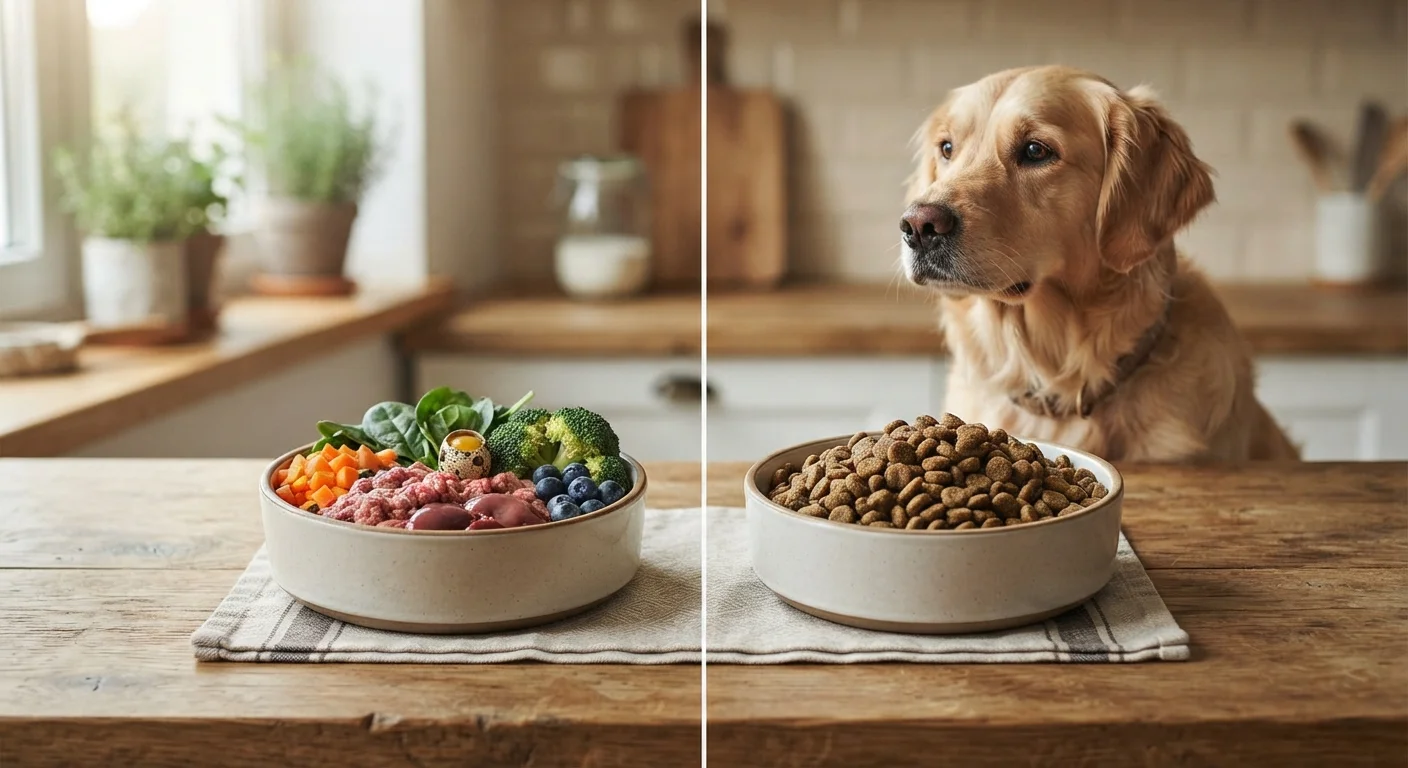
Kibble remains the more evidence-backed, safer option for most households, largely due to regulatory standards and a lower pathogen risk. Raw diets may appeal to owners seeking less-processed food, but they require careful sourcing, handling, and ideally professional guidance to minimize nutritional gaps and contamination risks. Neither approach is a guaranteed health solution.
| Best for | Recommended |
|---|---|
| Households with young children, elderly members, or immunocompromised individuals | Kibble |
| Dogs with chronic illness, compromised immunity, or complex nutritional needs | Kibble (under veterinary supervision) |
| Committed owners with healthy adult dogs who can manage safe food handling | Raw diet (with veterinary nutritionist input) |
| Owners who want convenience and consistent nutrition without extensive meal prep | Kibble |
Why This Debate Is So Persistent
Few topics in dog ownership generate as much heat as what goes in the bowl. Advocates of raw feeding argue that commercial kibble is over-processed and far removed from what dogs evolved to eat. Kibble defenders counter that modern formulations are rigorously tested and that raw meat poses genuine dangers. Both camps have valid points - and the evidence, frankly, is more nuanced than either side tends to acknowledge.
Understanding what the research actually shows - and where it falls short - helps owners make decisions grounded in reality rather than marketing or social media fervor. For a broader look at how to interpret dog food packaging claims, see our guide to decoding dog food labels.
| Kibble | Raw Diet | |
|---|---|---|
| Nutritional completeness | AAFCO-regulated; reliably complete | Variable; homemade often falls short |
| Pathogen risk | Low under normal handling | Elevated; Salmonella, Listeria documented |
| Convenience | High; shelf-stable, easy to store | Low; requires careful prep and storage |
| Processing level | High-heat extruded; nutrients added back | Minimal processing; closer to whole ingredients |
| Evidence base | Decades of feeding trials | Limited, small-scale studies |
| Cost | Generally lower | Generally higher, especially commercial raw |
| Suitability for vulnerable households | Safe for most situations | Not recommended where immunocompromised members present |
What Kibble Gets Right (and Where It Falls Short)
Commercial dry dog food sold in the U.S. must meet nutritional standards set by the Association of American Feed Control Officials (AAFCO). This means a properly labeled kibble provides a complete and balanced diet - all essential nutrients in quantities established by feeding trials or nutrient profile analysis. For most dog owners, this is a meaningful assurance.
The trade-off is processing. High-heat extrusion - the method used to make most kibble - can degrade some heat-sensitive nutrients, particularly certain vitamins and amino acids. Manufacturers compensate by adding synthetic nutrients back in, which is effective but adds a layer of complexity some owners find concerning.
Kibble is also convenient, shelf-stable, and relatively affordable, and it poses minimal contamination risk to household members when handled normally.
Choosing a Kibble Worth Feeding
Look for a product with an AAFCO statement that specifies feeding trials - not just nutrient profile formulation - as this indicates the food was tested in actual dogs. Checking for a manufacturer with a dedicated veterinary nutritionist on staff is also a reasonable quality signal. If your dog has specific health conditions, your vet can help narrow the options.
What Raw Feeding Claims - and What Evidence Supports
Raw diets - often called BARF (Biologically Appropriate Raw Food) or prey-model diets - typically consist of uncooked muscle meat, organ meat, raw meaty bones, and sometimes vegetables or dairy. Proponents claim benefits ranging from shinier coats to better digestion and dental health.
Some of these claims have anecdotal support, and a small number of peer-reviewed studies suggest potential benefits for coat condition and stool quality. However, the overall body of evidence is limited, inconsistent, and often conducted on small sample sizes. Veterinary nutrition researchers, including those at institutions like Tufts University's Cummings School of Veterinary Medicine, have noted that controlled long-term studies on raw diets in dogs remain scarce.
The pathogen concern is well-documented and serious. Studies - including research published in veterinary journals - have found Salmonella, Listeria, Campylobacter, and other harmful bacteria in commercially sold raw pet food at rates that warrant real caution. The risk is not only to the dog, but to people in the household who handle the food or are exposed to the dog's saliva and feces.
Raw Feeding and Household Safety
Households that include infants, young children, pregnant individuals, elderly people, or anyone with a weakened immune system face a meaningfully higher risk from raw pet food contamination. The CDC and FDA have both issued guidance noting that raw pet diets can spread harmful bacteria through contact with food, surfaces, or the pet itself. This is not a risk that careful handling alone can fully eliminate.
Nutritional Completeness: A Key Distinction
One underappreciated risk of homemade raw diets in particular is nutritional imbalance. Multiple published analyses of raw diet recipes - including those from popular books and websites - have found that a significant proportion fail to meet AAFCO nutrient profiles, particularly for calcium, phosphorus, zinc, and certain vitamins.
Commercial raw diets (frozen or freeze-dried) that carry an AAFCO statement offer more reassurance, though they still carry handling risks. Owners considering raw feeding are strongly encouraged to work with a board-certified veterinary nutritionist rather than relying on general internet guidance. Understanding how diet intersects with a dog's overall lifestyle is also worth considering - see how indoor vs. outdoor living affects your dog's needs for context.
This article is for general informational purposes only and is not a substitute for personalized veterinary advice. Always consult a licensed veterinarian or board-certified veterinary nutritionist before making significant changes to your dog's diet.
The content provided on our blog site traverses numerous categories, offering readers valuable and practical information. Readers can use the editorial team’s research and data to gain more insights into their topics of interest. However, they are requested not to treat the articles as conclusive. The website team cannot be held responsible for differences in data or inaccuracies found across other platforms. Please also note that the site might also miss out on various schemes and offers available that the readers may find more beneficial than the ones we cover.