

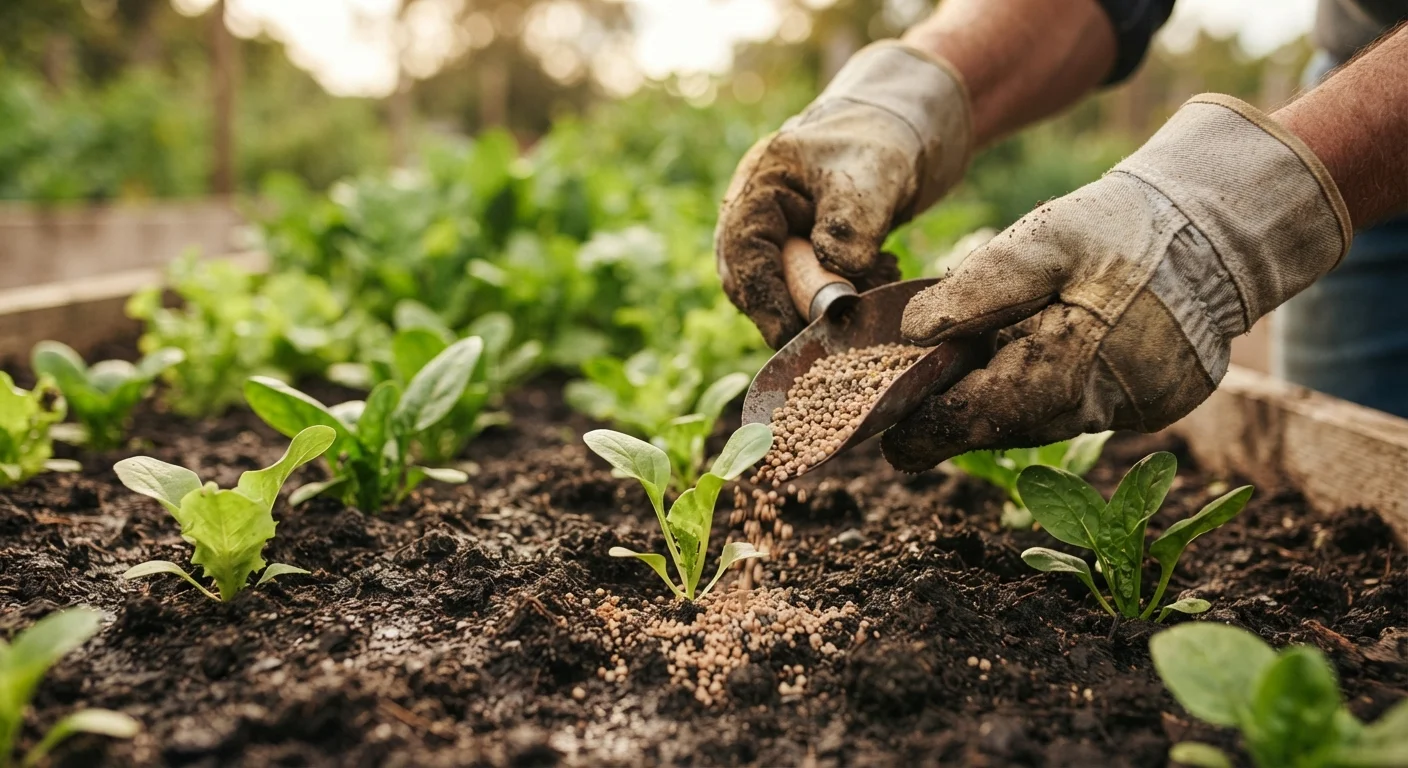
Why Fertiliser Myths Are So Stubborn
Fertiliser sits at the crossroads of marketing, folk wisdom, and genuine plant science - which makes it fertile ground for misconceptions. Garden center shelves are crowded with products promising lush results, and generations of well-intentioned advice (often "just add more") have been passed down without scrutiny. The result is a set of beliefs that feel intuitive but routinely lead gardeners to waste money, harm their plants, or damage the environment.
The good news: correcting these myths doesn't require a horticulture degree. It requires understanding a few key principles about how plants feed, how soil chemistry works, and why restraint is often the most productive approach.
Myth
More fertiliser always means healthier, faster-growing plants.
Fact
Excess fertiliser stresses plants, burns roots, and disrupts soil chemistry - more is genuinely harmful.
This is one of the most damaging misconceptions in home gardening. Plants have specific nutrient requirements at different growth stages, and those needs have a ceiling. When you exceed it, salts from fertiliser compounds accumulate in the root zone, drawing moisture out of roots through osmosis - a process commonly called fertiliser burn. Visually, this shows up as brown, crispy leaf edges and wilting even in well-watered soil. Steady, measured feeding aligned with plant needs consistently outperforms heavy-handed application.
Myth
Organic fertiliser is completely safe and can be applied freely.
Fact
Organic fertilisers carry real risks when overused, including nutrient runoff and soil imbalance.
The word 'organic' describes the source of nutrients - typically plant or animal matter - not a safety guarantee. Organic fertilisers like blood meal, bone meal, and composted manure release nutrients more slowly than synthetic options, but concentrated or repeated applications still raise soil phosphorus and nitrogen to damaging levels. Excess phosphorus in particular can lock out other nutrients and contribute to algal blooms in nearby waterways. Use organic products with the same care and attention to rates that you'd apply to any fertiliser.
Myth
If a plant looks unhealthy, it just needs more fertiliser.
Fact
Most plant health problems have causes unrelated to nutrient deficiency - fertilising can make them worse.
Yellowing leaves, stunted growth, and wilting are symptoms shared by overwatering, underwatering, pest damage, root rot, compacted soil, and yes - sometimes nutrient deficiency. Applying fertiliser to a plant suffering from root rot or overwatering adds stress to an already struggling root system. Diagnose before you feed: check soil moisture, inspect roots, look for pests, and consider a soil test before reaching for the fertiliser bag.
Myth
Fertiliser works the same regardless of soil pH.
Fact
Soil pH directly controls how available nutrients are to plant roots, making pH management essential.
Even a perfectly formulated fertiliser delivers limited benefit if your soil pH is outside the range your plants prefer. Most vegetables and ornamentals thrive in a slightly acidic to neutral pH (roughly 6.0-7.0). Outside this window, nutrients like iron, manganese, and phosphorus become chemically bound in the soil - present but inaccessible. This is why a plant can show classic deficiency symptoms in soil that has been fertilised repeatedly. Understanding how soil pH affects nutrient availability is foundational to effective fertilising.
Myth
Fertiliser can fix poor soil structure and drainage problems.
Fact
Fertiliser provides nutrients only - it cannot correct compaction, poor drainage, or low organic matter.
Nutrients and soil structure are separate issues. Compacted soil restricts root growth and oxygen availability; waterlogged soil suffocates roots regardless of nutrient content. The solution to structural soil problems is amendment - adding compost, improving drainage, or aerating - not more fertiliser. Improving organic matter levels through compost also interacts well with mulching strategies; see our guide on organic and inorganic mulch options for complementary approaches.
Myth
All fertilisers labelled for a plant type are interchangeable.
Fact
Nutrient ratios, release speeds, and formulations differ significantly and affect outcomes meaningfully.
Fertiliser labels display three numbers representing nitrogen (N), phosphorus (P), and potassium (K) content. A high-nitrogen formula encourages leafy growth - ideal for lawns and leafy vegetables, but counterproductive for flowering plants or fruiting crops that need more phosphorus and potassium. Slow-release granules, liquid concentrates, and water-soluble powders also behave differently in the soil. Matching the formulation to the plant's current growth stage - establishment, vegetative growth, flowering, or fruiting - makes a meaningful difference to results.
Feeding Your Garden More Effectively
Armed with accurate information, your fertilising decisions become simpler and more confident. Start with a soil test to establish a baseline - many US state cooperative extension services offer low-cost kits. Feed according to the plant's growth stage, not just the calendar. Apply at the rates specified on the label, and resist the urge to "top up" mid-season without good reason.
Test Before You Feed
Applying fertiliser without knowing your soil's current nutrient levels is a common mistake. A basic soil test - available through many cooperative extension services and garden centers - tells you what your soil already has and what it actually lacks. Fertilising blindly can compound deficiencies or create nutrient imbalances that make problems worse.
Pay attention to the season: applying a high-nitrogen feed in late summer, for instance, can push tender new growth that won't harden before the first frost. And remember that fertiliser works as part of a broader soil health system - pairing it with appropriate watering practices and good organic matter levels gives you the best foundation for a thriving garden.
Over-Fertilising Can Seriously Damage Your Garden
Applying too much fertiliser - even a natural or organic type - can cause salt buildup in the soil, scorch roots, and lead to excessive leafy growth at the expense of flowers or fruit. In heavy rain, runoff from over-fertilised gardens can also pollute local waterways. Always follow label guidance and start conservatively, especially with fast-release formulas.
The content provided on our blog site traverses numerous categories, offering readers valuable and practical information. Readers can use the editorial team’s research and data to gain more insights into their topics of interest. However, they are requested not to treat the articles as conclusive. The website team cannot be held responsible for differences in data or inaccuracies found across other platforms. Please also note that the site might also miss out on various schemes and offers available that the readers may find more beneficial than the ones we cover.