

What Hardiness Zones Actually Measure
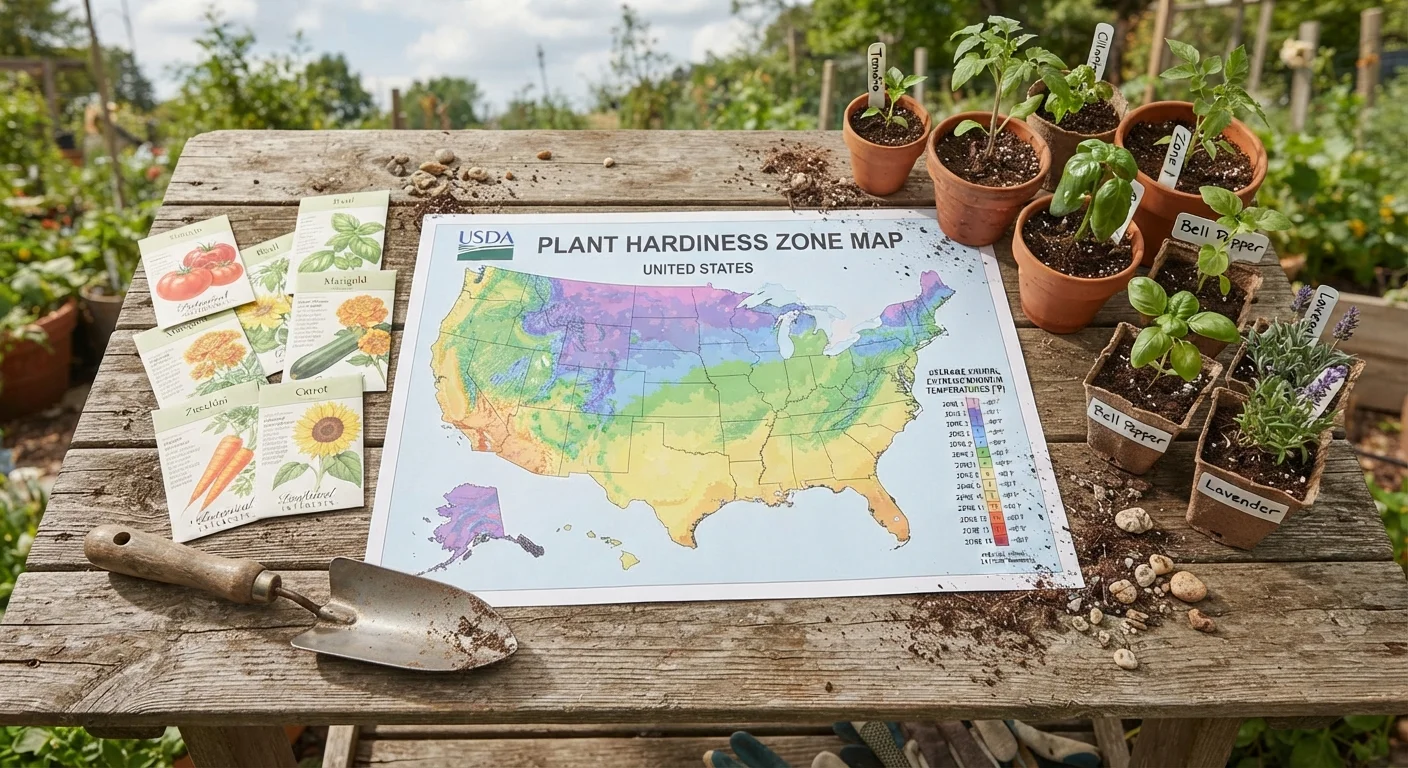
When you pick up a plant at a nursery and see "Zones 5-8" printed on the tag, you're looking at cold-hardiness data - specifically, a shorthand for the average lowest winter temperature that plant can endure without dying. The USDA Plant Hardiness Zone Map assigns every location in the U.S. to a numbered zone based on the average annual extreme minimum temperature recorded over a 30-year period.
Zone 3, for example, covers areas where winter lows average between -40°F and -30°F - think northern Minnesota or the higher elevations of the Rocky Mountains. Zone 10 includes frost-free regions such as coastal Southern California and South Florida. Most of the continental U.S. falls between Zones 5 and 9.
The zone system is a survival threshold, not a performance predictor. A plant rated Zone 6 should withstand Zone 6 winters, but that tells you nothing about how lush it will grow, how prolifically it will flower, or whether it can handle a Zone 6 summer.
13
USDA hardiness zones across the contiguous U.S.
The USDA Plant Hardiness Zone Map divides the country into 13 primary zones, each spanning a 10°F range of average annual minimum winter temperatures.
~50%
Of U.S. shifted at least a half-zone warmer
The 2023 USDA map update found that roughly half of the country moved into a warmer half-zone compared to the previous map, reflecting updated 30-year temperature averages.
30 years
Of temperature data behind zone designations
The current USDA Hardiness Zone Map uses temperature records from 1991 to 2020 to calculate average annual extreme minimum temperatures for each zone.
Where Zone Maps Fall Short
Hardiness zones are widely used because they're simple and standardized - but experienced gardeners know they capture only part of the picture. Several factors that zones don't measure can make or break a plant in your specific garden:
- Summer heat: The American Horticultural Society's Heat Zone Map tracks days above 86°F, which matters greatly for cool-season crops and woodland plants. A hydrangea that thrives in Zone 7 in the Pacific Northwest may struggle in a Zone 7 garden in Virginia with humid, prolonged summers.
- Soil drainage: Waterlogged soil in winter kills many plants that cold alone would not. Good drainage can make a plant rated one zone warmer viable in your garden. See our guide on soil health and pH for related fundamentals.
- Snowfall patterns: A consistent snow cover acts as insulation, protecting roots from the sharpest cold snaps. A Zone 5 garden in Vermont with reliable snow cover can sometimes grow plants rated Zone 6 successfully.
- Frost timing: Zones say nothing about when your first or last frost occurs - critical information for annuals, vegetables, and marginally hardy perennials.
Zone Ratings Vary by Source
Some European and Canadian nurseries use different zone systems - the Natural Resources Canada Hardiness Zone system, for instance, factors in several climate variables beyond minimum temperature. When buying plants from international sources or specialty catalogs, confirm which zone system the rating refers to before assuming it maps directly to a USDA zone number.
Microclimates: Your Yard Within the Zone
No zone map can capture the variation that exists within a single property. A south-facing brick wall absorbs heat during the day and radiates it at night, creating conditions that may be effectively a half-zone or full zone warmer than the surrounding landscape. Low spots where cold air settles on still nights create frost pockets that are colder than their zone suggests.
Learning your yard's microclimates - where water pools, where wind funnels, which corners stay warmest in early spring - lets you match plants to spots more precisely than any map can. This is how gardeners routinely succeed with plants that are technically rated one zone warmer than where they live.
For plants that push your zone's limits, preparing your garden for winter with mulch, burlap wraps, or container storage becomes especially important as cold approaches.
Track Your Own Microclimate Over Time
Place a min-max thermometer in different parts of your yard over two or three winters. Recording actual low temperatures - especially after cold snaps - reveals your real microclimate far more accurately than any published zone map. This data is invaluable when deciding where to place borderline-hardy plants.
Using Zone Information as a Practical Guide
The most effective approach treats hardiness zones as a reliable starting filter, not a final answer. Start by confirming your zone, then factor in your local frost dates, soil type, typical summer conditions, and the specific spot where you plan to plant.
When building out your garden with lower-risk choices, low-maintenance perennials suited to your zone offer a dependable backbone - they're selected precisely because they return year after year without coddling. For indoor growing, zone ratings become less relevant, but light, humidity, and temperature still govern success; our guide on which plants thrive inside your home covers those variables instead.
Think of a hardiness zone rating as the plant's minimum requirement for winter survival. Meeting that requirement is necessary - but pairing it with the right soil, light, drainage, and seasonal care is what turns a surviving plant into a thriving one.
“Hardiness zone maps are an indispensable tool, but they are only a tool. No map can account for every variable a living plant encounters - the gardener's observation and willingness to experiment remain irreplaceable.”
— Extension Horticulture Specialist, U.S. Land-Grant University Cooperative Extension Service
Frequently Asked Questions
It indicates the coldest average winter temperature range where that plant is expected to survive outdoors. A plant rated Zone 6-9 is generally cold-hardy down to -10°F and can tolerate winters within those zones. It does not predict summer performance or guarantee survival in every yard within that zone.
Enter your ZIP code on the USDA Plant Hardiness Zone Map website (planthardiness.ars.usda.gov) for an instant result. Nursery staff and your local cooperative extension office can also confirm your zone and offer region-specific planting guidance.
Sometimes, yes. Sheltered spots, south-facing walls, or containers brought indoors for winter can extend what's possible. The risk is that a harsh winter or late frost may kill plants not rated for your zone, so treat such experiments as informed trials rather than certainties.
The 2023 update incorporated 30 years of temperature data (1991-2020), replacing an older 1976-2005 dataset. Warmer average minimums recorded in many areas shifted roughly half the country into a slightly warmer half-zone. It reflects observed temperature trends rather than predicting future conditions.
Hardiness zones measure cold survival, while the AHS Plant Heat Zone Map measures the average number of days per year above 86°F - the temperature at which many plants experience heat stress. A plant that survives your winter may still struggle through your summer if it isn't heat-tolerant.
The content provided on our blog site traverses numerous categories, offering readers valuable and practical information. Readers can use the editorial team’s research and data to gain more insights into their topics of interest. However, they are requested not to treat the articles as conclusive. The website team cannot be held responsible for differences in data or inaccuracies found across other platforms. Please also note that the site might also miss out on various schemes and offers available that the readers may find more beneficial than the ones we cover.