

Why Garage-Free Ownership Demands Extra Attention
A private garage does more than store a car - it shields paint from UV fading, keeps rubber seals supple in cold snaps, and protects metal from the accelerated corrosion that road salt and standing moisture cause. Without one, those threats are simply present all the time. The good news is that consistent, straightforward habits can close most of that gap. Drivers who park on the street, in shared lots, or under open skies are not at a disadvantage - they just need a slightly more deliberate routine. For a broader look at year-round upkeep, our seasonal car maintenance calendar is a useful companion to the practices below.
Core Practices for Outdoor Parkers
These habits address the specific stresses that come with parking outside. Prioritize them in the order that fits your climate and daily routine.
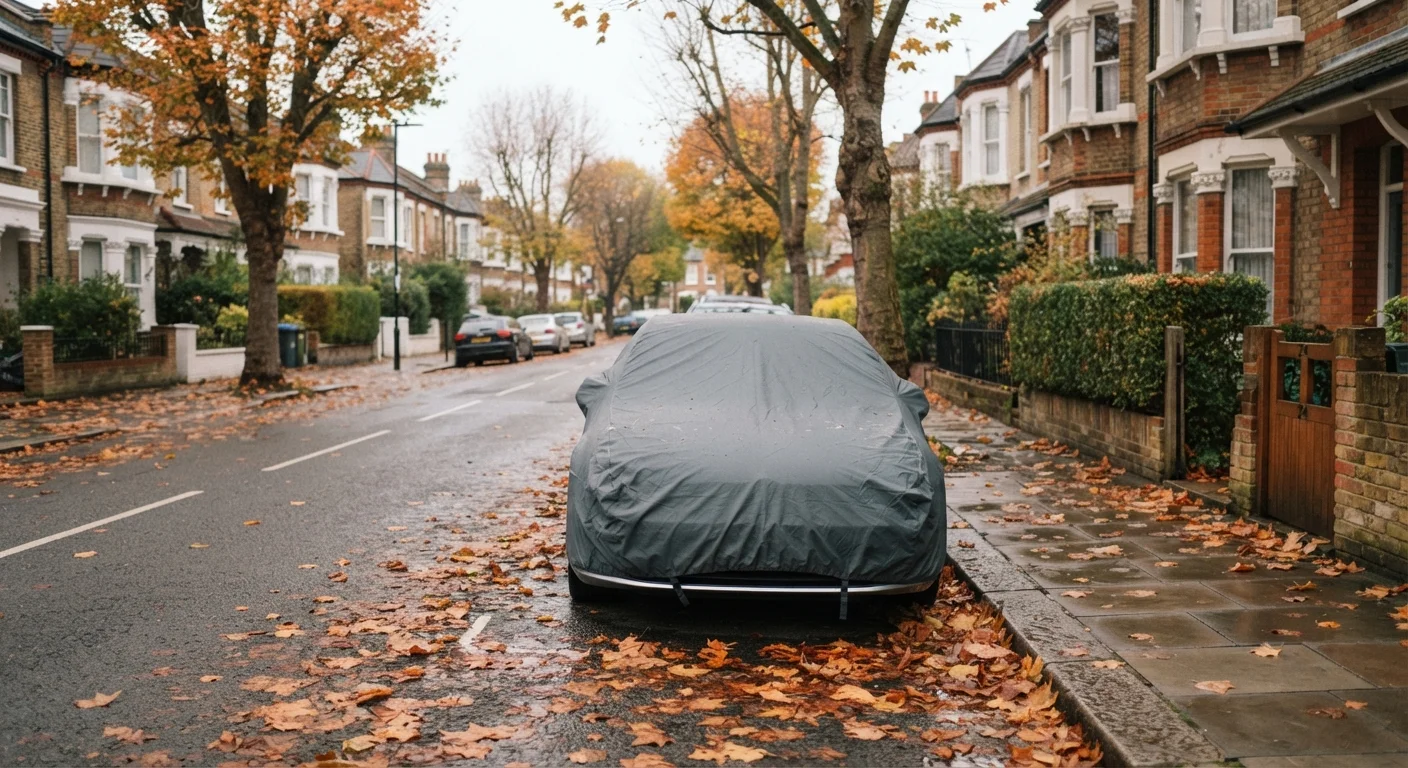
Use a fitted, breathable car cover whenever the vehicle sits for extended periods.
A cover blocks UV radiation, slows paint oxidation, reduces moisture accumulation, and deters opportunistic damage. Breathable materials prevent trapped condensation, which can cause mold and accelerate rust under the cover.
Wash the car every two weeks and more frequently after snow or coastal driving.
Road salt, bird droppings, tree sap, and industrial fallout are mildly acidic and eat through clear coat if left on the surface. Regular washing is the simplest way to reset the clock on paint degradation.
Apply a wax or paint sealant two to four times a year.
Wax and synthetic sealants create a sacrificial layer over clear coat, slowing UV damage and making contaminants easier to remove at the next wash. For outdoor-parked vehicles, this layer does real protective work rather than just cosmetic work.
Check tire pressure at least once a month and after significant temperature swings.
Outdoor vehicles experience greater temperature fluctuations than those kept in a climate-controlled garage. Tire pressure drops roughly 1 PSI for every 10°F fall in temperature, affecting handling, fuel efficiency, and tire wear.
Choose parking spots deliberately - shade in summer, shelter from wind and ice in winter.
Where you park is a form of passive protection. Sustained UV exposure accelerates interior fading and dashboard cracking. Exposed positions in freezing weather make door seals more brittle and drain batteries faster.
Inspect and treat rubber seals and weather stripping with a conditioner every six months.
Door, window, and trunk seals dry out and crack when exposed to the full range of outdoor temperatures. Cracked seals allow wind noise, water leaks, and accelerated corrosion in door cavities.
Quick Actions You Can Take Today
Not every improvement requires a weekend project. Several of the most effective protective measures take under an hour to set up or establish as a habit.
Treat the Windshield and Windows Too
Applying a water-repellent treatment to glass surfaces helps rain bead off at speed, improving visibility and reducing the time wipers need to work hard. It also makes frost easier to remove in winter, since ice bonds less firmly to treated glass. Re-apply every few months or when water stops beading visibly.
Staying Consistent Over Time
The biggest risk for outdoor parkers is not any single weather event - it is gradual neglect. Corrosion begins where paint chips go untouched. Rubber seals crack when they are never conditioned. Fluid levels drift because checks feel less urgent than an obvious warning light. Building short, regular checks into your schedule - even a five-minute walk-around once a week - catches small issues before they become repair bills.
Battery Drain Is a Real Risk in Cold Weather
Car batteries lose a significant portion of their cranking power at low temperatures. Without a garage, there is no buffer against overnight cold snaps. If your vehicle is more than three years old, have the battery tested before winter sets in - many auto parts stores and mechanics offer this check at no charge. Drivers with high-mileage vehicles will find additional guidance in our article on maintenance habits for high-mileage cars.
For broader ownership fundamentals, the car ownership basics hub covers insurance, costs, and responsibilities in plain terms. And if you want to understand which maintenance tasks you can safely handle yourself versus when to call a mechanic, see our guide on DIY car maintenance.
The content provided on our blog site traverses numerous categories, offering readers valuable and practical information. Readers can use the editorial team’s research and data to gain more insights into their topics of interest. However, they are requested not to treat the articles as conclusive. The website team cannot be held responsible for differences in data or inaccuracies found across other platforms. Please also note that the site might also miss out on various schemes and offers available that the readers may find more beneficial than the ones we cover.