

The Predator Logic Behind the Push
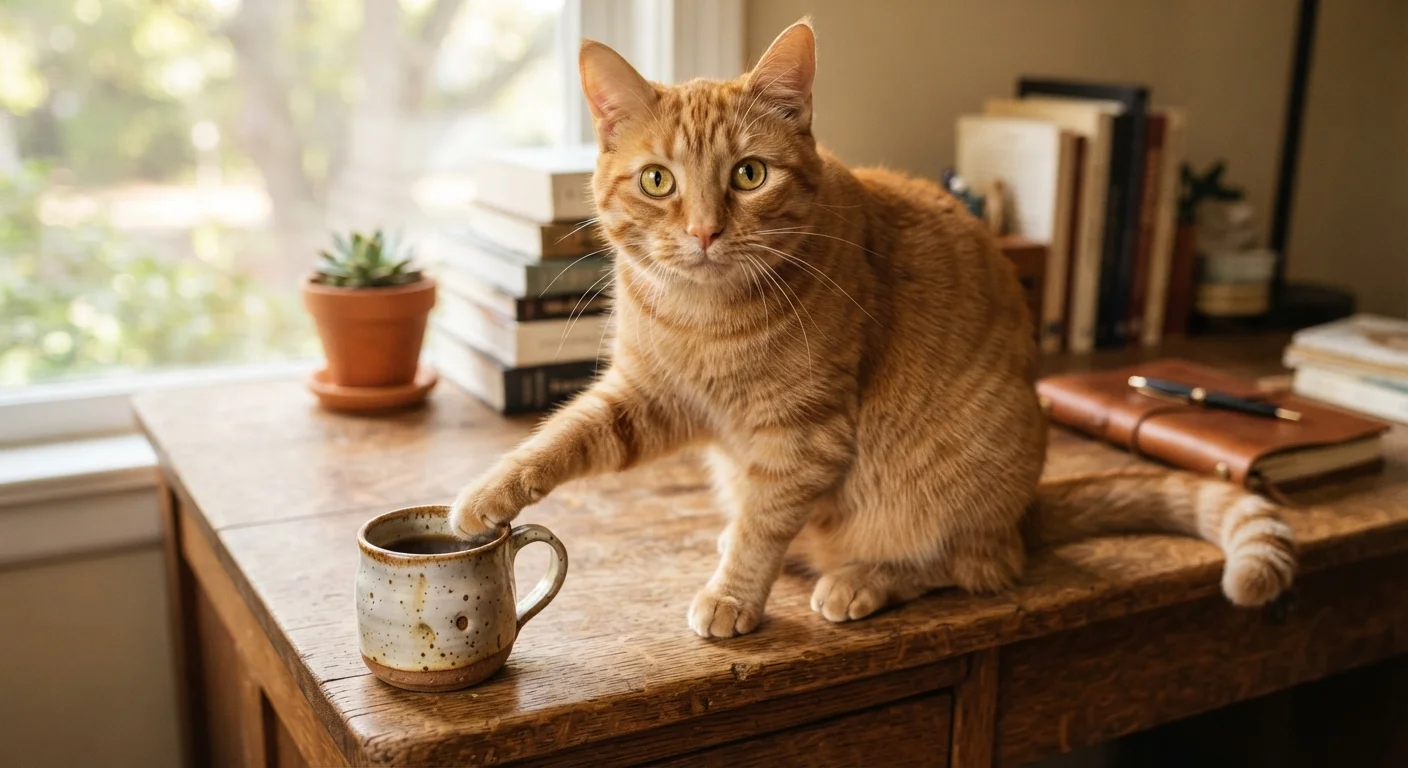
Watch your cat bat a pen off your desk and then stare at the floor where it landed. That sequence isn't chaos - it's hunting logic. Wild cats use their paws to test whether prey is alive before committing to a full attack. A mouse playing dead might bolt the moment it's touched; a quick paw swipe reveals the truth.
Domestic cats carry this same wiring even though they've never had to hunt for survival. When your cat taps a water glass and watches it wobble, their brain is running the same assessment their wild counterparts use on small prey. The falling object mimics the unpredictable movement of an animal, which is why cats often look intensely engaged - even satisfied - after the object drops.
This is an important frame: the behavior isn't directed at you. It's directed at the object. Understanding that distinction changes how you respond to it.
Channel the Hunting Instinct Constructively
Rather than trying to stop the behavior outright, give your cat sanctioned objects to interact with - lightweight toy balls, crinkle toys, or a dedicated "batting zone" on a low shelf. Cats that have an appropriate outlet for prey-testing behavior are less likely to recruit your valuables.
When It Becomes About You
Sometimes the target isn't the object - it's your attention. Cats are observant animals. If your cat has learned that pushing your phone off the nightstand makes you sit up immediately, that lesson sticks. From the cat's perspective, they've found a highly reliable method for getting a response from you.
This is known as learned attention-seeking behavior. It's not manipulation in the human sense, but it is goal-directed. Cats repeat behaviors that produce results, and a startled owner jumping up is a very satisfying result. The behavior tends to intensify if the owner consistently reacts - even with frustration - because any reaction confirms the strategy works.
You can read other attention-seeking signals your cat uses by exploring our guide to feline body language. Understanding the full communication picture helps you respond more effectively to what your cat is actually asking for.
Reacting Strongly Can Backfire
Cats don't process scolding the way dogs do. A loud or dramatic reaction to table-clearing can actually increase the behavior by confirming that this action produces an interesting, stimulating response from you. Calm, consistent redirection is more effective than emotional reactions.
What the Behavior Reveals About Mental State
Frequency and context matter. A cat that occasionally bats a toy off a shelf is expressing normal curiosity. A cat that systematically clears every surface in the house, particularly during quiet or predictable times of day, may be telling you something more specific: they're understimulated.
Indoor cats in particular need outlets for the cognitive and physical energy that outdoor life would naturally burn. When those outlets don't exist, cats find their own - and table-clearing is an efficient way to create novelty and movement in an otherwise static environment.
~60%
Indoor cats showing attention-seeking behaviors
Behavioral surveys of domestic cats suggest the majority of indoor-only cats display some form of attention-seeking behavior toward their owners, with object manipulation being among the most common.
2-3x
Increased activity during crepuscular hours
Cats are naturally crepuscular, meaning their activity peaks around dawn and dusk - the times when table-clearing and restless behavior are most commonly reported by owners.
If this sounds like your cat, cat enrichment strategies are worth exploring. Structured play, puzzle feeders, and vertical spaces can redirect this energy productively. A sudden or dramatic shift in the behavior - especially paired with other changes in appetite, grooming, or social habits - is worth discussing with a veterinarian, as it can occasionally point to underlying discomfort. See our article on signs your cat may be in pain for subtle cues to watch for.
Practical Ways to Redirect the Behavior
You're unlikely to train the instinct out of your cat entirely - nor should you try. The goal is channeling it toward appropriate targets. Here's what tends to work:
- Schedule daily interactive play. Wand toys and feather lures give your cat a legitimate hunt-and-catch cycle that satisfies the same drive that sends objects flying off shelves.
- Use puzzle feeders. Replacing part of your cat's meal with a food puzzle engages their problem-solving ability and reduces restless energy.
- Don't reward the behavior with attention. If you consistently respond to table-clearing by rushing over, you're reinforcing it. Calmly removing your cat from the surface - without drama - is more effective.
- Cat-proof valuable or fragile surfaces. Move breakable items, use museum putty for items you want to stay put, or simply keep cats off certain areas with consistent redirection.
- Provide vertical territory. Cat trees and wall-mounted shelves give cats elevated spaces of their own - reducing their interest in your surfaces.
For a broader look at what drives feline quirks like this one, our comprehensive cat ownership guide covers behavior, health, and environment in depth.
Frequently Asked Questions
Yes - most of the time it is intentional, not accidental. Cats use their paws deliberately to interact with objects, often watching the item fall with focused attention. The motivation is usually curiosity, hunting instinct, or a bid for your reaction.
Boredom is one common driver. If the behavior happens most when your cat lacks stimulation or you haven't engaged with them recently, it's a signal they need more mental and physical enrichment. Indoor cats especially benefit from structured play sessions.
Scolding is generally not effective and can increase anxiety without addressing the root cause. Redirecting your cat's energy toward appropriate outlets - such as puzzle feeders, wand toys, or designated climbing spaces - is a more constructive approach.
In most cases, no - it's normal feline behavior. However, a sudden increase in restlessness, destructive behavior, or unusual activity levels can sometimes signal an underlying health or anxiety issue. If the behavior seems compulsive or is accompanied by other changes, consult your veterinarian.
You won't eliminate the instinct entirely, but you can redirect it. Provide more interactive play, use puzzle feeders, create cat-safe climbing areas, and remove fragile items from surfaces your cat frequents. Consistency matters more than any single fix.
The content provided on our blog site traverses numerous categories, offering readers valuable and practical information. Readers can use the editorial team’s research and data to gain more insights into their topics of interest. However, they are requested not to treat the articles as conclusive. The website team cannot be held responsible for differences in data or inaccuracies found across other platforms. Please also note that the site might also miss out on various schemes and offers available that the readers may find more beneficial than the ones we cover.