

Why Texture Is a Design Essential, Not a Finishing Touch
A room furnished with good pieces but identical finishes can still feel flat and lifeless. Texture is what gives a space its tactile richness - the sense that it has been lived in, curated over time, and genuinely inhabited. When you layer rugs, textiles, and varied materials, you're creating visual interest that a single color or pattern cannot achieve on its own.
If you're new to decorating or starting a room from the ground up, this guide fits naturally alongside the broader process covered in decorating a room from scratch. And if terms like wabi-sabi or biophilic appear on your mood board, our interior style glossary can help decode them. The goal here is practical: how to build layered texture that adds depth without tipping into clutter.
What you will need
What You'll Need Before You Start
Successful layering requires a clear picture of your existing room before you add anything new. Take stock of your current furniture finishes, wall colors, and floor material - these form the foundation every layer sits on top of.
Base rug (large format)
Anchors the seating area and provides the foundational layer for all subsequent textile decisions.
Layering rug (smaller, contrasting texture)
Placed over the base rug to introduce a second texture, pattern, or material that adds visual interest.
Throw blankets (two or three, varied weight)
Draped over sofas or chairs to soften hard furniture edges and introduce additional textile depth.
Cushions in odd-numbered groupings
Add tactile variety through different fabric weaves - linen, velvet, knit - without relying solely on pattern.
Tape measure
Ensures rugs are sized correctly relative to the seating area and to each other.
Rug pad
Keeps layered rugs from shifting underfoot and protects both rugs from friction damage.
Mood board or fabric swatches
Helps visualize how textures and tones sit together before committing to purchases.
Step-by-Step: How to Layer Rugs, Textiles, and Texture
Follow these steps in sequence. Each builds on the previous one, helping you add richness gradually rather than all at once.
Establish your tonal palette first
Before selecting any rug or textile, identify two or three tonal families you want the room to work within - for example, warm neutrals, earthy ochres, and muted greens. Texture reads differently depending on whether materials share or contrast in tone. Keeping tone consistent allows you to mix materials freely without visual chaos.
Choose and position your base rug
The base rug should be large enough that the front legs of all major seating pieces sit on it. In most living rooms, this means a rug measuring at least 8×10 feet. Choose a relatively low-pile, durable material here - flatweave cotton, sisal, or low-loop wool works well because it provides a stable visual floor for layers above it.
Add a smaller rug with contrasting texture
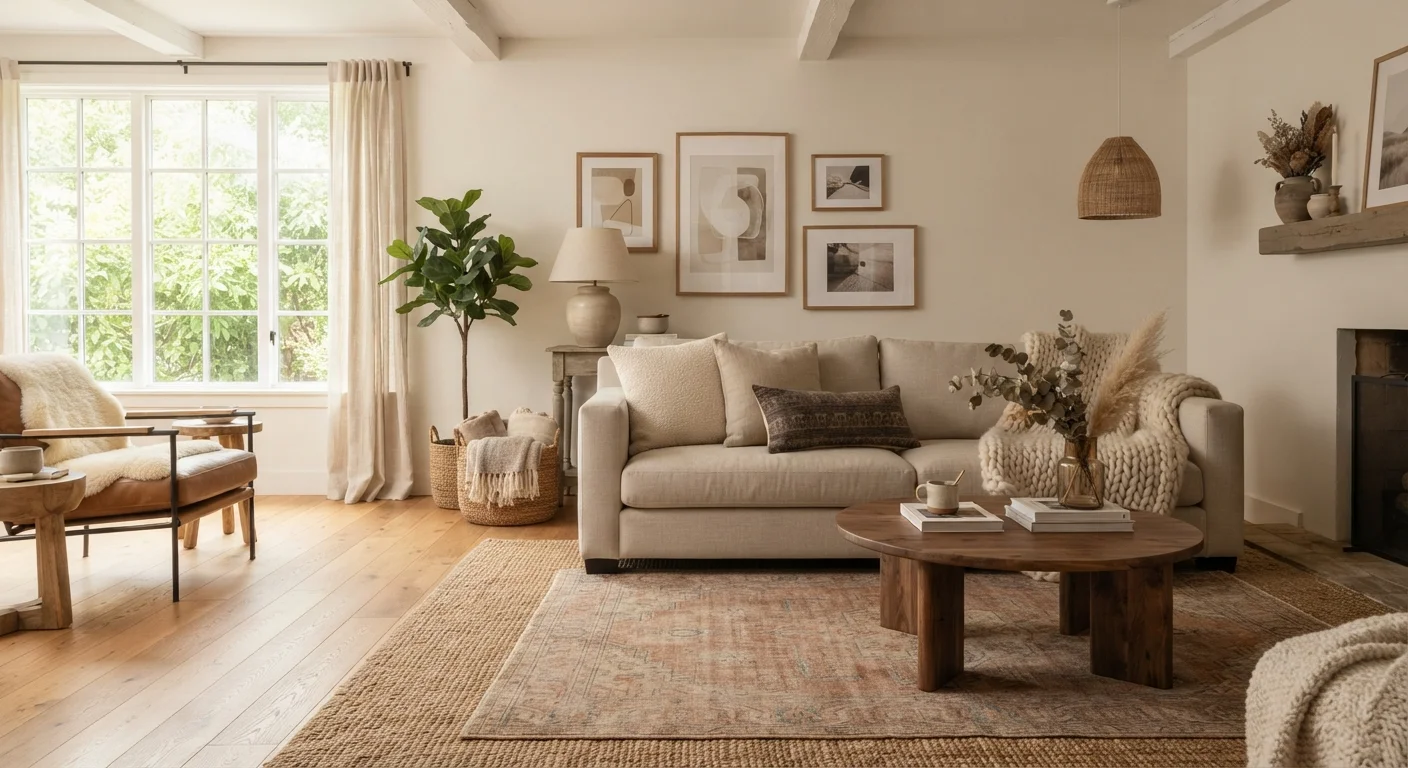
Layer a smaller rug on top of the base, offset toward one end of the seating area rather than centered. Choose a contrasting texture: if your base is a flatweave, opt for a high-pile shag, a Moroccan-knotted style, or a braided jute. The contrast in material height is what creates visible depth. The layered rug should cover roughly one-third to one-half of the base rug's visible area.
Introduce throws and blankets to upholstered pieces
Drape one to two throws over a sofa arm, a chair back, or a bench at the foot of the bed. Aim for natural fiber options - linen, cotton, chunky wool, or cotton-blend knits - since these have inherent visual texture even in plain weaves. Fold one neatly and leave another slightly loose to suggest the room is actually used. This small contrast of ordered and relaxed makes a space feel genuinely liveable rather than staged.
Layer cushions in odd numbers with varied fabric weaves
Arrange cushions in groups of three or five on sofas and two or three on chairs. Vary the fabric type within each group rather than the pattern - a linen cushion beside a velvet cushion beside a boucle cushion reads as thoughtfully layered even if all three share the same color. Reserve one or two accent cushions for a contrasting tone within your established palette.
Extend texture to walls and hard surfaces
Texture layering doesn't stop at the floor. Woven wall hangings, linen curtains, rattan baskets, ceramic vessels, and wooden objects all contribute tactile variation without adding textile bulk. Group hard-surface objects by material family - ceramics together, wooden objects nearby - so the eye reads clusters of related texture rather than a scattered miscellany.
The Rule of Restraint in Layering
Every textile or rug you add should either introduce a new texture that isn't present yet, or reinforce the room's tonal palette. If a piece does neither, it's likely adding clutter rather than depth. Step back periodically and remove one item - you'll often find the room looks better with slightly less than you thought it needed.
Avoiding Common Layering Mistakes
The most frequent error is adding too much at once. When every surface has a different pattern, color, and texture competing for attention, the result is visual noise rather than depth. Layering should feel intentional and calm.
More Layers Don't Equal More Depth
Layering is not about accumulation - it's about contrast and intention. Adding a fifth cushion variety or a third rug pattern rarely improves a room. The visual impression of depth comes from the relationship between different textures, not the sheer number of items present. If a room starts to feel busy, subtract before you add anything new.
Another pitfall is ignoring scale. A small accent rug on a large base rug disappears visually; aim for the layered piece to cover at least one-third of the base. Similarly, furniture layout affects how layered textiles read - refer to our guide on furniture layout decisions to make sure your arrangement gives each layer room to breathe.
Finally, consider how lighting changes the appearance of texture throughout the day. Raking light from a low lamp will emphasize woven surfaces and create shadow depth, while harsh overhead lighting flattens them. For ideas on how to shift mood with light, see our piece on artificial lighting strategies.
The content provided on our blog site traverses numerous categories, offering readers valuable and practical information. Readers can use the editorial team’s research and data to gain more insights into their topics of interest. However, they are requested not to treat the articles as conclusive. The website team cannot be held responsible for differences in data or inaccuracies found across other platforms. Please also note that the site might also miss out on various schemes and offers available that the readers may find more beneficial than the ones we cover.