

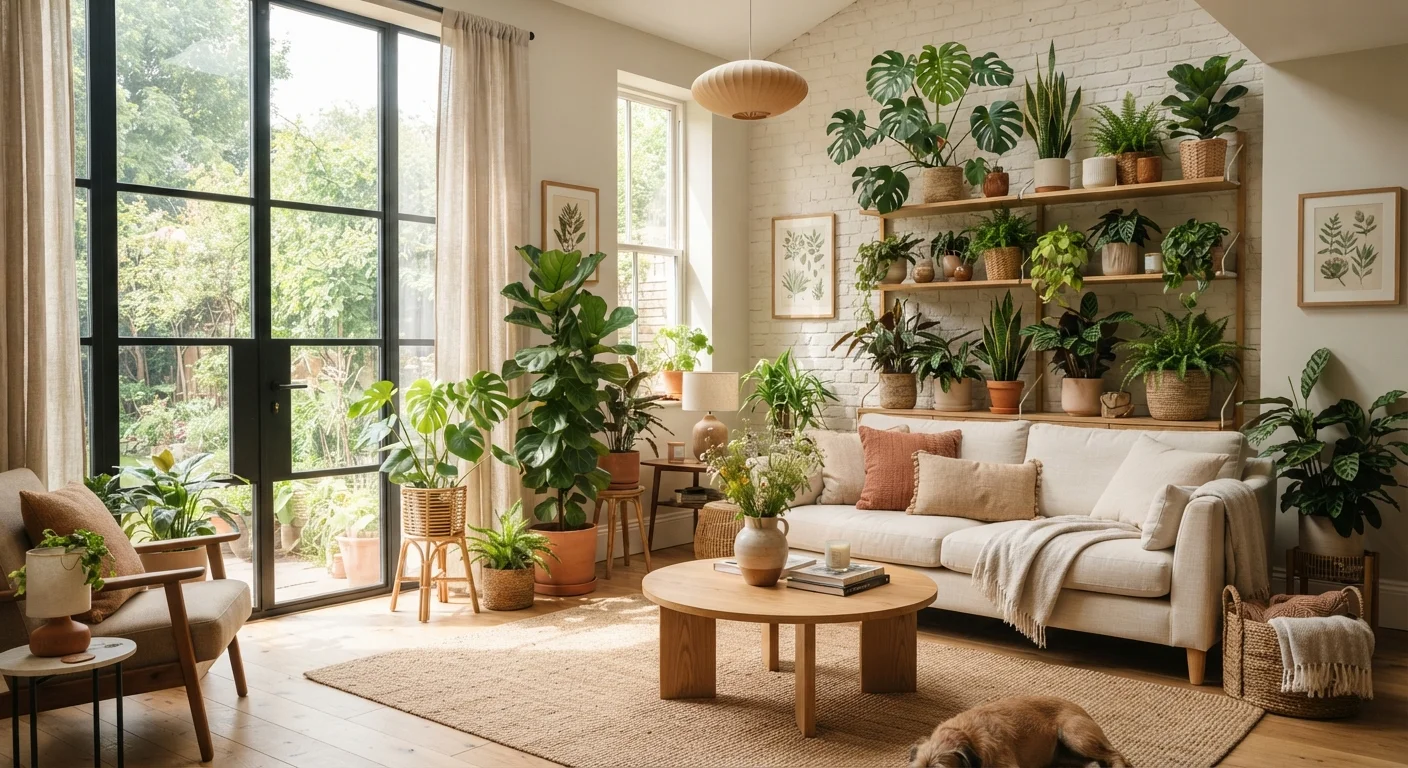
Why Most Indoor Plants Fail - and How to Avoid It
Bringing plants indoors has become one of the most accessible ways to refresh a room's feel, but a surprising number end up wilting within months. The problem is rarely a lack of care - it's a mismatch between the plant's needs and the conditions it's actually placed in. Before choosing a species, assess what your space genuinely offers: How much natural light does the room receive, and from which direction? Is the air particularly dry (as it often is with forced-air heating) or humid? How consistent is the temperature?
Understanding these conditions up front takes the guesswork out of plant selection. A thriving plant in the wrong room signals something went right; a struggling one in a prime window often signals the wrong match entirely. The tips below pair specific plant types to real-world interior conditions, so you can make choices that hold up over time - not just at the point of purchase.
Check the Soil Before You Water
The most common cause of indoor plant failure is overwatering, not underwatering. Before adding water, push a finger about an inch into the soil - if it still feels damp, wait another day or two. Most houseplants prefer their soil to partially dry out between waterings. This one habit extends the life of nearly every indoor plant significantly.
Plants Matched to the Spaces That Suit Them Best
Low-Light Corners: Pothos, ZZ Plant, and Cast Iron Plant
Rooms with small windows, north-facing exposures, or limited natural light aren't plant-free zones - they just require tolerant species. Pothos (Epipremnum aureum) is among the most forgiving of all houseplants, thriving in indirect light and irregular watering. The ZZ plant (Zamioculcas zamiifolia) handles near-dark conditions and stores water in its rhizomes, making it drought-tolerant. The aptly named cast iron plant (Aspidistra elatior) can endure low light, temperature fluctuations, and infrequent watering - useful near entryways or inner hallways.
None of these plants prefer low light - they simply tolerate it better than most. Even shade-tolerant species benefit from occasional rotation closer to a light source.
Pothos and ZZ plants tolerate low light but still benefit from occasional access to brighter conditions.
Bright Indirect Light: Monsteras, Rubber Plants, and Philodendrons
East- or west-facing rooms that receive a few hours of gentle sun without intense midday rays are ideal for many popular houseplants. Monstera deliciosa produces its iconic split leaves most dramatically with consistent bright, indirect light. Rubber plants (Ficus elastica) develop rich, glossy foliage under similar conditions and can grow into substantial statement pieces over several years. Heartleaf philodendrons are fast-growing, trail elegantly from shelves, and tolerate occasional missed waterings.
This category covers a wide range of sizes and textures, making it the most versatile group for general living spaces and home offices.
East- or west-facing rooms offer the bright indirect light that most popular foliage plants genuinely prefer.
High Humidity Rooms: Ferns, Orchids, and Peace Lilies
Bathrooms and kitchens typically have higher ambient humidity than other rooms, which suits a specific group of plants that struggle in dry indoor air. Boston ferns (Nephrolepis exaltata) are one of the classic bathroom plants, thriving where steam keeps the air moist. Orchids - particularly Phalaenopsis varieties - prefer indirect light, moderate humidity, and good airflow, and they perform well on bathroom windowsills. Peace lilies (Spathiphyllum) tolerate lower light and filter certain airborne compounds, making them a practical and attractive choice for kitchens.
If your bathroom lacks a window, artificial grow lights can supplement, though very low airflow may limit success with ferns.
Bathrooms with natural light offer the humidity that ferns and orchids need to genuinely flourish indoors.
Dry Air and Direct Sun: Succulents, Cacti, and Aloes
South-facing windowsills in homes with forced-air heating or air conditioning can be challenging environments - low humidity and high light intensity. This is exactly where succulents, cacti, and aloe plants are at home. These species store water in their leaves and are adapted to infrequent, thorough watering followed by a complete dry-out period. Overwatering is their most common cause of failure indoors.
Beyond windowsills, this group works well in sunny kitchens and home studios. They require very little intervention, making them practical for rooms you don't occupy daily. Keep them in well-draining, gritty soil mixes - standard potting soil holds too much moisture for most of these plants.
Succulents thrive on neglect - dry air and direct sun suit them far better than most other houseplants.
Statement Plants for Scale and Structure
Some plants earn their place primarily through visual impact rather than adaptability. Fiddle-leaf figs (Ficus lyrata), bird of paradise (Strelitzia reginae), and large Monstera specimens can anchor a room the way a piece of furniture does. These plants need more consistent care - stable temperatures, bright indirect light, and correct watering - but the payoff is a living architectural element that evolves over time.
Placement matters significantly: a fiddle-leaf fig dropped into a dark corner will drop leaves within weeks. Position statement plants first, then build the rest of the room's arrangement around them, much like placing a sofa before choosing accent furniture. For further ideas on spatial hierarchy, see how focal points shape room layout.
Statement plants function like furniture anchors - their placement should shape the room, not work around it.
Grouping Plants for Humidity and Visual Effect
Grouping plants together creates a microclimate with slightly elevated humidity as leaves transpire, which benefits moisture-loving species placed near each other. It's also an effective design strategy - a cluster of plants at varying heights (floor pot, side table, shelf) reads as a composed vignette rather than random placement. Vary leaf textures and sizes within a group for visual contrast: pair a broad-leafed plant with something feathery or trailing.
From a care standpoint, grouping simplifies watering routines since plants in similar conditions often need attention at similar intervals. Just ensure grouped plants share compatible light and water requirements - mixing a succulent with a fern will mean one is always getting the wrong treatment.
Grouped plants create a natural humidity boost and work as a composed design moment rather than scattered decor.
Once you've matched plants to your conditions, consider how they interact with your broader interior layout. In open-plan homes - where defining zones without walls is a key challenge - tall plants like fiddle-leaf figs or bird of paradise can act as natural room dividers. Clustered smaller plants can reinforce a reading nook or soften a kitchen peninsula. Think of plants as part of your spatial toolkit, not just decoration.
Pets and Plant Toxicity
Several popular houseplants - including pothos, philodendrons, and certain lilies - are toxic to cats and dogs if ingested. Before introducing any plant into a home with pets or small children, verify its safety profile through a veterinarian or a reliable reference such as the ASPCA's online plant toxicity database. This doesn't mean avoiding all plants, but it does shape which species make sense in accessible spots.
Putting It All Together
Good plant placement follows the same logic as good furniture arrangement: it respects how people move through a space, where eyes naturally land, and what the room functionally needs. A dramatic Monstera in a dim corner will struggle; the same plant near an east-facing window becomes a genuine focal point. Start with one or two well-chosen plants suited to your actual conditions, observe how they respond, and build from there. Sustainable indoor gardening is incremental - and the results compound over time.
The content provided on our blog site traverses numerous categories, offering readers valuable and practical information. Readers can use the editorial team’s research and data to gain more insights into their topics of interest. However, they are requested not to treat the articles as conclusive. The website team cannot be held responsible for differences in data or inaccuracies found across other platforms. Please also note that the site might also miss out on various schemes and offers available that the readers may find more beneficial than the ones we cover.