

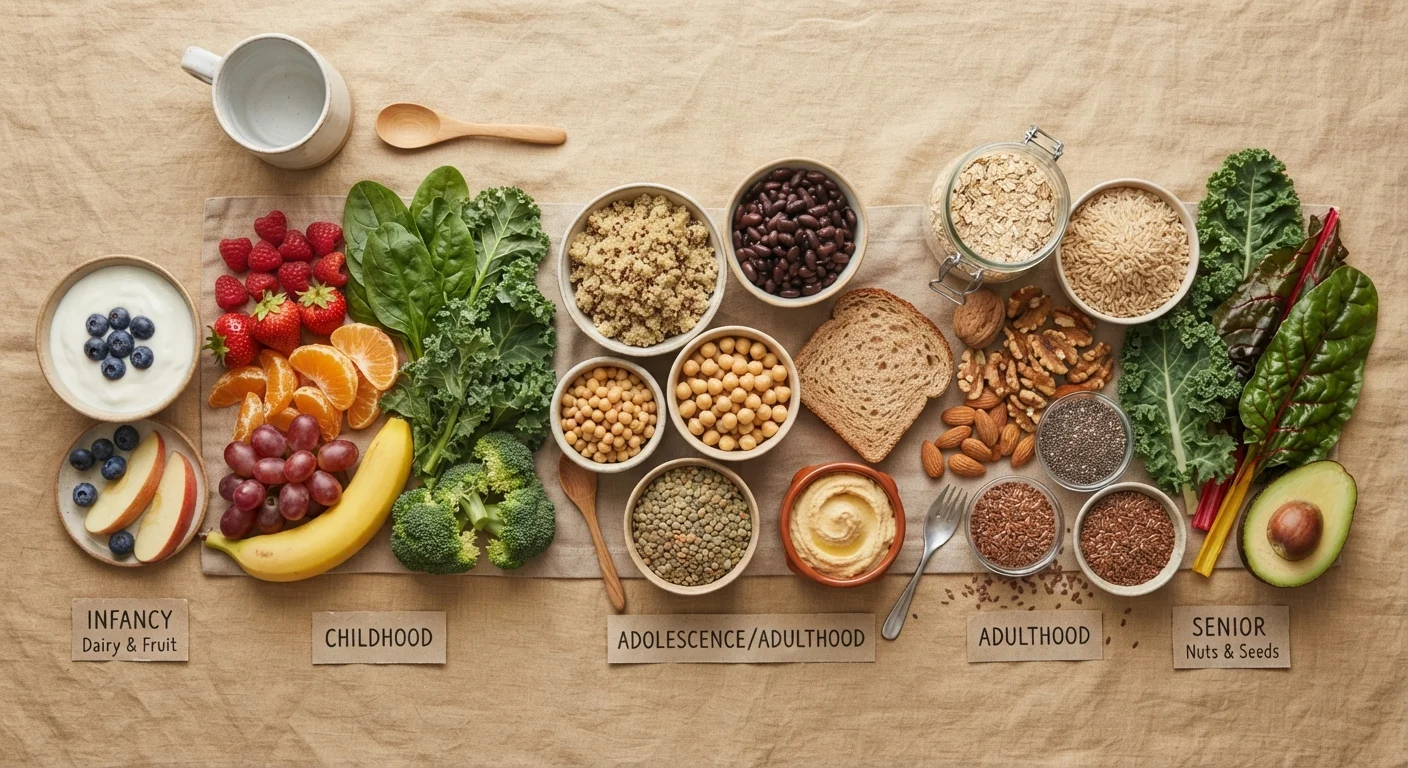
Why Nutrition Isn't One-Size-Fits-All
The human body is not static - it grows, changes, and declines across decades, and its demand for specific nutrients shifts accordingly. What fuels a teenager through rapid growth is meaningfully different from what supports bone density in a 70-year-old. Yet most general nutrition guidance treats adults as a single, uniform group.
Understanding how dietary needs evolve across life stages helps you make better everyday food decisions - and recognize when a change in health or age may call for a reassessment of what's on your plate. As always, this article provides general health information, not personalized medical advice. Consult a registered dietitian or physician for guidance tailored to your circumstances.
Nutrition is also shaped by more than biology. Attitudes and emotions around food play a significant role in what people actually eat at every stage of life.
| Peak bone density age | Around age 30 (U.S. Department of Health & Human Services) |
| Nutrient of concern for teens | Calcium, vitamin D, iron (U.S. Dietary Guidelines for Americans, 2020-2025) |
| Muscle loss onset | Typically begins in the 30s-40s, accelerates after 60 (National Institute on Aging) |
| Vitamin B12 absorption risk | Increases with age due to reduced stomach acid (National Institutes of Health, Office of Dietary Supplements) |
| Caloric need trend with age | Generally decreases; micronutrient needs stay high or rise (Dietary Reference Intakes, National Academies) |
Childhood and Adolescence: Building the Foundation
The years from birth through late adolescence represent the most nutrient-intensive period of life. Rapid bone growth demands adequate calcium and vitamin D; the U.S. Dietary Guidelines consistently identify these as nutrients of concern for children and teens. Iron is equally important, particularly for adolescent girls who begin menstruating.
Protein supports muscle development, while healthy fats - especially omega-3 fatty acids - contribute to brain development through early childhood. Fiber from whole grains, fruits, and vegetables helps establish gut health patterns that can persist into adulthood.
Teenage years bring a surge in caloric needs, especially for active adolescents. This period also sets long-term eating habits, making it an important window for establishing a positive relationship with varied, whole foods.
Nutrient density
A measure of how much nutritional value (vitamins, minerals, protein) a food provides relative to its calorie count. Foods like leafy greens and legumes are considered nutrient-dense.
Sarcopenia
The gradual loss of muscle mass and strength that naturally occurs with aging, typically accelerating after age 60. It can be slowed through adequate protein intake and regular physical activity.
Micronutrients
Vitamins and minerals required by the body in small amounts for normal function, including calcium, iron, vitamin D, and B vitamins. They differ from macronutrients (protein, fat, carbohydrates).
Dietary Reference Intakes (DRIs)
A set of science-based nutrient reference values established by the National Academies to guide adequate nutrition across different age groups and sexes.
Adulthood: Maintaining and Preventing
Through the 20s, 30s, and 40s, the primary nutritional focus shifts from growth to maintenance and prevention. Bone density peaks around age 30, meaning adequate calcium intake beforehand matters enormously. After that peak, the priority becomes slowing bone loss.
Adults in this range often face challenges like busy schedules, stress, and changing metabolism - factors that can erode diet quality over time. Key priorities include sufficient fiber for cardiovascular and digestive health, folate (especially for those who could become pregnant), iron, and limiting excess sodium and added sugars.
Auditing your weekly grocery choices is a practical way to check whether your current diet covers the nutritional bases most adults need. Adequate hydration also plays a larger role in nutrient absorption than many people realize - see how fluid intake connects to dietary health.
90%
Americans not meeting vegetable intake recommendations
According to the U.S. Dietary Guidelines Advisory Committee, vegetable consumption falls short across nearly all adult age groups.
40%
Older adults with low vitamin D levels
Studies published in nutrition journals consistently find vitamin D insufficiency is widespread among adults over 50 in the United States.
1 in 3
Adults over 50 with inadequate protein intake
Research has indicated that a significant portion of older adults consume less protein than is recommended for preserving muscle mass.
Older Adulthood: Adapting to a Changing Body
From around age 50 onward, several physiological shifts alter how the body processes and uses nutrients. Muscle mass tends to decline - a process called sarcopenia - making adequate protein intake increasingly important. Research suggests older adults generally need proportionally more protein per pound of body weight than younger adults to maintain muscle.
Vitamin B12 absorption often decreases as stomach acid production declines with age, making food sources (or supplementation, guided by a physician) a relevant consideration. Calcium and vitamin D remain critical for bone health, and vitamin D deficiency is particularly common in older populations. Caloric needs typically fall, yet micronutrient needs remain high or increase - meaning nutrient density in food choices matters more than ever.
Appetite changes, medication interactions, and reduced mobility can all affect dietary intake. For older adults, these complexities make working with a healthcare provider especially important. Physical activity also shifts with age, and nutrition and movement work together to support healthy aging.
Those following plant-based diets at any age should be aware of specific micronutrient gaps - a topic covered in depth in our overview of nutrients vegetarians and vegans are most likely to miss.
This article is for general informational and educational purposes only and is not a substitute for professional medical or dietary advice. Always consult a qualified healthcare provider before making significant changes to your diet, especially if you have an existing health condition or take medications.
The content provided on our blog site traverses numerous categories, offering readers valuable and practical information. Readers can use the editorial team’s research and data to gain more insights into their topics of interest. However, they are requested not to treat the articles as conclusive. The website team cannot be held responsible for differences in data or inaccuracies found across other platforms. Please also note that the site might also miss out on various schemes and offers available that the readers may find more beneficial than the ones we cover.