

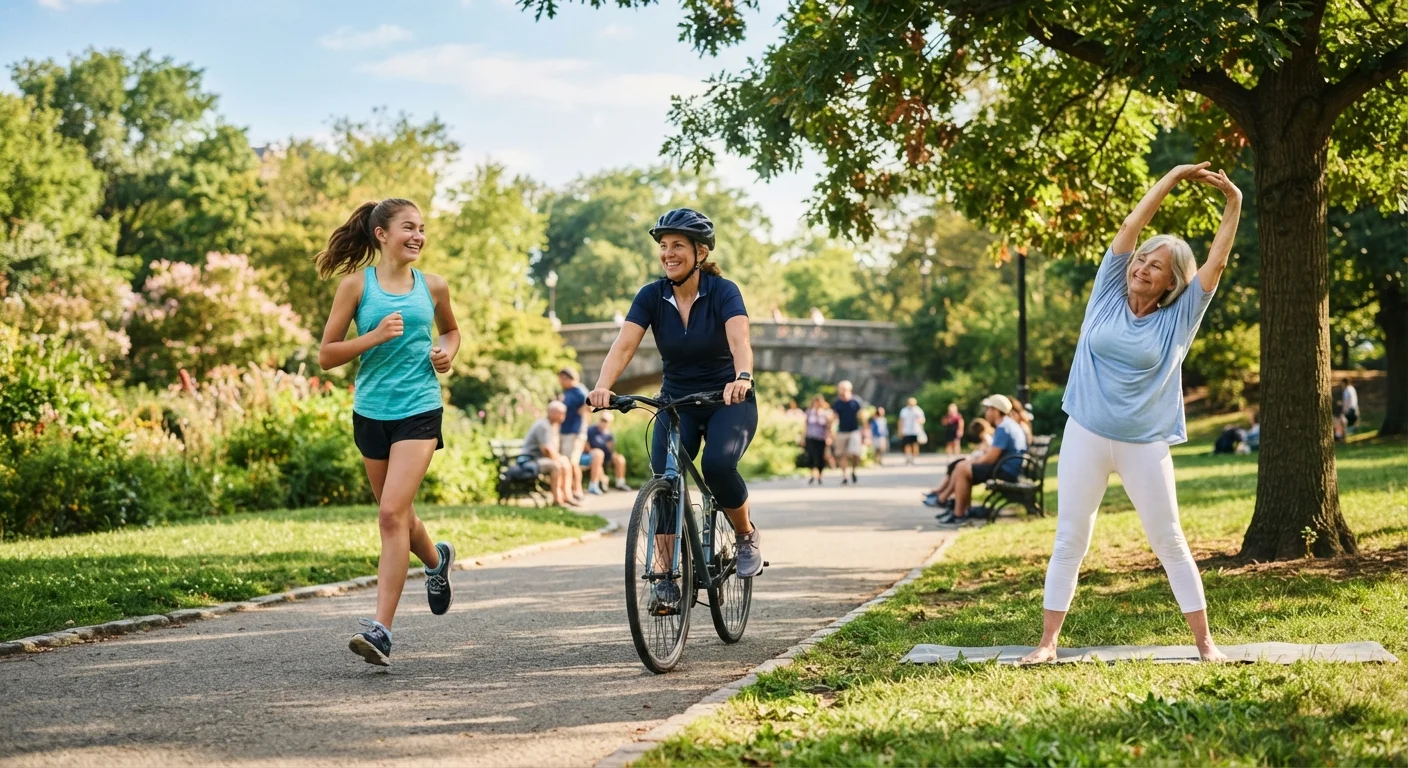
Why Exercise Needs Change Across the Lifespan
The human body is not a fixed machine. From adolescence through older adulthood, physiology shifts in profound ways - bone density peaks and then gradually declines, muscle mass changes, hormones fluctuate, and recovery time lengthens. These biological realities mean that a workout routine designed for a 22-year-old will look very different from one suited to a 65-year-old, and both are completely valid.
Understanding why exercise needs shift helps you adapt intelligently rather than push through programs that no longer serve your body. The core goals of physical activity - cardiovascular health, muscle strength, flexibility, and mental well-being - remain the same throughout life. What changes is the emphasis, intensity, and type of movement most beneficial at each stage.
150 min
Weekly moderate aerobic activity recommended for adults
According to U.S. Department of Health and Human Services Physical Activity Guidelines for Americans.
3-8%
Muscle mass lost per decade after age 30 without resistance training
A commonly cited range in exercise physiology literature describing age-related sarcopenia progression.
60 min
Daily activity recommended for adolescents aged 6-17
Per the U.S. Physical Activity Guidelines, including muscle- and bone-strengthening activity at least three days per week.
This guide walks through each major life stage, highlighting what the evidence generally supports and what to discuss with your healthcare provider before making significant changes to your activity level.
This article is for general informational and educational purposes only. It is not a substitute for professional medical advice. Always consult a qualified healthcare provider before starting or significantly changing an exercise program, especially if you have an existing health condition.
Teens and Young Adults (Ages 13-25)
During adolescence and early adulthood, the body is at a peak for building foundational fitness. Bones are still mineralizing through the mid-20s, making weight-bearing activity particularly valuable for long-term bone health. The U.S. Department of Health and Human Services recommends that teenagers get at least 60 minutes of moderate-to-vigorous physical activity daily, including muscle- and bone-strengthening activities at least three days per week.
For young adults transitioning out of school sports or structured PE classes, maintaining activity can become less automatic. This is a critical window to develop habits that carry forward. Variety tends to work well at this stage - team sports, recreational activities, gym training, cycling, and dance all deliver meaningful benefits.
Build the Habit Before the Intensity
For teens and young adults establishing fitness routines, consistency matters far more than perfection. Showing up three times per week for light-to-moderate exercise builds the neural and behavioral habit that supports harder training later. Start with activities you genuinely enjoy - adherence is highest when movement feels rewarding, not punishing.
Recovery tends to be faster in this age group, but overtraining is still a real risk - particularly for competitive young athletes. Rest days are not optional; they are when adaptation actually occurs. See our guide to how the body adapts to exercise for a clear look at this process.
Adults in Their Prime (Ages 26-45)
Most adults in this range are managing careers, relationships, and often family responsibilities alongside their fitness goals. Time constraints frequently become the biggest barrier. The good news: research consistently shows that shorter, more intense bouts of activity - even 10-20 minutes - accumulate meaningfully toward weekly targets.
The general guidance for this group aligns with U.S. federal recommendations: aim for at least 150 minutes of moderate aerobic activity or 75 minutes of vigorous activity per week, plus muscle-strengthening activities on two or more days. Strength training is especially valuable here because muscle mass begins a slow natural decline in the early 30s.
Schedule strength sessions like appointments - two per week is enough to meaningfully counter age-related muscle loss for most adults in their 30s and 40s.
Consistency with resistance training, even at modest volume, is more effective than sporadic intense efforts for preserving muscle mass over time.
If fatigue consistently lingers more than 48 hours after a workout, treat it as a signal to reduce intensity or volume - not push harder.
Prolonged recovery is a sign the body needs more adaptation time, especially common during hormonal transitions in midlife.
Nutrition and exercise are deeply connected at this stage. Our companion guide on how dietary needs shift as you age covers what your body needs to support an active lifestyle through each decade.
Stress management is another dimension often overlooked. Regular moderate exercise has well-documented associations with reduced anxiety and improved sleep quality - both of which matter enormously during high-demand life phases.
Midlife and Beyond (Ages 46-65)
Perimenopause and menopause in women, and gradual hormonal shifts in men, make this a pivotal period for fitness adaptation. Loss of estrogen accelerates bone density decline in women, making resistance training and weight-bearing cardio particularly important. Muscle loss (sarcopenia) accelerates for everyone beginning around age 50 without active intervention.
Flexibility and joint mobility also deserve more deliberate attention now. Yoga, Pilates, and targeted stretching routines can help maintain range of motion and reduce injury risk. Many people in this age group also find that recovery takes longer - this is normal, and adjusting training frequency accordingly is sensible rather than defeatist.
Get Medical Clearance Before Restarting
Adults in midlife who have been sedentary for an extended period should seek medical clearance before beginning moderate-to-vigorous exercise programs. Cardiovascular risk increases with age and inactivity, and a healthcare provider can help identify any precautions or modifications needed for a safe return to movement.
If you are returning to regular exercise after a long gap, or beginning for the first time in midlife, a gradual approach is essential. Our step-by-step guide to restarting fitness walks through how to build safely. Always consult your doctor before starting a new program, particularly if you have cardiovascular risk factors, joint conditions, or other health concerns.
Older Adults (Ages 65+)
Physical activity remains one of the most evidence-supported ways to maintain independence, cognitive function, and quality of life in older adulthood. The CDC notes that adults 65 and older can generally follow the same 150-minute weekly aerobic guideline as younger adults, with the addition of balance-focused activities to reduce fall risk.
Balance training - such as standing on one foot, tai chi, or specific balance exercises - is a distinct priority in this group. Falls are a leading cause of injury among older adults, and targeted balance work has been shown to reduce fall risk. Strength training remains important to counter ongoing muscle loss.
“Exercise is the closest thing to a wonder drug that we have. It benefits virtually every system in the body and has particular power to preserve function and independence as we age.”
— Robert Butler, Founding Director, National Institute on Aging
Exercises do not need to be high-impact to be effective. Walking, water aerobics, chair yoga, and light resistance band work all contribute meaningfully. The key is consistency and progression at a pace that feels manageable. For those interested in pairing physical activity with cognitive engagement, our article on lifelong learning for older adults explores how staying intellectually active complements physical well-being.
What Stays Constant at Every Age
Despite the differences across life stages, several principles of physical activity hold true throughout the lifespan:
- Consistency matters more than intensity. Regular moderate movement over months and years outperforms occasional bursts of intense effort.
- Variety reduces injury risk. Mixing aerobic, strength, and flexibility work distributes stress across different systems and keeps motivation higher.
- Rest is part of training. Recovery is when the body rebuilds and adapts - skipping it undermines progress at any age.
- Mental health benefits are universal. Exercise has well-established associations with improved mood, reduced anxiety, and better sleep across all age groups.
- Any movement is better than none. Even short walks, stretching, or light activity on busy days add up over time.
U.S. Physical Activity Guidelines for Americans
The federal government's comprehensive evidence-based recommendations for physical activity across all age groups, freely available at health.gov.
CDC Physical Activity Resources
The Centers for Disease Control and Prevention offers age-specific activity guidance, tools, and resources to help adults and older adults stay active safely.
MedlinePlus Exercise and Fitness
A trusted resource from the National Library of Medicine covering fitness basics, safety, and condition-specific exercise information for general readers.
Whatever your current age or fitness level, the goal is not perfection - it is sustainable movement that supports your health and feels achievable. Start where you are, adjust as your body and life evolve, and consult a healthcare professional whenever you have specific concerns about your individual situation.
The content provided on our blog site traverses numerous categories, offering readers valuable and practical information. Readers can use the editorial team’s research and data to gain more insights into their topics of interest. However, they are requested not to treat the articles as conclusive. The website team cannot be held responsible for differences in data or inaccuracies found across other platforms. Please also note that the site might also miss out on various schemes and offers available that the readers may find more beneficial than the ones we cover.