

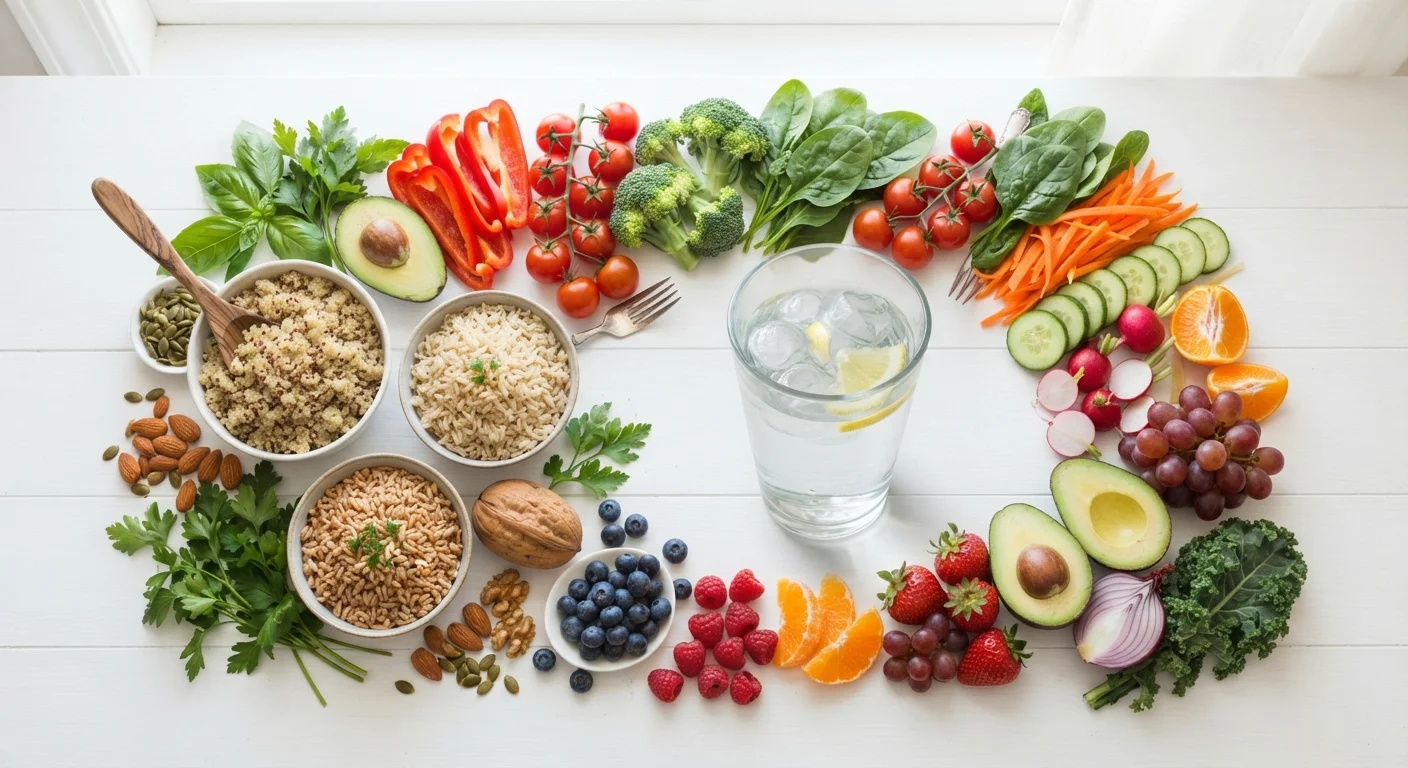
Why Hydration Belongs in Every Nutrition Conversation
Pick up most diet guides and you'll find detailed breakdowns of protein targets, carbohydrate timing, and fat quality. Rarely does the same guide devote more than a paragraph to water. Yet fluid intake is woven into virtually every nutritional process - from the moment food enters the mouth to the final delivery of nutrients to cells.
Digestion begins with saliva, which is largely water. Stomach acid, bile, and pancreatic enzymes - all critical to breaking food into absorbable components - are produced and diluted in a fluid environment. Without adequate hydration, these processes slow down. Nutrients that would otherwise be extracted efficiently may pass through incompletely absorbed.
Understanding this connection doesn't require memorizing biochemistry. It does require recognizing that what you drink is as nutritionally relevant as what you eat. See our guide to macronutrients for a foundation on how the body uses carbohydrates, proteins, and fats - all of which depend on water for processing and transport.
~20-30%
Daily fluid intake from food sources
According to established dietary research, food - particularly fruits, vegetables, and cooked grains - contributes roughly 20-30% of total daily fluid intake for most adults.
1-2%
Body water loss before performance declines
Studies on hydration and physical performance suggest that a body water deficit of as little as 1-2% of body weight can measurably impair cognitive and physical function.
~75%
Of Americans may be chronically mildly dehydrated
This frequently cited figure is an estimate based on population water intake surveys; exact prevalence varies by study methodology, but insufficient fluid intake is considered a widespread pattern in the US.
Water-Soluble Nutrients: Where Hydration Matters Most
Nutrients fall into two broad categories based on how they dissolve: fat-soluble (vitamins A, D, E, and K) and water-soluble. The water-soluble group - including vitamin C and the eight B vitamins - relies on fluid to be absorbed through the intestinal wall and carried in the bloodstream to where they're needed.
When fluid intake is consistently low, the body prioritizes water for essential functions like circulation and temperature regulation. Nutrient transport becomes less efficient. Over time, this can subtly undermine even a well-balanced diet. For a detailed look at which vitamins and minerals your body requires and cannot produce on its own, see Understanding Micronutrients.
Fibre presents a related case. It functions as a digestive regulator - slowing glucose absorption, feeding beneficial gut bacteria, and adding bulk to stool - but only when it has enough water to work with. Increasing fibre intake without increasing fluid intake is a well-documented cause of digestive discomfort. Learn more about fibre's broader role in Fibre: The Nutrient Most People Eat Too Little Of.
Pair Fibre Increases With More Fluid
If you're working to eat more fibre-rich foods - vegetables, legumes, whole grains - gradually increase your fluid intake at the same time. Fibre needs water to do its job in the digestive tract. Starting both changes together helps your body adapt without discomfort.
Hydration, Appetite, and the Hunger Signal Confusion
The hypothalamus - the brain region that governs both hunger and thirst - processes these signals in overlapping ways. Mild dehydration can produce sensations that feel like hunger, prompting food intake when what the body actually needs is fluid. This is not a design flaw but a reflection of how closely the two systems are tied together.
In practice, this means a person who drinks too little throughout the day may find themselves reaching for food more frequently, not because their calorie or nutrient needs are unmet, but because the thirst signal is being misread. This pattern is discussed in research on appetite regulation, though scientists are careful to note that the effect is modest and varies considerably between individuals.
“The relationship between fluid intake and appetite is real but subtle. Thirst and hunger share overlapping neural pathways, and in everyday life - especially as people age - the distinction between the two can easily blur.”
— National Institute on Aging, U.S. government health research institute focused on aging and physiology
Hydration also affects how nutrients are processed after eating. Water consumed with a meal participates in the churning and mixing of stomach contents, influences gastric emptying rate, and contributes to the feeling of fullness. None of this means drinking large volumes of water during meals is universally beneficial - the effect is nuanced and individual - but it underscores that hydration is an active participant in the eating process, not a passive afterthought.
Practical Implications: Building Hydration Into a Nutritional Approach
No universal fluid target fits every person. Needs vary based on body size, activity level, climate, health status, and - crucially - diet composition. People who eat generous amounts of fruits, vegetables, soups, and whole grains get more water from food than those whose diets are dominated by processed, dry foods.
Rather than fixating on a specific daily number, a more sustainable approach involves paying attention to a few practical signals: urine color (pale yellow is a commonly cited general indicator), how you feel during physical activity, and whether you tend to confuse thirst with hunger in the mid-afternoon. Those who exercise regularly have higher fluid needs; for context on how hydration intersects with physical performance, visit our Fitness & Movement hub.
Dietary patterns also shape hydration requirements. A high-protein diet increases the kidneys' workload in filtering nitrogen byproducts, raising fluid needs slightly. A high-fibre diet - strongly encouraged for long-term health - demands more water to function as intended. Understanding your overall dietary pattern matters as much as tracking individual nutrients. Tools like reading nutrition labels effectively can help you evaluate not just macronutrients but the broader composition of what you eat.
This article is for general informational and educational purposes only and does not constitute medical or dietary advice. Speak with a qualified healthcare professional or registered dietitian for guidance tailored to your individual health needs.
Frequently Asked Questions
Research suggests that drinking water before or during a meal can promote a sense of fullness, which may reduce the amount eaten at that sitting. This appears to be more pronounced in older adults. However, individual responses vary, and water is not a substitute for eating adequate, balanced meals.
Dehydration slows digestive transit, reduces the efficiency of enzymatic breakdown of food, and impairs the body's ability to transport water-soluble nutrients. Even mild dehydration can subtly compromise these processes over time.
Food contributes roughly 20-30% of daily fluid intake for most people, primarily through fruits, vegetables, soups, and cooked grains. For most adults, beverages still need to make up the majority of fluid intake to meet daily needs.
Yes. Dietary fibre absorbs water in the gut and needs adequate fluid to move efficiently through the digestive tract. Increasing fibre intake without increasing fluid intake can worsen constipation rather than relieve it.
Thirst is a useful but imperfect signal - by the time you feel thirsty, mild dehydration may already be present. Older adults in particular may have a blunted thirst response. Urine color (pale yellow as a general goal) is often cited as a practical everyday indicator.
Moderate amounts of caffeinated beverages like coffee and tea do contribute to overall fluid intake. The mild diuretic effect of caffeine is generally offset by the fluid volume consumed, though plain water remains the most straightforward hydrating choice.
The content provided on our blog site traverses numerous categories, offering readers valuable and practical information. Readers can use the editorial team’s research and data to gain more insights into their topics of interest. However, they are requested not to treat the articles as conclusive. The website team cannot be held responsible for differences in data or inaccuracies found across other platforms. Please also note that the site might also miss out on various schemes and offers available that the readers may find more beneficial than the ones we cover.