

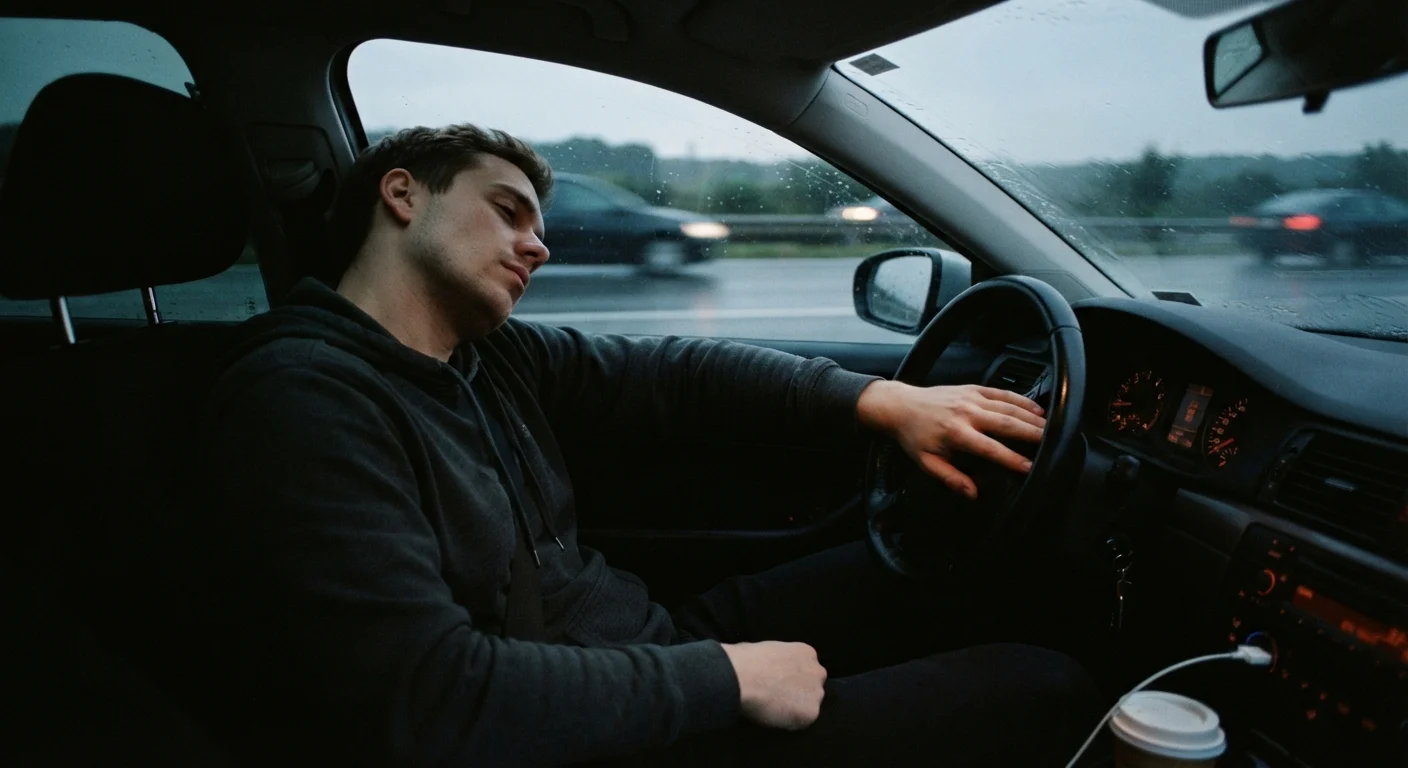
Why Drivers Consistently Rate Themselves Above Average
Ask a room full of drivers whether they're above average behind the wheel, and the majority will say yes - often confidently. Research in traffic psychology has shown this pattern to be remarkably consistent. Studies have found that anywhere from 70 to 90 percent of drivers rate themselves as better than the median. Mathematically, that's impossible. But the finding reveals something important: we are not reliable judges of our own driving ability.
This isn't unique to driving. It's a well-documented cognitive bias. In driving specifically, the stakes are high because overestimated skill tends to translate directly into riskier behaviour - shorter following distances, less margin for error, slower recognition of danger. The driver who believes they can handle anything the road throws at them is often the least prepared when something unusual actually happens.
70-90%
Drivers who rate themselves above average
Multiple traffic psychology studies have found this proportion consistently, despite it being statistically impossible for most drivers to be above median.
~40%
Of crashes linked to driver recognition failure
The NHTSA has estimated that a significant share of crashes involve failures in hazard recognition - a key outcome of reduced vigilance associated with overconfidence.
How Overconfidence Develops Over Time
Paradoxically, driving overconfidence often grows alongside experience. Early drivers tend to be cautious because the task feels genuinely demanding. As the basics become automatic - steering, braking, lane management - mental effort decreases. That's efficient, but it can quietly erode vigilance.
What feels like confidence is sometimes just reduced attention. A driver who has completed the same commute 500 times without incident may stop anticipating hazards the way they once did. This is sometimes called habituation - the road becomes background rather than something actively managed. The problem is that roads don't become safer with repetition; conditions, other drivers, weather, and vehicle state all vary constantly.
Driving with others can compound this. Passenger dynamics subtly shift driver behaviour, sometimes toward risk-taking - particularly when the driver wants to appear competent or unflappable.
Reset Your Vigilance on Routine Routes
Familiar roads are where complacency most often takes hold. Before starting a commute or regular journey, take a brief moment to consciously commit to active scanning - checking mirrors, watching junctions, and maintaining appropriate following distances. Treating a known route as if it's slightly unfamiliar is a simple way to offset habituation.
The Gap Between Confidence and Hazard Perception
One of the clearest ways overconfidence causes real-world harm is through its effect on hazard perception - the ability to read the road ahead and anticipate danger before it becomes an emergency. Overconfident drivers tend to scan less, fixate longer on a narrow field of view, and underestimate the significance of early warning signs.
Anticipating hazards rather than just reacting to them is a learned, maintained skill - not a permanent trait that experience locks in. Overconfidence interferes with this because it reduces the driver's sense of urgency to stay actively engaged. If you already believe you can handle whatever comes, there's less psychological pressure to scan, predict, and prepare.
This connects directly to cognitive load. Driving already demands significant mental resources, and overconfidence tends to increase distraction by making the task feel easier than it is.
Confidence and Competence Are Not the Same
Feeling confident while driving is not the same as driving safely. Confidence is a mental state; competence is a measurable set of skills. Genuine driver improvement involves regularly questioning whether the two are aligned - especially after any incident, however minor. Healthy caution is not the opposite of confident driving; it's part of it.
What Honest Self-Assessment Actually Looks Like
Recalibrating your driving self-image doesn't mean becoming anxious or hesitant. It means applying the same honest scrutiny to your driving that you'd apply to any other skilled task. A few practical habits support this:
- Treat near-misses as data, not flukes. If a situation required sudden braking or a sharp swerve, analyse what you missed earlier rather than attributing the incident entirely to another driver.
- Seek external feedback. Advanced driving assessments, refresher courses, or even a candid conversation with a qualified instructor can surface blind spots that self-review cannot.
- Notice your internal narration. Regularly thinking 'these other drivers are terrible' is a signal worth examining. Road frustration often reflects overestimated personal competence more than objective observation.
- Apply the same caution on familiar routes. Familiarity should not translate to reduced vigilance. Statistically, many collisions happen close to home on roads drivers know well.
Drivers returning after a long absence often find this recalibration happens naturally. Rebuilding awareness after time away from driving can actually reset some of the complacency that accumulated over years of routine.
Frequently Asked Questions
Experience creates familiarity, and familiarity can breed complacency. As routine driving becomes automatic, drivers pay less conscious attention to the road. This reduced vigilance can feel like confidence, but it actually means they're processing fewer hazards in real time.
Overconfident drivers tend to underestimate the time and distance needed to respond safely. This leads to shorter following distances and higher approach speeds - both of which reduce the window available for safe braking or evasive action.
Both groups carry different risks. Newer drivers may lack skills; experienced drivers often lack caution. Research suggests that drivers with several years of experience are particularly prone to overestimating their ability because they've gone incident-free for a long time.
Yes, structured feedback - such as advanced driving assessments or in-car coaching - can help drivers identify gaps between perceived and actual skill. Without external input, most drivers have no reliable way to calibrate their self-assessment.
Common signs include routinely tailgating, rarely checking mirrors proactively, dismissing near-misses as 'other people's fault,' and feeling impatient or superior toward other road users. These attitudes tend to signal inflated self-assessment rather than genuine skill.
The content provided on our blog site traverses numerous categories, offering readers valuable and practical information. Readers can use the editorial team’s research and data to gain more insights into their topics of interest. However, they are requested not to treat the articles as conclusive. The website team cannot be held responsible for differences in data or inaccuracies found across other platforms. Please also note that the site might also miss out on various schemes and offers available that the readers may find more beneficial than the ones we cover.