

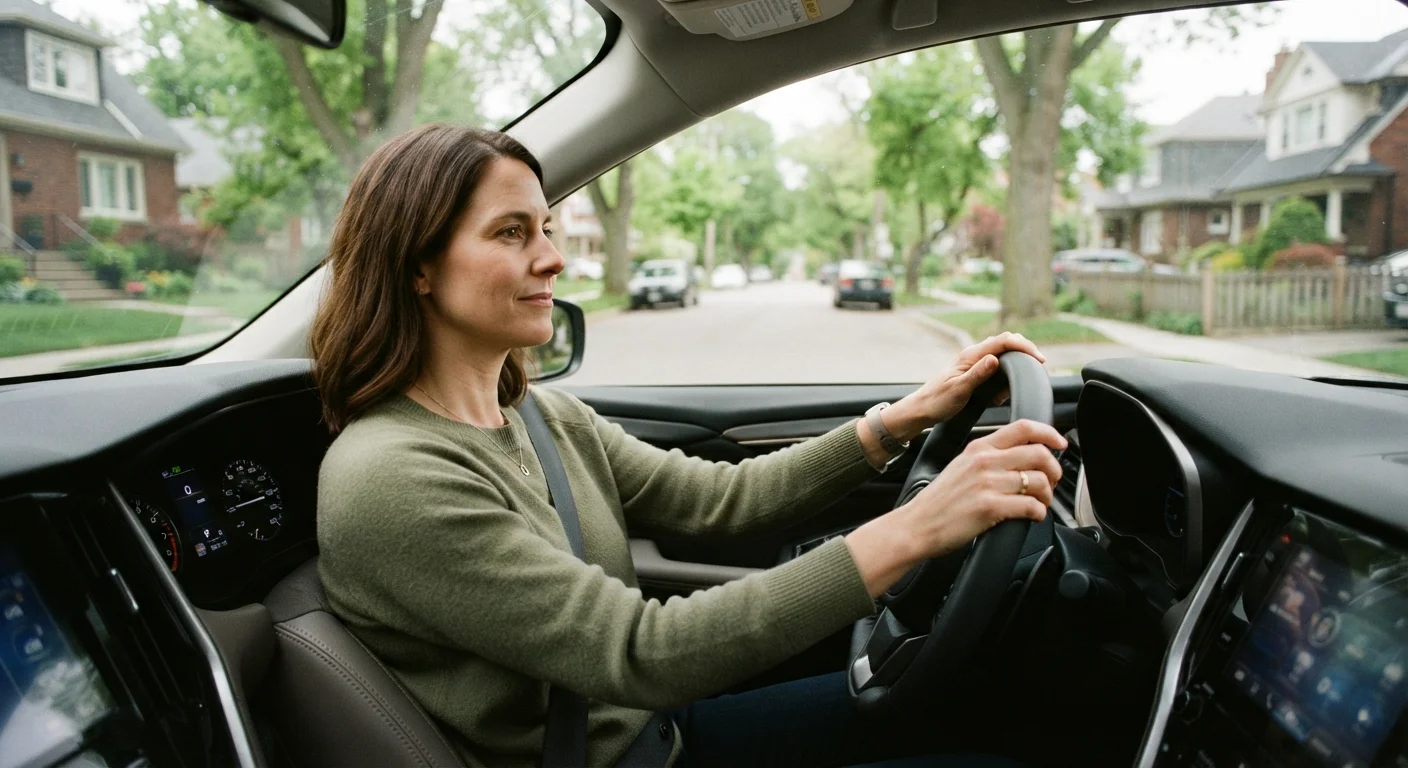
Why a Driving Break Affects More Than You'd Expect
Driving feels automatic after years of experience, but that automaticity depends on consistent practice. When you stop driving - whether due to illness, relocation, financial circumstances, or simply not needing a car - both procedural memory and situational awareness begin to erode. You may remember how to drive in a broad sense while still struggling with smooth gear transitions, accurate distance judgment, or reading traffic flow in real time.
This is not a personal failing. It reflects how motor skills and perceptual habits work: they require regular use to stay sharp. The good news is that re-learning is significantly faster than initial learning, and a structured return can get most drivers back to a comfortable level within a few weeks.
What tends to catch returning drivers off guard isn't the mechanical act of driving - it's the cognitive load. Modern traffic is faster-paced, road layouts change, and in-car technology has evolved. Giving yourself an honest, graduated re-entry period is the most effective way to close that gap.
What you will need
What to Do Before Your First Drive Back
The period before you actually drive matters as much as the drive itself. Start by ensuring your license is current and legally valid for the vehicle you plan to drive. If you've been away from driving long enough that license renewal was due, check with your state DMV. Then turn your attention to the vehicle.
Tire pressure gauge
Verify that all four tires are inflated to the manufacturer's recommended pressure before driving.
Vehicle owner's manual
Reference for dashboard warning lights, fluid specifications, and vehicle-specific controls you may have forgotten.
Dash camera
Provides a recorded perspective of your driving that you can review to identify habits or errors you missed in the moment.
Extended non-use is hard on cars: tires lose pressure and can develop flat spots, battery charge depletes, brake rotors can develop surface corrosion, and fuel can degrade in the tank. Even if the car looks fine, a pre-drive check is non-negotiable. For drivers who haven't thought much about vehicle upkeep before, our guide on car maintenance basics covers the fundamentals in plain language.
Rebuilding Confidence: What to Expect
Most returning drivers experience a predictable arc: initial anxiety, a phase of cautious over-concentration, then gradual re-automation of core skills. Knowing this arc exists helps you interpret your own experience more accurately - the discomfort is a phase, not a permanent state.
Medications and Medical Conditions Matter
If your driving break was related to a health condition or a period of medication use, consult your doctor before returning to driving. Some conditions and medications directly affect reaction time, concentration, and visual processing. Your physician can advise whether you are medically fit to drive and whether any restrictions apply.
One pattern to watch for is the temptation to rush the process. Feeling okay after your first few drives is encouraging, but it doesn't mean you're fully back. Reaction times, hazard perception, and the ability to manage multiple inputs simultaneously all take longer to restore than basic vehicle control. Give each stage of the progression below its proper time before advancing.
It can also help to think of this process in terms similar to returning to physical fitness after a break - gradual load, honest self-assessment, and patience produce better results than trying to pick up exactly where you left off. See our related guide on starting fitness after a long break for a parallel perspective on rebuilding capability progressively.
Inspect the vehicle before you drive
Before you turn the key, do a thorough walkaround. Check tire condition and pressure, look under the vehicle for fluid leaks, test all lights, and confirm that windshield washer fluid and oil are at appropriate levels. If the car has sat idle for more than a few weeks, battery health and brake responsiveness deserve particular attention - see our guide on why brakes feel different over time for what to watch for. For a broader maintenance checklist, our car maintenance hub is a useful starting point.
Reacquaint yourself with the controls
Sit in the driver's seat with the engine off. Adjust mirrors - both wing mirrors and the rearview - so your blind spots are minimised. Re-familiarise yourself with indicator stalks, wiper controls, headlight switches, and emergency braking systems. If your vehicle has features that weren't present in cars you previously drove - lane-keeping assist, automatic emergency braking, or a reversing camera - read the owner's manual section covering those systems before relying on them.
Start in a low-pressure environment
Your first drive back should not be on a busy arterial road or highway. Choose an empty parking lot, a quiet residential street, or an industrial area on a weekend morning. Practice gentle acceleration and braking, slow-speed turns, reversing, and parallel parking. Give yourself at least one or two sessions in these conditions before moving to busier roads. The goal is to rebuild physical confidence and spatial awareness without the additional cognitive load of active traffic.
Re-enter familiar local roads
Once low-speed maneuvering feels natural again, progress to roads you know well - neighbourhood streets, local shopping routes, roads you drove regularly before your break. Familiarity with the environment reduces the mental effort required, leaving more attention for re-establishing smooth lane positioning, junction timing, and mirror-check habits. Keep initial trips short - 15 to 20 minutes is plenty - and drive during daylight in good weather.
Progressively tackle more complex scenarios
Once local driving feels comfortable, systematically introduce more demanding conditions: multi-lane roads, busier intersections, night driving, and eventually motorways or highways. Each new scenario should be introduced separately rather than all at once. If high-speed road driving still feels daunting, our guide on motorway confidence walks through joining, lane discipline, and exiting step by step. Pair this progression with the principles in our defensive driving guide.
Monitor your confidence honestly
Confidence tends to return faster than actual skill, which carries its own risk. Research consistently links driving overconfidence to increased collision rates. Periodically ask yourself whether your error rate is genuinely decreasing or whether you're simply feeling more comfortable with the same mistakes. Our article on overconfidence behind the wheel is worth reading at this stage of your return.
The content provided on our blog site traverses numerous categories, offering readers valuable and practical information. Readers can use the editorial team’s research and data to gain more insights into their topics of interest. However, they are requested not to treat the articles as conclusive. The website team cannot be held responsible for differences in data or inaccuracies found across other platforms. Please also note that the site might also miss out on various schemes and offers available that the readers may find more beneficial than the ones we cover.