

Start here
Why Motorways Feel Different
Next
Joining the Motorway: The Slip Road
Then
Lane Discipline and Overtaking
Also important
Maintaining Safe Following Distances
Before you exit
Exiting Safely and Reading Signs
Keep improving
Building Long-Term Motorway Confidence
Why Motorways Feel Different
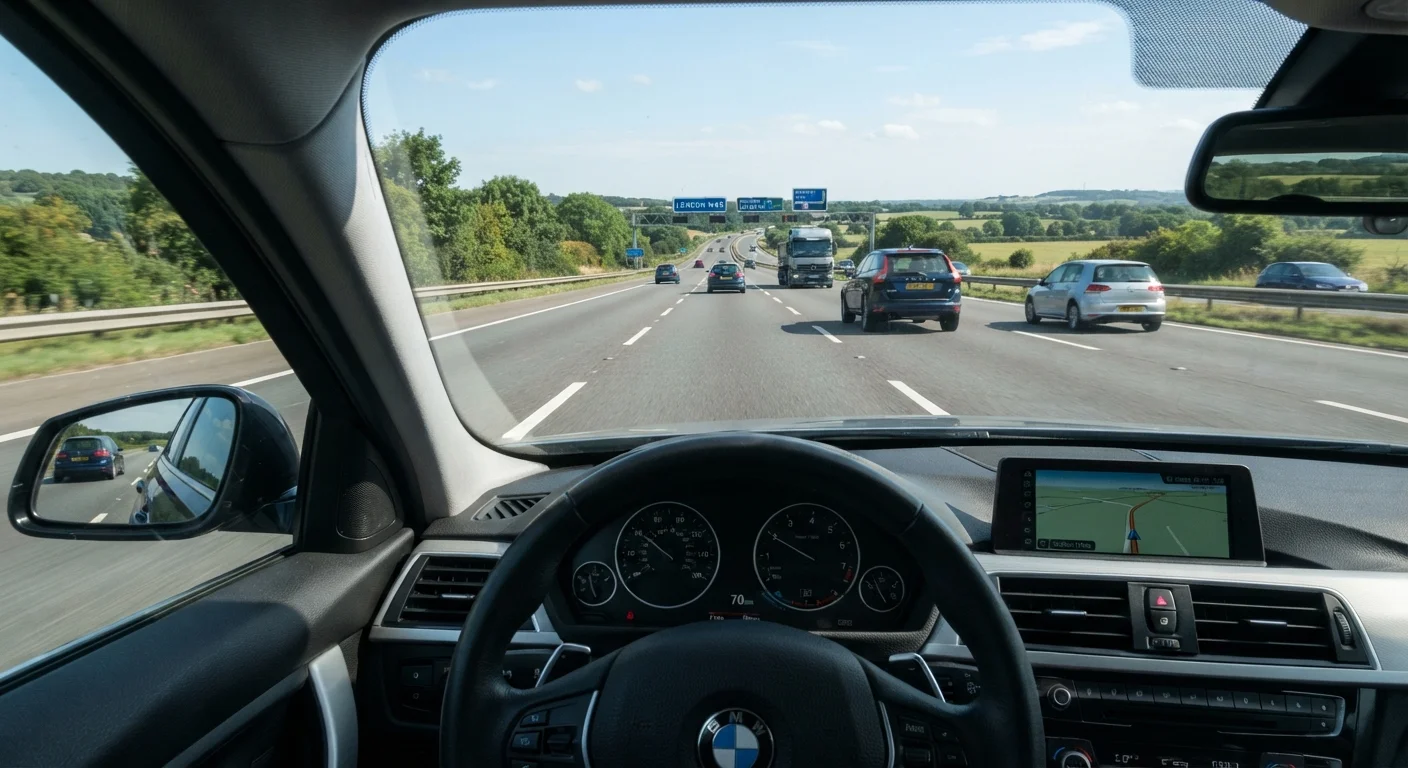
The first time many drivers join a motorway, the speed and scale of it can feel overwhelming. Vehicles traveling at 60-70 mph in multiple lanes, large trucks generating wind buffet, and a narrow window to make decisions - it's a genuinely different environment from local roads. Understanding why it feels that way is the first step toward handling it with confidence.
Motorways are engineered to reduce the most common collision types. There are no pedestrians, cyclists, or junctions mid-route. Traffic flows in one direction on each carriageway. Entry and exit are controlled. Despite the higher speeds, this controlled design makes motorways statistically safer per mile traveled than many lower-speed road types - provided drivers follow the rules consistently.
The anxiety most new drivers feel comes from speed perception and decision-making pressure. At higher speeds, events happen faster and gaps close more quickly. The antidote is preparation: knowing what to expect before you encounter it.
Slip road
The short road that connects a regular road to the motorway, designed to let drivers accelerate to motorway speed before merging with traffic.
Lane discipline
The practice of keeping to the left (or appropriate) lane unless overtaking, and returning promptly after passing another vehicle.
Two-second rule
A simple method for maintaining a safe following gap: ensure at least two seconds of clear road between your vehicle and the one ahead.
Undertaking
Passing a slower vehicle on its left side while on a multi-lane road - generally considered dangerous and discouraged or prohibited.
Deceleration lane
The lane that branches off the main motorway before an exit, giving drivers space to slow down before rejoining a lower-speed road.
Blind spot
The area beside and slightly behind your vehicle that cannot be seen in your mirrors - requires a brief shoulder check before changing lanes.
Joining the Motorway: The Slip Road
The slip road (also called an on-ramp) is your acceleration zone. Its entire purpose is to give you enough distance to reach motorway speed before you merge. Use all of it. A common mistake is to reach the end of the slip road still traveling at 40 mph and then lurching into 70 mph traffic - that speed mismatch is dangerous for everyone.
As you accelerate, actively look for a gap in the left lane using your mirrors and a shoulder check for the blind spot. Signal early to communicate your intention. Merge smoothly into a suitable gap rather than forcing your way in or braking abruptly. If no gap exists immediately, briefly adjust your speed within the slip road - but aim never to come to a full stop unless traffic is completely stationary.
Use the Full Slip Road Length
Many new drivers brake or hesitate halfway along the slip road. Treat it as an acceleration zone and aim to reach close to motorway speed before the merge point. A smooth, confident merge is safer than a slow, tentative one.
Drivers already on the motorway should move to an outer lane where safe to assist merging traffic, but they are not always able to. Don't rely on it - your primary job is to match their speed.
Lane Discipline and Overtaking
Lane discipline is one of the most misunderstood aspects of motorway driving. The left lane is the default driving lane for all vehicles. The middle and right lanes exist solely for overtaking. Many drivers treat the middle lane as a comfortable cruising lane, but doing so creates unnecessary congestion and is an offense in many places.
When overtaking, check your mirrors, signal, move to the next lane, pass, signal again, and return to the left lane once you've cleared the vehicle. This sequence should be deliberate and unhurried. Avoid undertaking - passing on the left - as this is unexpected to other drivers and significantly raises the risk of collision.
For a broader look at reading road situations and acting ahead of hazards, see our guide on hazard perception and anticipating danger. Also, if you're navigating other challenging road formats, our piece on reading roundabouts correctly offers useful perspective on lane-based decision-making.
Maintaining Safe Following Distances
At motorway speeds, stopping distances are substantially longer than most drivers instinctively expect. A vehicle traveling at 70 mph needs a minimum of around 315 feet to stop - that's roughly 24 car lengths - under ideal, dry conditions.
The practical tool for maintaining safe gaps is the two-second rule: pick a fixed point on the road ahead (a bridge, a sign), watch the car in front pass it, and count two seconds before you reach the same point. In wet conditions, double the gap to four seconds. In fog, ice, or when fatigued, increase it further.
Tailgating at Speed Is Extremely Dangerous
At 70 mph, even a one-second reduction in your following gap can mean the difference between stopping safely and a serious collision. Never tailgate, and if someone is tailgating you, resist the urge to retaliate. Let them pass by easing your pace gently.
Tailgating is the primary contributing factor in rear-end collisions on motorways. If another driver is following you too closely, do not brake-check them - instead, gradually slow to widen the gap to the vehicle ahead of you, which naturally encourages the tailgater to find room to pass.
Exiting Safely and Reading Signs
Motorway exits are signed well in advance, typically with countdown markers at 300, 200, and 100 yards. Make it a habit to identify your exit number or junction number before you set off, so you're looking for a specific sign rather than scanning every one as you pass.
Begin positioning yourself in the left lane at least half a mile before your exit. Signal in good time - not at the last moment - and ease into the deceleration lane smoothly. One key adjustment: after traveling at motorway speeds, 40 mph on a slip road can feel surprisingly slow, but your speedometer will give you the accurate reading. Don't rely on feel alone when matching the speed limit of the road you're joining.
If you miss your exit, drive calmly to the next one. Never stop, reverse, or cut across marked areas. For longer road trips where exit planning matters even more, our travel tips hub covers route preparation and on-the-road problem-solving in depth.
Building Long-Term Motorway Confidence
Confidence on the motorway is built through repeated, low-stress exposure - not through avoidance. If motorways currently feel daunting, plan short practice journeys: join at a quiet time of day (mid-morning on a weekday is often calmer than peak hours), travel just two or three junctions, and exit. Repeat this until the mechanics feel automatic.
Consider pairing motorway practice with a refresher lesson from a qualified driving instructor who can sit beside you and offer real-time feedback. This is particularly valuable for drivers who passed their test some time ago but have limited motorway experience.
Also factor in your vehicle's condition. A car with worn tires, unpredictable brakes, or low windshield washer fluid is a liability at high speed. Our guide to car maintenance for new drivers is a practical starting point for making sure your vehicle is genuinely ready for motorway use. And for a comprehensive look at the habits that keep all drivers safer in every situation, our defensive driving guide is worth reading alongside this one.
Frequently Asked Questions
Yes - motorways are designed for consistent, high-speed travel with controlled access points, which reduces many hazards found on local roads. New drivers can improve safety by practicing in low-traffic periods, understanding lane rules, and keeping a generous following distance.
Use the full length of the slip road to accelerate and match the speed of traffic in the left lane. Check your mirrors and blind spot, signal, and merge smoothly into a gap. Avoid stopping at the end of the slip road unless traffic is completely stationary.
Always keep to the left lane unless overtaking. Once you've passed a slower vehicle, return to the left lane promptly. Traveling continuously in the middle or right lane when the left is clear is illegal in many jurisdictions and increases congestion risk.
The two-second rule means maintaining at least two seconds of clear road between your vehicle and the one ahead. You should double this gap in wet conditions, and extend it further in fog, heavy rain, or when tired.
Begin moving toward the left lane well before your exit and signal your intention clearly. On most motorways, countdown markers appear at 300, 200, and 100 yards from the exit. Aim to be in the left lane and signaling by the 300-yard marker.
Do not stop, reverse, or cut across lanes. Simply continue to the next exit and reroute from there. Missing an exit is a minor inconvenience; making a dangerous maneuver to correct it is a serious hazard.
The content provided on our blog site traverses numerous categories, offering readers valuable and practical information. Readers can use the editorial team’s research and data to gain more insights into their topics of interest. However, they are requested not to treat the articles as conclusive. The website team cannot be held responsible for differences in data or inaccuracies found across other platforms. Please also note that the site might also miss out on various schemes and offers available that the readers may find more beneficial than the ones we cover.