

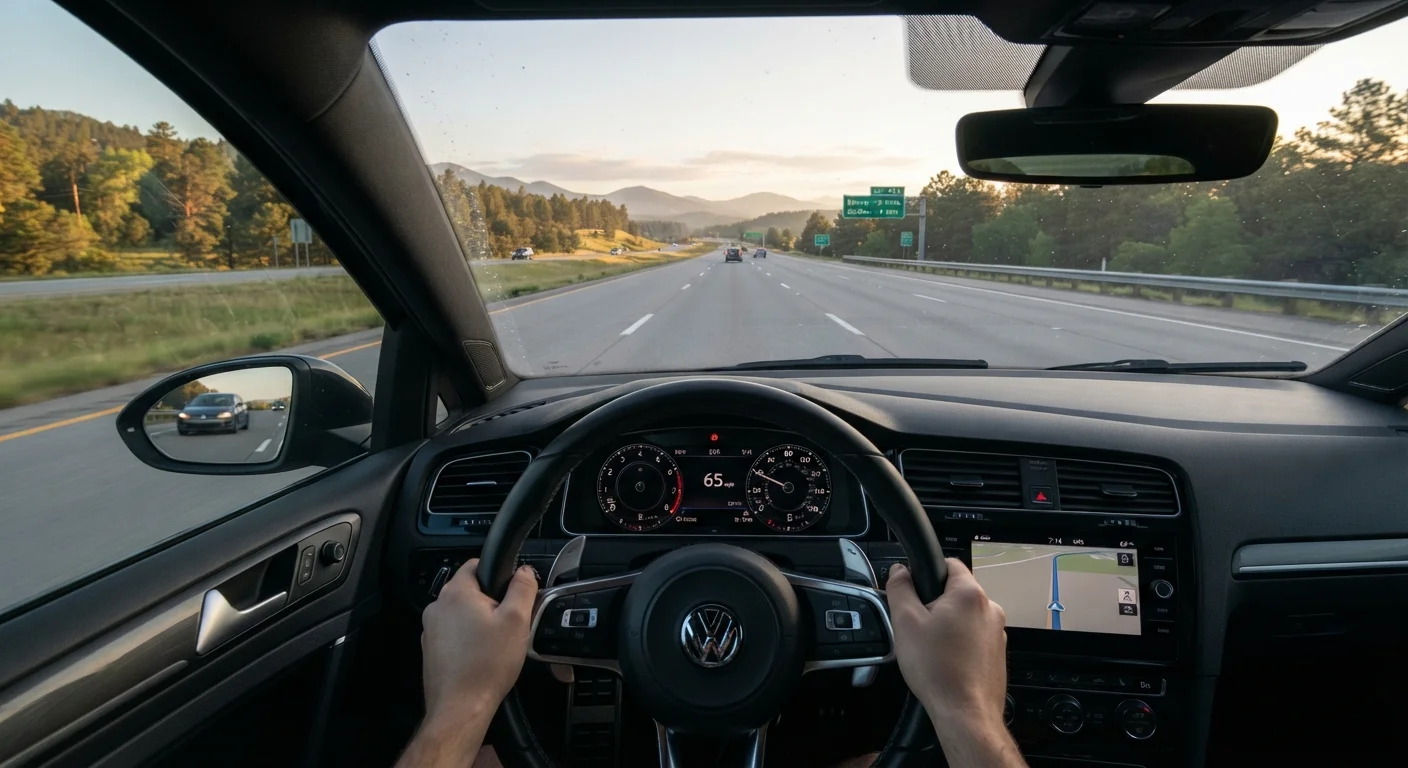
What Defensive Driving Actually Means
Defensive driving is often misunderstood as simply driving slowly or being overly cautious. In reality, it means taking active responsibility for your own safety - and for the safety of everyone around you - by anticipating what could go wrong before it does.
The core idea is that you cannot control other drivers, road conditions, or the unexpected. What you can control is your own position, speed, awareness, and response time. A defensive driver assumes that other road users may make mistakes and leaves enough margin to handle those mistakes without incident.
This approach is relevant whether you've had your license for three months or thirty years. Habits erode over time, and overconfidence is one of the most common contributors to collisions among experienced drivers.
Defensive Driving Starts Before You Move
Adjust your mirrors, fasten your seatbelt, and set your route before putting the car in gear. Starting each drive with a consistent routine primes your attention for the road ahead rather than scrambling to settle in while already moving.
The Core Principles Every Driver Should Know
Defensive driving rests on a handful of principles that apply across nearly every road situation:
- Stay alert and minimize distractions. Phones, passengers, and in-car systems all compete for your attention. Even a two-second lapse at highway speed covers significant ground.
- Assume others will make errors. Don't rely on other drivers to signal, yield, or stop correctly. Anticipate gaps in their behavior and plan accordingly.
- Maintain an escape route. Always know where you could steer if the vehicle ahead stopped suddenly or a hazard appeared from the side.
- Adapt to conditions. Speed limits reflect ideal conditions. Rain, fog, traffic density, and fatigue all require adjustment beyond the posted limit.
94%
Crashes involving human error
According to NHTSA research, approximately 94% of serious crashes involve human choice or error as a critical factor.
4 sec
Recommended following distance in rain
Traffic safety experts generally recommend at least doubling the standard two-second gap in wet or low-visibility conditions.
Before any journey, a quick check of your vehicle's readiness matters too. See our pre-journey safety checklist for the habits that take minutes and matter every trip.
Hazard Perception and Reading the Road Ahead
One of the clearest markers separating experienced, safer drivers from reactive ones is their ability to read developing situations well before they require action. This skill - hazard perception - can be developed intentionally.
Rather than reacting to what's directly in front of you, practice scanning further ahead: look through intersections before you reach them, track the behavior of vehicles two or three cars ahead, and notice pedestrians near curbs before they step out. Context clues like brake lights rippling backward through traffic, a ball rolling into the street, or a driver sitting at an unusual angle all signal that something may require your attention.
Our guide on hazard perception for experienced drivers breaks this skill down further for those looking to sharpen their road-reading ability.
Narrate the road silently as you drive - identifying potential hazards aloud (even mentally) forces active scanning rather than passive looking.
Verbalization engages deliberate attention, which is why driving instructors use commentary driving techniques to train hazard awareness.
At intersections, pause a full beat after your light turns green before moving - it gives you time to confirm cross-traffic has actually stopped.
Intersection-related crashes are among the most common collision types, and a brief pause costs almost nothing in time while adding a meaningful safety buffer.
Managing Space, Speed, and Blind Spots
Three mechanical habits underpin the majority of collision avoidance: following distance, speed management, and blind spot discipline.
Following Distance
The traditional two-second rule - maintaining at least two seconds of gap between you and the vehicle ahead - is a reasonable minimum in dry, ideal conditions. In rain or reduced visibility, that gap should increase to four seconds or more. Tailgating is consistently cited as a factor in rear-end collisions, and those collisions are almost always preventable.
Speed Management
Speed multiplies both stopping distance and collision severity. Traveling at higher speeds doesn't just require longer braking - it reduces the time available to perceive and react to a hazard. Arriving at a speed appropriate for conditions, not just the limit, is a hallmark of genuinely defensive driving.
Blind Spot Discipline
Mirrors cover most of your surroundings, but physical head checks before lane changes are non-negotiable. Adjust mirrors correctly before every drive: your side mirrors should just clear your vehicle's body, and your rearview mirror should frame the full rear window. For those building confidence on faster roads, our motorway confidence guide covers lane discipline and merging in detail.
Don't Rely Solely on Mirrors for Lane Changes
Even correctly adjusted mirrors leave blind spots - typically alongside each rear quarter of your vehicle. Always combine a mirror check with a physical shoulder glance before changing lanes. Relying only on mirrors is one of the most common habits that leads to side-swipe incidents, particularly on multi-lane roads.
Building the Habit: Tips for Every Experience Level
Defensive driving isn't a one-time lesson - it's an ongoing discipline. Here's how to approach it depending on where you are in your driving life:
New Drivers
Focus on the fundamentals first: mirror checks, following distance, and reading traffic flow. Avoid high-distraction environments until those basics are automatic. Car maintenance habits also belong in your early toolkit - a vehicle that responds predictably is essential for safe driving.
Intermediate Drivers
This is where overconfidence becomes a real risk. Periodically audit your own habits: are you still doing head checks before lane changes? Is your following distance slipping in familiar areas? Refreshing your knowledge of core vehicle maintenance is also worth doing regularly.
Experienced Drivers
Long-time drivers often develop unconscious shortcuts. Consider a formal defensive driving course as a tune-up - many insurers recognize completion of accredited programs, though outcomes vary. The goal isn't to pass a test; it's to reset habits that may have drifted over years of routine driving.
“The goal of defensive driving is not to be a timid driver - it's to be a thinking driver. You're always asking: what could happen next, and am I ready for it?”
— Traffic Safety Education Foundation, Road safety research and driver education organization
This article is for general informational purposes only. Always comply with applicable traffic laws and consult qualified professionals for vehicle safety concerns.
The content provided on our blog site traverses numerous categories, offering readers valuable and practical information. Readers can use the editorial team’s research and data to gain more insights into their topics of interest. However, they are requested not to treat the articles as conclusive. The website team cannot be held responsible for differences in data or inaccuracies found across other platforms. Please also note that the site might also miss out on various schemes and offers available that the readers may find more beneficial than the ones we cover.