

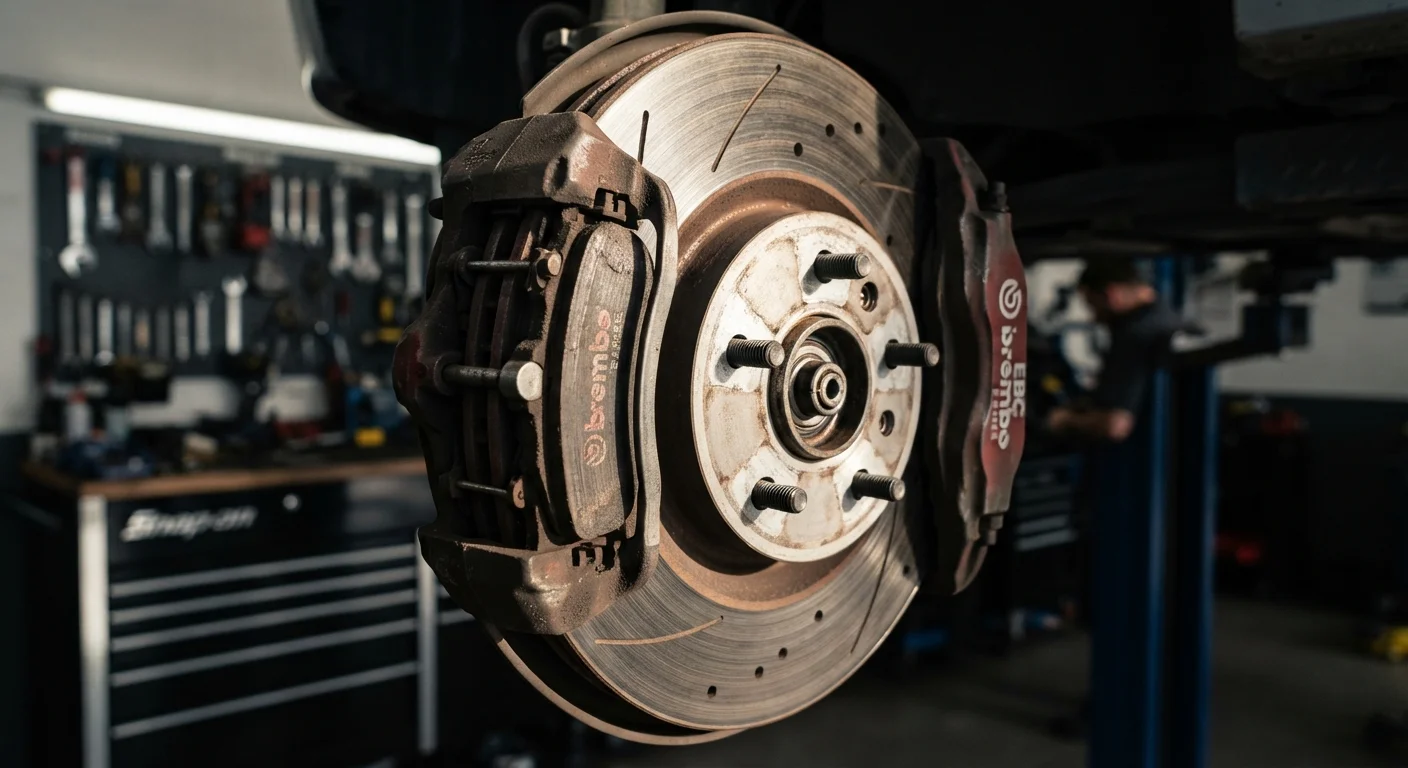
How Brakes Work - and Why They Change
Your car's disc brakes work by pressing friction pads against a spinning metal rotor to slow the wheel. Over thousands of miles, both pads and rotors wear down. Brake fluid transmits the pressure from your foot on the pedal through hydraulic lines to the calipers that squeeze those pads. Each part of this system degrades at its own pace, and when any component starts to fail, you'll usually feel it before any warning light appears.
Understanding what's normal - and what isn't - helps you act before small wear becomes a safety issue or an expensive repair. See our guide to habits that keep a car running well for how routine checks fit into overall vehicle care.
~70%
Braking force handled by front brakes
Front brakes carry the majority of stopping load under typical conditions, which is why front pads wear faster than rear pads on most passenger vehicles.
2-3 years
Typical brake fluid service interval
Most vehicle manufacturers recommend inspecting or replacing brake fluid within this window, as moisture absorption degrades its boiling point and performance over time.
Reading the Signals Your Brakes Send
Squealing or Squeaking
A high-pitched squeal during normal stops is usually the brake pad wear indicator doing its job. Most modern pads include a small metal tab engineered to contact the rotor when the friction material wears thin. That sound is a deliberate alert, not a coincidence. Occasional squealing on cold mornings or after the car has sat in rain is generally normal; persistent squealing is not.
Grinding
Grinding - a harsh, metallic noise - means the pad material is gone and metal is contacting metal. This damages the rotor with every stop and should be addressed immediately. Continuing to drive in this condition escalates both safety risk and repair cost.
Spongy or Low Pedal
If the pedal feels soft underfoot, sinks unusually close to the floor, or requires more force than it used to, your hydraulic system needs attention. Air in the brake lines - often introduced during a repair or through a leak - reduces the system's ability to transmit pressure efficiently. Degraded brake fluid, which absorbs moisture over time, has a similar effect. Understanding your car's fluid system explains how brake fluid fits into your vehicle's broader maintenance picture.
Pulling to One Side
When the car drifts left or right during braking without steering input, one side of the braking system is working harder than the other. A stuck caliper, a collapsed hose, or unevenly worn pads are the usual culprits. This pulls the car off a straight line - a real safety concern at highway speeds.
Vibration Through the Pedal or Wheel
Pulsing or shuddering felt in the brake pedal or steering wheel typically points to rotors that are warped or worn unevenly. Rotors can warp from repeated heavy braking (such as descending a long grade), rapid cooling, or simply age. Resurfacing or replacing them restores smooth, even stopping.
Trust Your First Impression
If your brakes felt normal last week and feel different today, that change is information. You don't need to diagnose the cause - that's a mechanic's job. Your job is to notice the difference and act on it. A brake inspection is far less disruptive than a roadside emergency.
When to Act - and What Waiting Costs
Brake symptoms rarely stay the same - they typically worsen. A squeal ignored for weeks often becomes a grind. A soft pedal that goes unchecked can become a pedal that reaches the floor in an emergency. The cost difference between catching a worn pad early and waiting until the rotor is damaged can be substantial.
As a general principle: if something feels different about your brakes, treat it as a prompt to get an inspection, not a reason to monitor and wait. A qualified mechanic can assess pad thickness, rotor condition, fluid quality, and caliper function in a standard brake inspection. Many shops include brake checks during routine tyre services.
It's also worth noting that factors beyond brakes affect overall stopping distance. Tyre condition plays a significant role - see our tyre safety guide for what to check, and why tyre pressure matters for how inflation affects grip and braking.
“The brake system is the single most safety-critical system on any road vehicle. Drivers who respond quickly to early warning signs - unusual sounds, changes in pedal feel, pulling - consistently avoid the most serious and costly failures.”
— National Highway Traffic Safety Administration, U.S. federal road safety agency
Frequently Asked Questions
Most pads include a small metal tab that contacts the rotor when the pad wears thin, producing a high-pitched squeal during normal stops. Some vehicles also display a dashboard warning light. If you hear persistent squealing or grinding, have the pads inspected by a mechanic promptly.
Yes - a pedal that feels soft, spongy, or sinks closer to the floor than usual can indicate air in the brake lines or deteriorated brake fluid. Both reduce your ability to stop quickly. This is a situation that warrants immediate professional attention, not something to defer.
Pulling usually means the braking force is uneven between the front wheels. Common causes include a stuck or seized brake caliper, unevenly worn pads, or a collapsed brake hose restricting fluid flow. A mechanic should inspect the system, as this directly affects your ability to brake in a straight line.
Most manufacturers recommend inspecting or replacing brake fluid every two to three years, though your vehicle's owner manual is the authoritative source. Brake fluid absorbs moisture over time, which lowers its boiling point and can lead to a spongy pedal or reduced braking performance under heavy use.
Grinding typically means the brake pads are fully worn and metal components are contacting the rotor directly. This is unsafe and will rapidly damage the rotor, significantly increasing repair costs. You should arrange a mechanic inspection as soon as possible and drive only if absolutely necessary.
The content provided on our blog site traverses numerous categories, offering readers valuable and practical information. Readers can use the editorial team’s research and data to gain more insights into their topics of interest. However, they are requested not to treat the articles as conclusive. The website team cannot be held responsible for differences in data or inaccuracies found across other platforms. Please also note that the site might also miss out on various schemes and offers available that the readers may find more beneficial than the ones we cover.