

Why That Small Number Matters More Than Most Drivers Realize
Tyre pressure sits quietly in the background of every drive you take - yet few maintenance tasks have a greater effect on safety, cost, and comfort. An under- or overinflated tyre changes the way your vehicle responds to steering inputs, lengthens the distance it takes to stop, and accelerates tyre wear in ways that shorten tyre life considerably.
According to the National Highway Traffic Safety Administration (NHTSA), tyre problems - including underinflation - are a contributing factor in thousands of crashes each year in the United States. Yet checking pressure takes about three minutes and costs nothing beyond an inexpensive gauge.
As part of any solid maintenance routine - including the checks outlined in habits that keep a car running well - tyre pressure stands out as one of the highest-return tasks a driver can do themselves.
1-2 PSI
Natural monthly pressure loss per tyre
Tyres lose air gradually through the rubber and valve stem even without any puncture or visible damage.
0.2-0.3%
Fuel economy lost per 1 PSI underinflation
The US Department of Energy estimates this reduction in fuel efficiency for every PSI below the recommended level across all four tyres.
25%
Pressure drop needed to trigger TPMS warning
Federal standards require TPMS systems to alert drivers only when pressure falls approximately 25% below the vehicle's recommended level - a significant gap before the warning appears.
How to Read Your Vehicle's Correct Pressure
The single most common mistake drivers make is reading the pressure figure off the tyre sidewall and inflating to that number. That figure - often labelled "Max Press" - is the maximum the tyre can physically hold, not what your vehicle needs. Inflating to the maximum can actually reduce grip and increase the risk of a blowout on rough roads.
The correct figure is vehicle-specific and accounts for the car's weight, suspension design, and load distribution. Find it in one of two places:
- Door jamb sticker: A label on the driver's door edge or door pillar lists both front and rear recommended pressures. This is your primary source.
- Owner's manual: Usually includes a tyre information section with pressures for different load conditions.
Note that the recommended pressure may also vary depending on whether you're carrying a full passenger load or towing - the sticker often provides both figures. For a broader look at tyre safety numbers and what they mean, see our guide on tyre safety, pressure, and tread.
Check Pressure Before the First Drive of the Day
For the most accurate reading, check your tyres first thing in the morning before the car has been driven. Even a short trip warms the air inside the tyre and raises the pressure reading by several PSI, which can mask an underinflation problem. Keeping a gauge in the glovebox makes this habit easy to maintain.
How to Check and Adjust Tyre Pressure Yourself
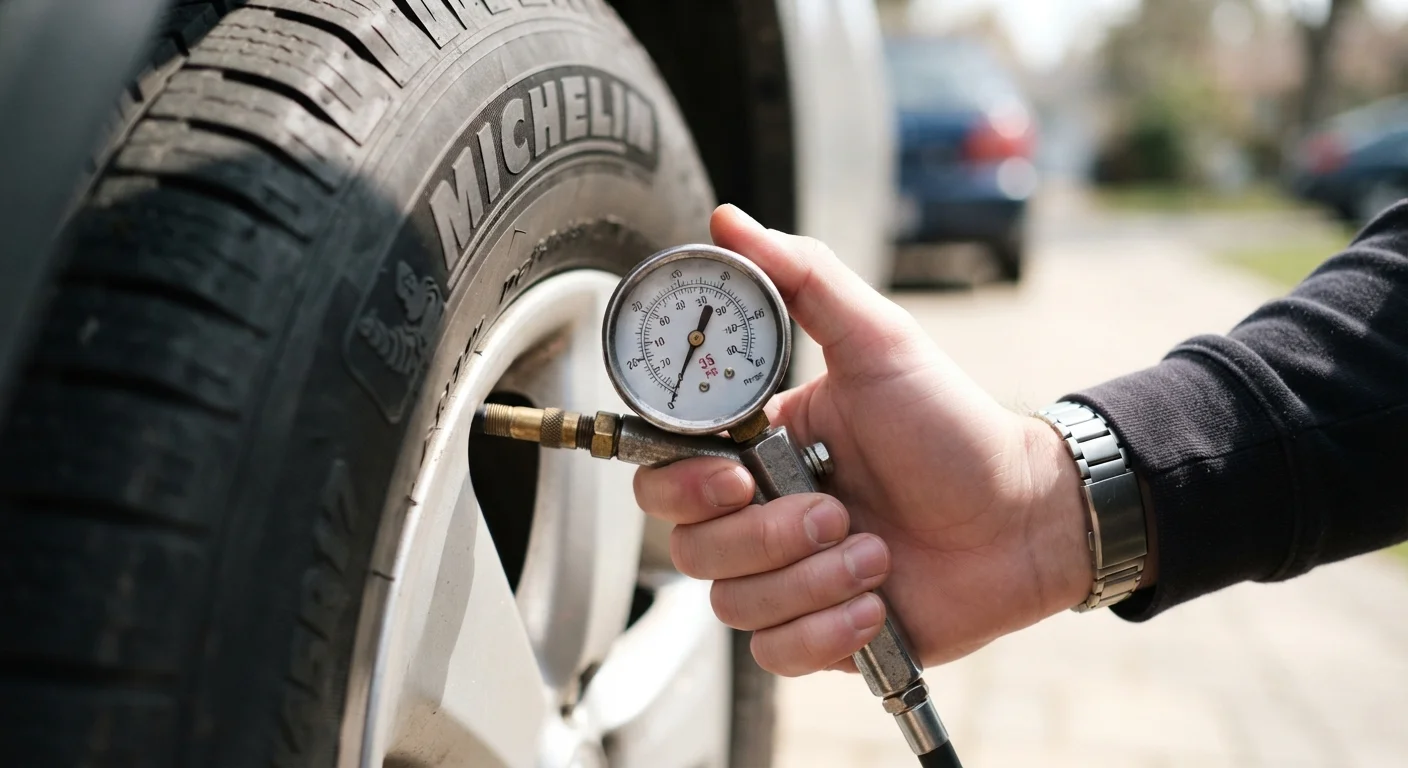
The process is straightforward and requires only a tyre pressure gauge - digital models are inexpensive and easy to read. Follow these steps for an accurate result:
- Check cold tyres. Drive less than a mile before checking, or let the car sit for at least three hours after a drive. Heat from driving temporarily increases pressure and will skew your reading high.
- Remove the valve cap from the tyre's valve stem - the small rubber or metal nub on the inner edge of the wheel.
- Press the gauge firmly onto the valve stem. A hiss means you haven't seated it correctly; reposition until the reading stabilizes.
- Compare the reading to the door jamb sticker. If it's low, add air at a gas station pump or with a portable compressor. If it's high, use the small pin on the gauge or pump nozzle to release air gradually.
- Recheck after adjusting to confirm the final reading.
Don't forget your spare tyre. A flat spare at the side of the road is one of the more avoidable inconveniences in car ownership - include it in your monthly check. This step is also part of a solid pre-trip vehicle check before heading out on a long journey.
What Happens When Pressure Is Wrong
Both underinflation and overinflation carry real consequences - they just manifest differently.
Underinflation
When a tyre is underinflated, its sidewalls flex more than designed, generating excess heat. This accelerates wear on the outer edges of the tread and, in severe cases, can lead to tyre failure. Braking distances increase, fuel economy drops (underinflated tyres create more rolling resistance), and the car may feel sluggish or pull to one side.
Overinflation
An overinflated tyre bulges in the center, meaning less rubber contacts the road at any given moment. This reduces grip, makes the ride noticeably harsher, and causes faster wear in the center of the tread band. The tyre also becomes more vulnerable to damage from potholes or road debris.
Both conditions degrade the predictability of your vehicle's handling - something that matters most in emergency situations when you need the car to respond precisely. If you've also noticed changes in how your vehicle stops, it's worth reading about why brakes feel different over time - tyre and brake condition often interact.
Frequently Asked Questions
Most mechanics and vehicle manufacturers recommend checking tyre pressure at least once a month. You should also check before any long road trip or if you notice the car handling differently. Temperature swings - particularly at the start of cold weather seasons - can cause significant pressure drops that are easy to miss.
Look for a sticker on the inside edge of the driver's door or door jamb - this is the most reliable source. The owner's manual also lists the recommended pressures. Do not use the maximum pressure printed on the tyre sidewall; that is the tyre's physical limit, not the vehicle's recommendation.
Not accurately. Visual inspection is unreliable - a tyre can be significantly underinflated while still appearing normal to the eye. An inexpensive digital or dial gauge is the only dependable way to get a true reading. Many gas stations also have air pumps with built-in gauges.
No. The Tyre Pressure Monitoring System (TPMS) required on US vehicles since 2008 typically alerts you only when pressure drops about 25% below the recommended level - by which point handling and fuel economy are already noticeably affected. Manual monthly checks catch smaller deviations before they become a safety issue.
Not always. Many vehicles specify different pressures for front and rear tyres, particularly larger SUVs, trucks, and vehicles with rear-biased load ratings. Always confirm both front and rear recommendations on the door jamb sticker rather than assuming they are equal.
Nitrogen maintains pressure more consistently over time and is less affected by temperature changes than compressed air, which contains moisture. However, for most everyday drivers, properly inflated regular air performs well and is far more accessible. The most important factor is keeping tyres at the correct pressure, regardless of what gas fills them.
The content provided on our blog site traverses numerous categories, offering readers valuable and practical information. Readers can use the editorial team’s research and data to gain more insights into their topics of interest. However, they are requested not to treat the articles as conclusive. The website team cannot be held responsible for differences in data or inaccuracies found across other platforms. Please also note that the site might also miss out on various schemes and offers available that the readers may find more beneficial than the ones we cover.