

Start here
What Slow Travel Actually Means
Next
Why Portugal Suits the Slow Travel Mindset
Then
Where in Portugal to Consider Staying Longer
When you're ready to plan
Making It Work in Practice
What Slow Travel Actually Means
Slow travel is less a style of booking and more a shift in mindset. Rather than treating a trip as a sequence of destinations to check off, the slow traveler chooses depth over breadth - picking one place, staying long enough to develop a sense of routine, and letting the ordinary details of local life become part of the experience.
That means skipping the whirlwind itinerary. Instead of five cities in ten days, it might look like twelve days in a single coastal town, with occasional day trips woven in. The measure of success isn't how much ground was covered but how fully a place was encountered.
Slow Travel Isn't the Same as Doing Nothing
A common misconception is that slow travel means lounging around passively. In practice, slow travelers are often highly engaged - attending local festivals, taking language classes, hiking regional trails, or learning to cook regional dishes. The difference is that these activities unfold at a human pace, without the pressure of a packed itinerary.
This approach contrasts sharply with a conventional packed schedule. If you're curious about how traditional itineraries are structured - and when to deliberately break from that model - our piece on building a well-structured travel itinerary explains the underlying logic.
Why Portugal Suits the Slow Travel Mindset
Portugal has a particular quality that rewards patience. Its geography is compact, its culture is textured and regionally distinct, and the pace of daily life in most parts of the country is genuinely unhurried. These aren't just romantic generalizations - they translate into real practical advantages for travelers who want to linger.
The country's mild climate means comfortable conditions across a long stretch of the year. Its train and bus networks, while not always frequent in rural areas, cover enough ground to make a single base viable for exploring a broader region. And relative to most of Western Europe, day-to-day costs for accommodation, food, and local transport remain accessible.
Slow travel
A travel approach that prioritizes depth over distance - spending more time in fewer places to experience local life rather than moving quickly between sights.
Shoulder season
The travel period between a destination's peak and off-peak seasons, typically offering fewer crowds and milder weather at more manageable prices.
Schengen Area
A group of 27 European countries - including Portugal - that allow passport-free movement between them, governed by shared visa and entry rules.
Azulejo
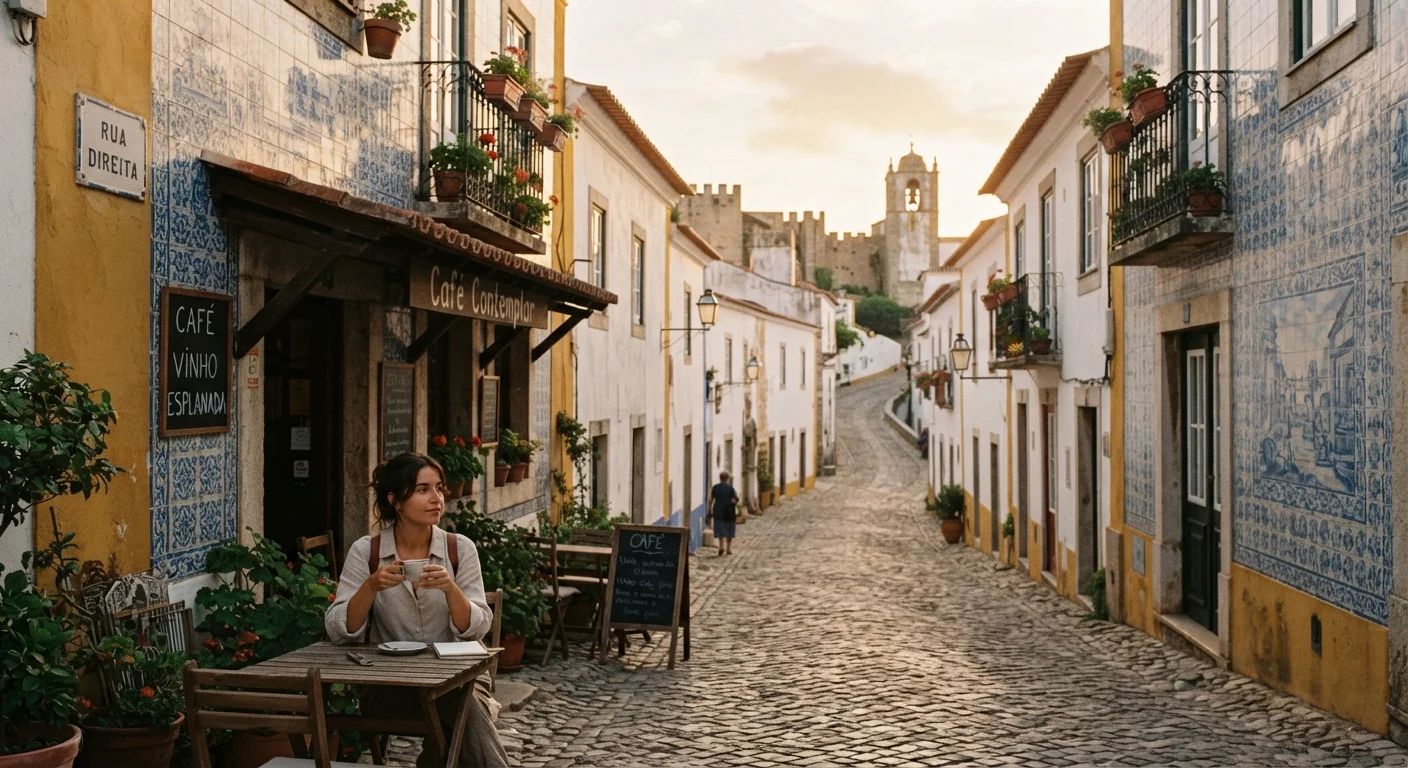
The hand-painted glazed ceramic tiles that are a defining feature of Portuguese architecture, found on church facades, train stations, and private homes across the country.
Alentejo
A vast, rural region in south-central Portugal known for cork forests, medieval walled towns, olive groves, and a distinctly unhurried pace of life.
Timing also matters. Portugal's most visited areas - Lisbon, Porto, the southern Algarve - attract significant summer crowds. Slow travelers often find that traveling during shoulder season delivers a substantially different and often more rewarding experience, with smaller crowds and easier access to local life.
Where in Portugal to Consider Staying Longer
Not every destination is equally suited to a long stay. Major tourist hubs can feel exhausting to inhabit rather than just visit, while places with a strong local identity and enough infrastructure for daily life tend to work much better.
- The Alentejo: Portugal's vast interior plateau is defined by cork forests, whitewashed villages, and medieval hilltop towns like Évora and Monsaraz. Life moves slowly here by nature, and the region's food culture - black pork, robust wines, migas - gives slow travelers something to explore in depth.
- The Douro Valley: The terraced wine country east of Porto is visually dramatic and genuinely local. Smaller towns like Peso da Régua serve as comfortable bases, and the regional rail line along the river is one of Europe's more scenic train journeys.
- The Silver Coast (Costa de Prata): The stretch of Atlantic coastline between Lisbon and Porto is dotted with working fishing towns, surf beaches, and historic sites like Óbidos and Alcobaça. It sees far fewer visitors than the Algarve, and the day-to-day rhythm feels authentically Portuguese.
- Interior university towns: Coimbra, with its ancient university and dense cultural calendar, offers the kind of lived-in urban texture that makes a two-week stay feel genuinely different from a two-night visit.
For travelers drawn to less conventional European destinations more broadly, our guide to lesser-known European capitals offers useful context about what makes a place worth a longer commitment.
Making It Work in Practice
The logistics of slow travel require a slightly different approach than booking a standard trip. A few principles tend to make the difference between a stay that genuinely deepens and one that just drags.
Weekly Rentals Change the Experience
Booking an apartment or cottage by the week rather than per night transforms how you relate to a place. You'll shop at the same market stalls, greet the same neighbors, and start to feel less like a tourist. Many platforms allow weekly stays with flexible check-in, and the per-night cost is usually lower than nightly hotel rates.
Build in a rhythm, not a schedule. Slow travel works best when you allow certain anchors - a morning walk route, a preferred café, a weekly market - to structure the days loosely. These routines are what make a place start to feel familiar rather than simply foreign.
Use local transit deliberately. Portugal's intercity trains and regional buses are genuine windows into daily life. The slower regional trains especially, which stop at small stations through agricultural landscapes, are part of the experience rather than just a means to an end.
Accept the friction. Slow travel occasionally bumps up against language barriers, closed shops, or simply nothing happening. Those moments are part of the texture. Travelers who struggle most are those who approach slow travel with a highlights-reel expectation. For a grounded perspective on the friction that long or unfamiliar travel brings, it helps to read about how experienced travelers handle the harder parts of being far from home.
Check Visa Rules Before You Extend Your Stay
US travelers can stay in the Schengen Area - which includes Portugal - for up to 90 days within any 180-day window without a visa. Exceeding this limit carries real legal and travel consequences. If you're planning a stay longer than three months, research the appropriate visa well in advance and verify requirements with official government sources, as rules can change.
Slow travel in Portugal isn't about spending less or doing less. It's about spending differently - more time in fewer places, more attention to fewer things. That shift tends to produce memories that outlast any highlight-reel itinerary.
Frequently Asked Questions
There's no universal rule, but most slow travelers aim for at least one week in a single location, with two or more weeks being common. The goal is to settle into a rhythm rather than tick off sights, so duration matters less than the quality of engagement with the place.
Portugal remains one of the more affordable destinations in Western Europe, particularly outside Lisbon and the Algarve coast during peak summer. Weekly or monthly apartment rentals, cooking some meals at home, and using local transit all help stretch a budget significantly.
English is widely spoken in cities and tourist areas, but learning a few basic Portuguese phrases goes a long way toward building local rapport. In smaller villages, locals genuinely appreciate any effort with the language, even imperfect attempts.
The Alentejo, the Douro Valley, and the Silver Coast (Costa de Prata) tend to work well for first-time slow travelers because they offer cultural depth and natural beauty without the congestion of Lisbon or the Algarve in high season.
Yes - Portugal shares its only land border with Spain, and cities like Évora or Porto can serve as comfortable bases for occasional day trips or short excursions across the border. Train and bus connections make this straightforward.
US passport holders can stay in the Schengen Area - which includes Portugal - for up to 90 days within any 180-day period without a visa. For stays beyond that, a specific visa or permit is required. Always verify current entry requirements with the Portuguese consulate or the US State Department before traveling.
The content provided on our blog site traverses numerous categories, offering readers valuable and practical information. Readers can use the editorial team’s research and data to gain more insights into their topics of interest. However, they are requested not to treat the articles as conclusive. The website team cannot be held responsible for differences in data or inaccuracies found across other platforms. Please also note that the site might also miss out on various schemes and offers available that the readers may find more beneficial than the ones we cover.