

The Case for Skipping the Obvious
Every seasoned traveler eventually tires of fighting for elbow room at the Eiffel Tower or navigating Amsterdam's selfie-stick gauntlet. Europe, it turns out, is full of capital cities that have somehow escaped the mass-tourism spotlight - and are richer for it. These are places where restaurants fill with locals rather than tour groups, where museums don't require advance booking weeks out, and where wandering without a plan feels genuinely rewarding rather than overwhelming.
The destinations below aren't obscure for lack of merit. They're overlooked largely because travelers default to familiar names. If you're willing to build a trip around somewhere unexpected, the payoff is real: slower mornings, more personal discoveries, and the particular satisfaction of going somewhere few people around you have been. When planning your days in any of these cities, the principles in our guide to structuring a travel itinerary apply just as well to small capitals as they do to sprawling ones.
Valletta, Malta
The European Union's smallest capital by area, Valletta punches well above its weight. Built by the Knights of St. John in the 16th century, the city is essentially a Baroque stage set: ornate churches, honey-colored limestone facades, and steeply terraced streets that drop toward one of the Mediterranean's finest natural harbors. The Grandmaster's Palace, St. John's Co-Cathedral (with its astonishing Caravaggio paintings), and the Upper Barrakka Gardens are all within a short walk of each other.
Valletta's food scene has grown significantly in recent years, with a focus on local ingredients - fresh seafood, rabbit dishes, and the pastry pastizzi - alongside a clutch of serious restaurants. The city is walkable in a day but rewards those who linger, especially in the quieter back streets away from the main tourist drag.
Valletta's Baroque streets and harbor views rival far more visited Mediterranean destinations.
Ljubljana, Slovenia
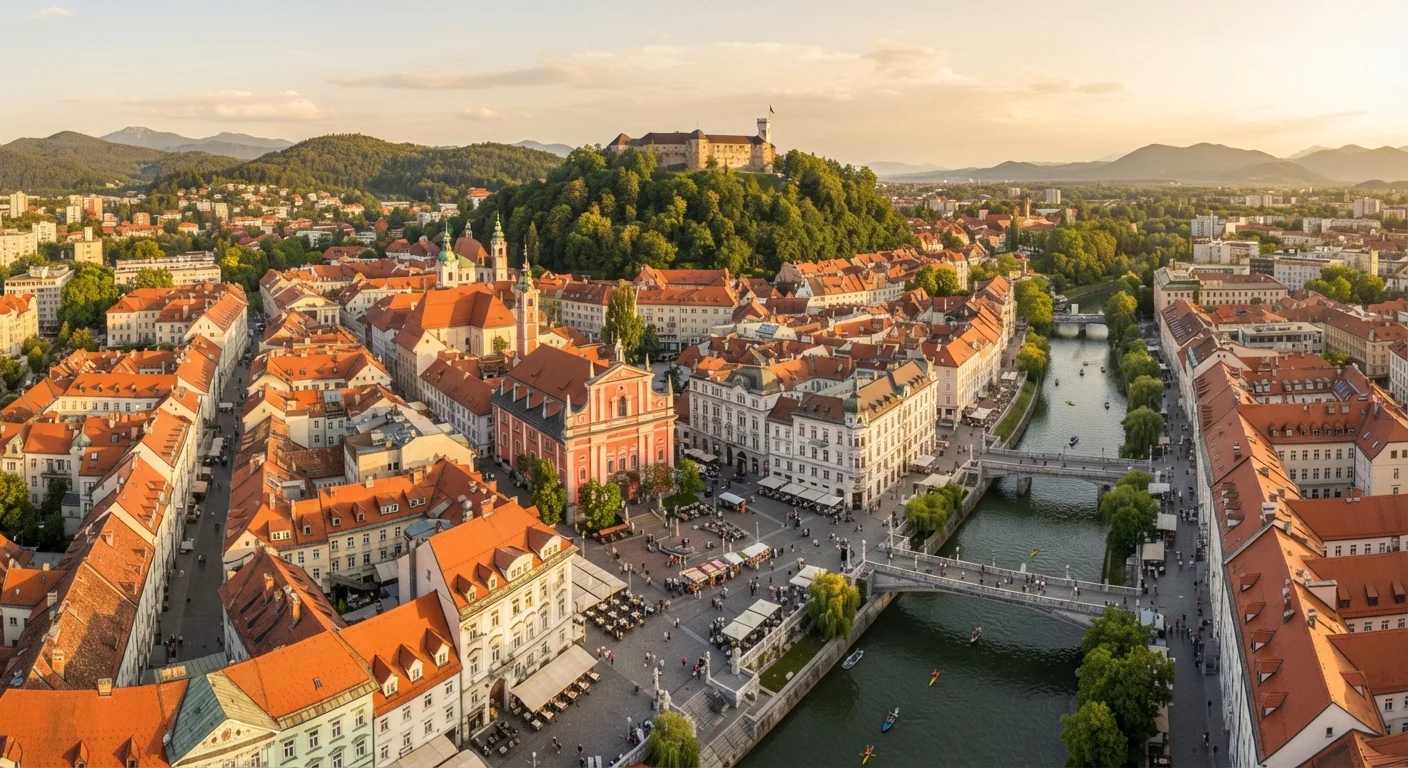
Ljubljana is one of Central Europe's most livable and visually appealing cities, yet it remains dramatically undervisited compared to neighboring Vienna or Prague. The Slovenian capital is anchored by a hilltop castle, a pedestrianized old town laced with Art Nouveau architecture, and the Ljubljanica River, whose cafe-lined banks set a relaxed tone for the whole city.
The covered Central Market - designed by architect Jože Plečnik, who reshaped much of the city in the early 20th century - is an excellent place to understand local food culture. Day trips to Lake Bled and the Škocjan Caves are both feasible from the city, making Ljubljana a logical base for exploring Slovenia more broadly.
Ljubljana's compact old town, riverside cafes, and easy day-trip options make it an ideal slow-travel base.
Tallinn, Estonia
Tallinn's medieval old town is among the best-preserved in Northern Europe, a UNESCO World Heritage Site where city walls, watchtowers, and cobbled lanes have survived largely intact for centuries. Toompea Hill offers panoramic views over the lower town's red rooftops and, on clear days, toward the Baltic Sea.
Beyond the fairy-tale medieval core, Tallinn has a vibrant contemporary side: a design-forward cafe culture, an emerging food scene drawing on Estonian, Nordic, and Russian influences, and a thriving arts and technology community. The city is compact enough to explore almost entirely on foot, and summer evenings - when daylight stretches remarkably late - give the old town an especially atmospheric quality.
Tallinn offers one of Europe's finest medieval old towns alongside a quietly modern, creative city culture.
Nicosia, Cyprus
Nicosia holds the unusual distinction of being the world's last divided capital - a UN buffer zone still bisects the city between the Republic of Cyprus in the south and the Turkish Cypriot-administered north. Crossing the Green Line at the Ledra Street checkpoint is straightforward for most visitors and offers a genuinely thought-provoking experience: two distinct urban cultures, architectures, and cuisines within a few city blocks of each other.
The walled old city on the southern side contains excellent museums - including the Cyprus Museum, with one of the most significant collections of ancient Cypriot artifacts in the world - as well as a growing restaurant and bar scene in the Laiki Geitonia neighborhood. Nicosia is less beach-focused than the coastal resorts, which makes it a good complement to, rather than replacement for, a broader Cyprus trip.
Nicosia's divided city lets travelers experience two cultures, histories, and cuisines within a short walk.
Vaduz, Liechtenstein
Vaduz is the capital of one of Europe's two doubly landlocked countries (surrounded entirely by landlocked nations), and its small size is part of the appeal. With a resident population of roughly 5,000, the city functions more like a prosperous Alpine town, and a visit here is as much about the novelty of the principality as it is about conventional sightseeing. The Vaduz Castle overlooks the Rhine Valley from its hillside perch, though the interior is the private residence of the Prince and not open to the public.
The Kunstmuseum Liechtenstein holds a surprisingly substantial collection of modern and contemporary art. Getting a passport stamp at the tourist office - a low-key tradition among visitors - costs a small fee. Vaduz works best as a focused stop on a broader trip through Switzerland or Austria rather than a standalone destination, but it's a genuinely memorable one.
Vaduz offers the rare novelty of a functioning principality capital in a compact, walkable Alpine setting.
Podgorica, Montenegro
Podgorica rarely appears on travel wish lists, which is partly a fair reflection of its modest architectural inheritance - much of the city was rebuilt after World War II - and partly an oversight. The Montenegrin capital is surrounded by dramatic geography: the Morača River canyon cuts through the city's edge, the Skadar Lake basin lies to the south, and the mountains of Durmitor National Park are within a few hours' drive.
The old Ottoman quarter of Stara Varoš and the Ribnica fortress ruins offer historical texture, while the city's cafe culture is lively and genuinely local. For travelers already visiting Montenegro's Adriatic coast - Kotor, Budva - a night or two in Podgorica gives a more complete picture of the country beyond its Instagram-famous medieval walls.
Podgorica's real draw is its geography - dramatic canyons, lakes, and mountains begin at the city's edge.
Planning Your Visit
These capitals share a useful characteristic: their compact size makes them natural candidates for slow travel rather than destination-hopping. Two to four days in any of these cities is generally enough to cover the highlights without rushing - and enough to discover something the guidebooks missed. Most connect well by rail or budget airline to larger European hubs, so they integrate smoothly into a broader regional trip rather than requiring a standalone journey.
Verify entry requirements, local transportation options, and current travel advisories through official government sources before you go - conditions and visa rules can change. With a little planning and an open mind, any one of these capitals is more than worth building a trip around.
Pack Light for Capital-Hopping
Smaller European capitals often involve a mix of cobblestoned streets, compact transit systems, and boutique accommodations with limited luggage storage. Traveling with a single carry-on bag simplifies everything from train connections to checking in. Our packing light guide offers practical strategies for fitting everything you need into less luggage.
The content provided on our blog site traverses numerous categories, offering readers valuable and practical information. Readers can use the editorial team’s research and data to gain more insights into their topics of interest. However, they are requested not to treat the articles as conclusive. The website team cannot be held responsible for differences in data or inaccuracies found across other platforms. Please also note that the site might also miss out on various schemes and offers available that the readers may find more beneficial than the ones we cover.