

Our Verdict
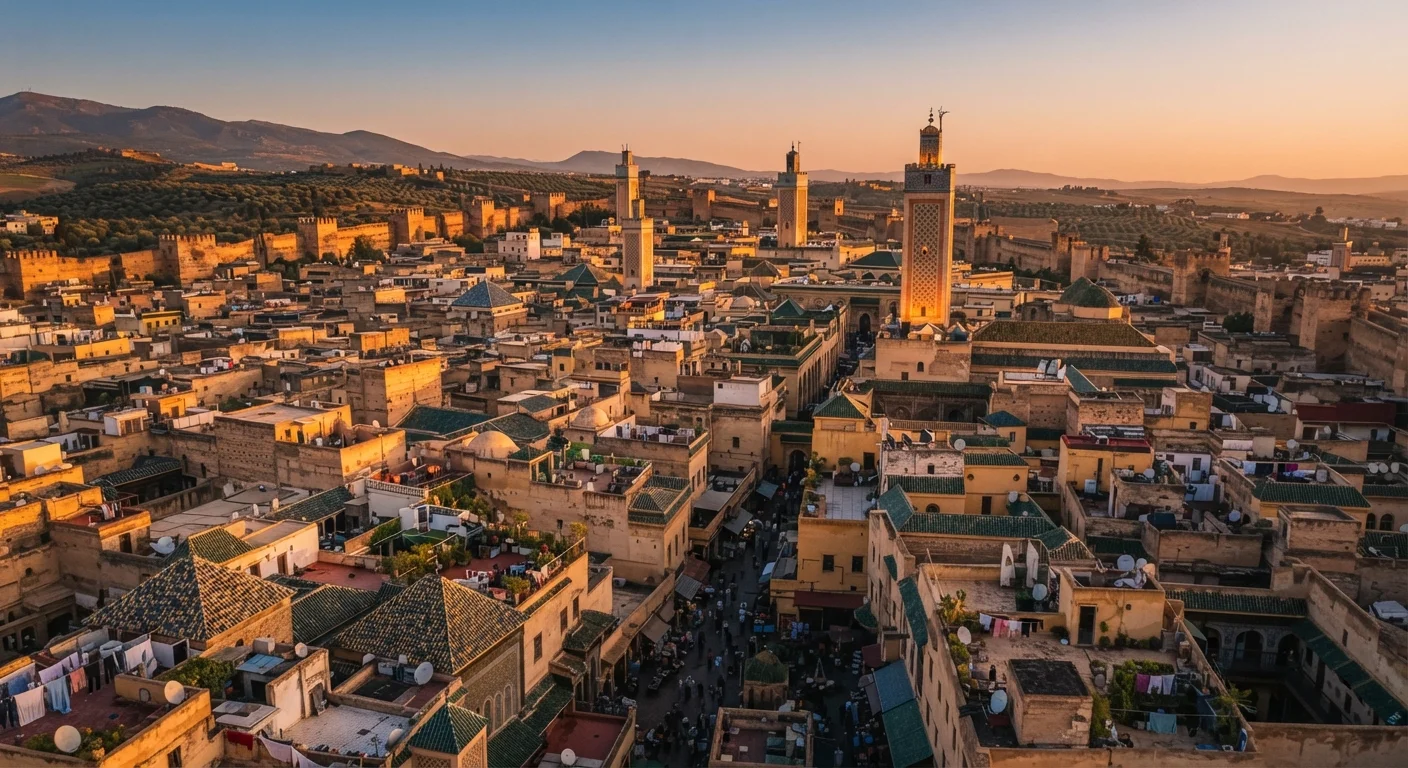
Morocco's four imperial cities share a dynastic heritage but feel strikingly different on the ground. Fez captivates with raw medieval authenticity, Marrakech dazzles with energy and accessibility, Meknes surprises with grandeur and calm, and Rabat balances history with modern livability. Most travelers with a week or more will find rewarding stops in at least two.
| Best for | Recommended |
|---|---|
| History and culture immersion seekers | Fez |
| First-time visitors wanting an all-in-one Morocco experience | Marrakech |
| Travelers who prefer quieter, crowd-free exploration | Meknes |
| Those wanting a modern, navigable base with historic appeal | Rabat |
What Makes Morocco's Imperial Cities Special
Morocco's four imperial cities - Fez, Marrakech, Meknes, and Rabat - each served as the seat of a ruling dynasty at different points in the country's long history. That shared status gifted each with monumental architecture, labyrinthine medinas (old city quarters), royal palaces, and a sense of layered time that few destinations anywhere can match.
What separates them is character. Traveling between them - they form a rough triangle in Morocco's interior and Atlantic coast - reveals how differently history, geography, and modern development can shape a city. Whether you're planning a focused city break or a sweeping circuit, knowing what each city does best is the key to building a trip you'll remember. For a similar exercise in contrasting cities within one culture, see our guide on Oaxaca vs Mexico City.
| Fez | Marrakech | Meknes | Rabat | |
|---|---|---|---|---|
| Historic significance | Oldest university; medieval scholarly hub | Almoravid dynasty capital; UNESCO medina | Moulay Ismail's baroque imperial showcase | Current capital; Almohad and later dynasties |
| Medina navigability | Very complex; guides strongly recommended | Moderately complex; well-signposted | Manageable; less crowded | Compact and easy to navigate |
| Crowd levels | High, especially in tannery area | Highest of the four cities | Low; largely local atmosphere | Moderate; mix of locals and visitors |
| Day-trip options | Nearby Middle Atlas villages | Atlas Mountains; Essaouira | Volubilis Roman ruins; Moulay Idriss | Coastal towns along Atlantic |
| Best for | Medieval culture and crafts | First-time visitors; all-round experience | Independent, off-the-beaten-path travelers | Modern comfort with historic depth |
| Typical visit length | 2-3 days | 2-4 days | 1-2 days | 1-2 days |
Fez: The Scholar's City
Fez el-Bali, the medieval core of Fez, is widely considered the best-preserved historic medina in the Arab world. Founded in the 9th century, the city grew into Islam's foremost center of learning; the Qarawiyyin mosque and university, established in 859 CE, is recognized by the Guinness World Records as the world's oldest continuously operating university.
Walking Fez's medina is genuinely disorienting - and genuinely thrilling. Narrow alleyways too tight for cars open suddenly onto tiled fountains or the clamor of a spice souk. The famous Chouara tannery, where leather has been dyed using traditional methods for centuries, offers one of Morocco's most visceral and photogenic scenes.
Navigating Fez's Medina Confidently
Download an offline map before entering Fez el-Bali - cell signal can be patchy in the deeper alleyways. Most locals are genuinely helpful if you're lost, but be aware that unsolicited 'guides' near the tannery entrance sometimes expect payment. Official, licensed guides can be arranged through your accommodation and offer real historical depth.
Fez rewards slower travel. Plan at least two full days in the medina, and consider hiring a local guide for at least one morning - the maze of streets is genuinely complex, and context deepens every corner.
Marrakech: Energy, Color, and Accessibility
Marrakech is the city most international visitors encounter first, and for good reason. Its Jemaa el-Fna square - a UNESCO-recognized cultural space - transforms from a fruit juice market by day into a swirling carnival of storytellers, musicians, and food stalls by night. The city's souks are exceptionally well-stocked with crafts, textiles, and ceramics, and the surrounding Palmeraie and Atlas Mountain foothills add day-trip possibilities few other imperial cities can offer.
Accommodation ranges from simple guesthouses to beautifully restored riads (traditional courtyard houses) and international-brand hotels. Marrakech also has the most developed tourist infrastructure of the four cities, making logistics straightforward even for first-time Morocco visitors. The trade-off is crowds and assertive vendor culture, particularly around the main square.
Meknes: The Overlooked Giant
Meknes is consistently the least-visited of the four imperial cities, which is puzzling given its scale. Sultan Moulay Ismail, who ruled in the late 17th and early 18th centuries, envisioned Meknes as Morocco's answer to Versailles. The result - vast gates, enormous granaries, and sprawling royal stables - still impresses, though much of it exists in picturesque partial ruin.
The city's relative obscurity works in a traveler's favor: medina navigation is less pressured, prices tend to be more modest, and the atmosphere is distinctly local. Meknes is also the closest imperial city to the ancient Roman site of Volubilis, one of North Africa's finest archaeological sites, making it a natural base for a half-day excursion.
9,400+
Streets in Fez's medina
Fez el-Bali is estimated to contain over 9,400 lanes and alleys, making it one of the world's largest car-free urban areas.
~600 km
Royal stables capacity, Meknes
Sultan Moulay Ismail's royal stables at Meknes were reportedly built to house up to 12,000 horses, spanning a vast network of vaulted structures.
Rabat: Morocco's Capital, Quietly Compelling
As Morocco's administrative capital, Rabat carries a different energy from the other three cities - calmer, more organized, and genuinely cosmopolitan. The Hassan Tower and Mausoleum of Mohammed V form one of Morocco's most elegant historic complexes. The Kasbah of the Udayas, perched above the Atlantic estuary, offers blue-and-white alleyways with ocean breezes and a completely different aesthetic from the inland medinas.
Rabat's medina is compact enough to explore comfortably without feeling overwhelmed, and the adjacent Ville Nouvelle (modern city) gives travelers good transport links, a range of dining options, and easy onward connections. For travelers who enjoy combining history with the texture of a functioning modern city, Rabat often exceeds expectations. If you enjoy discovering underrated urban destinations, our piece on lesser-known European capitals follows a similar spirit.
The content provided on our blog site traverses numerous categories, offering readers valuable and practical information. Readers can use the editorial team’s research and data to gain more insights into their topics of interest. However, they are requested not to treat the articles as conclusive. The website team cannot be held responsible for differences in data or inaccuracies found across other platforms. Please also note that the site might also miss out on various schemes and offers available that the readers may find more beneficial than the ones we cover.