

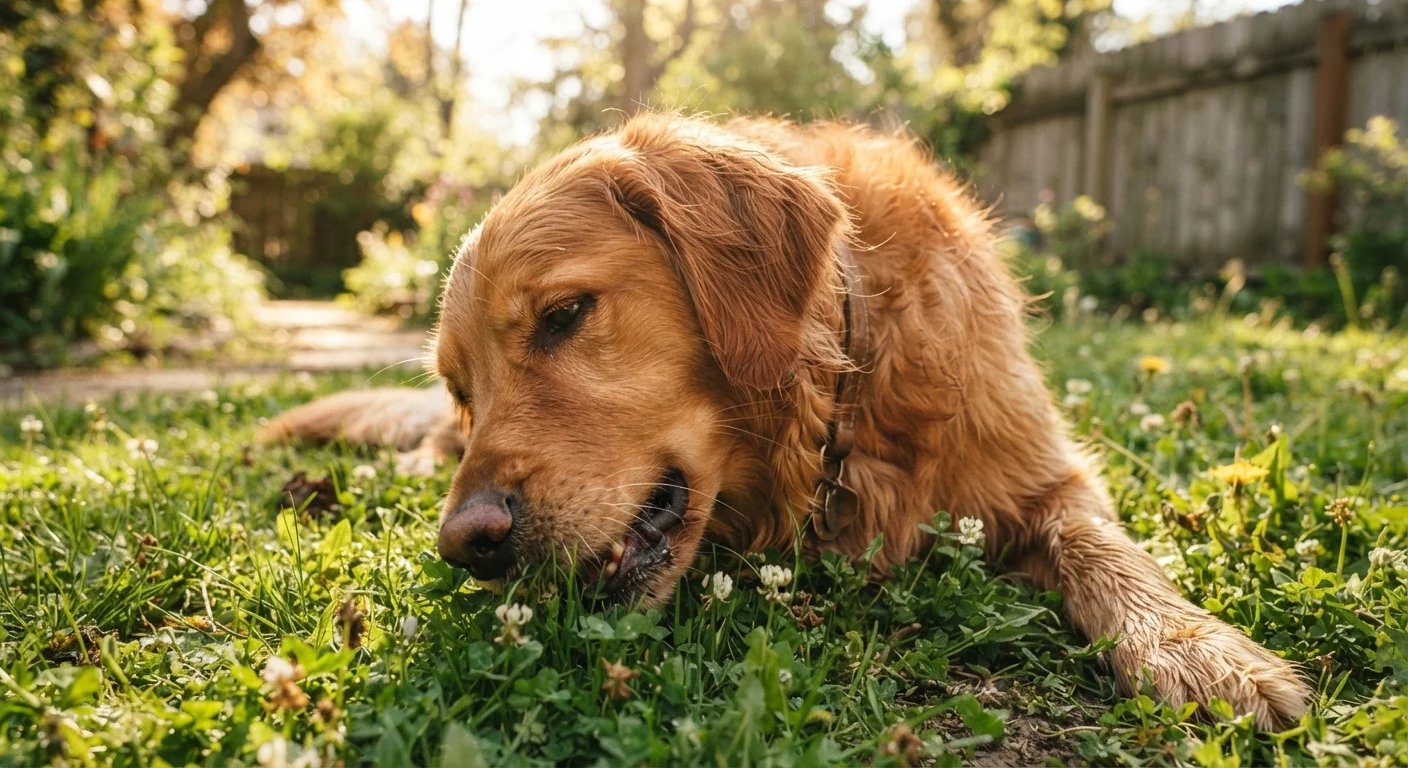
What We Actually Know About Why Dogs Eat Grass
Dog owners have been puzzling over grass-eating for decades, and so have researchers. The honest answer is that there is no single confirmed reason - and that's partly because the behaviour likely has more than one cause depending on the dog and the moment.
A commonly cited explanation is that dogs eat grass to induce vomiting when their stomach is upset. While this may occasionally be true, research doesn't support it as the primary driver. One study published in a veterinary journal found that fewer than 25% of dogs who regularly eat grass vomit afterward, and less than 10% appeared ill before eating it. That data challenges the popular assumption significantly.
Other leading explanations include:
- Instinctive behaviour: Wild canid ancestors regularly consumed plant material, often through the stomach contents of prey. Grass-eating may be a behavioural remnant of that history.
- Taste and texture: Some dogs simply appear to enjoy the taste or chewing sensation, particularly with young, tender grass in spring.
- Boredom or understimulation: Dogs left outdoors without enough engagement sometimes graze as an activity in itself.
- Mild gastrointestinal discomfort: Grass may help move contents through the digestive tract or provide brief relief from bloating or nausea.
Grass-Eating Is Not the Same as Pica
Pica is the compulsive consumption of non-food items including soil, fabric, rocks, or plastic. While grass-eating can technically fall under this umbrella, it is generally treated as a distinct and far more benign behaviour by veterinarians. True pica often requires behavioural or medical intervention and is a separate concern.
If you're a new owner surprised by this behaviour, our guide for first-time dog owners covers more of the everyday behaviours that can catch people off guard.
When Grass-Eating Is and Isn't a Concern
For most dogs, occasional grass-eating on a clean, untreated lawn is harmless. The behaviour becomes worth paying attention to when it shifts in frequency, urgency, or context.
Signs that warrant a vet visit:
- The dog is eating grass compulsively or in large quantities
- Vomiting occurs repeatedly after eating grass
- The behaviour is new and sudden in an older dog
- Grass-eating is accompanied by lethargy, appetite loss, or changes in stool
- The dog is eating other non-food materials alongside grass
The most concrete safety concern isn't the grass itself - it's what's on it. Lawns treated with herbicides, pesticides, or synthetic fertilizers carry real toxicity risks. Even a neighbour's well-maintained lawn can be dangerous if recently sprayed. Get into the habit of knowing the treatment status of any outdoor space your dog accesses.
Check the Lawn Before Your Dog Grazes
Before allowing your dog to eat grass in any yard - including your own - confirm whether the area has been treated with pesticides, herbicides, or fertilizers. Many products remain active on grass long after application and are not safe for dogs to ingest. When in doubt, redirect your dog away from the area.
Diet quality can sometimes factor into unusual eating behaviours. Understanding what's in your dog's food is a useful starting point - our explainer on reading dog food labels can help you evaluate what your dog is actually getting.
What You Can Do as an Owner
In most cases, no intervention is needed. But if the behaviour feels excessive or you want to understand it better, there are a few practical steps worth taking.
Assess the environment: Make sure any grass your dog accesses is free from chemical treatments. If you're unsure, err on the side of caution.
Review the diet: While nutritional deficiency isn't the most common cause of grass-eating, it's worth ensuring your dog's food meets their needs. A balanced look at different feeding approaches can help you weigh your options with clearer information.
Add stimulation: If boredom seems likely - especially for dogs spending long stretches outdoors alone - structured play, enrichment toys, and more active engagement often reduce the behaviour naturally.
Talk to your vet: If you're uncertain, a brief conversation with a veterinarian is always the right move. They can rule out underlying gastrointestinal issues and offer guidance specific to your dog's age, breed, and health history.
“Grass-eating is rarely a medical emergency. What matters most is context - how often it happens, what the grass has been treated with, and whether other symptoms are present alongside it.”
— Veterinary General Practice Advisory Panel, Representative summary from veterinary general practice guidance
This article is for general informational purposes only and is not a substitute for professional veterinary advice. If you have concerns about your dog's health or behaviour, consult a licensed veterinarian.
Frequently Asked Questions
Yes, it is very common. Studies suggest the majority of dog owners have observed this behaviour at some point. Most dogs who eat grass do not vomit afterward and appear otherwise healthy.
No. While some dogs may eat grass when their stomach is unsettled, many do so when they appear perfectly healthy. It is not a reliable indicator of illness on its own.
Plain, untreated grass is generally not harmful. The risk comes from grass that has been treated with herbicides, pesticides, or fertilizers, which can be toxic. Always check whether a lawn has been recently sprayed before letting your dog graze.
Occasional grass-eating on safe, untreated lawns is generally not something that needs to be prevented. If the behaviour is frequent, compulsive, or accompanied by vomiting or lethargy, speak with your vet.
A dietary deficiency is one possible explanation, but it is not the most common cause. If you suspect your dog's nutrition is incomplete, reviewing their diet with a veterinarian is the most productive step.
The content provided on our blog site traverses numerous categories, offering readers valuable and practical information. Readers can use the editorial team’s research and data to gain more insights into their topics of interest. However, they are requested not to treat the articles as conclusive. The website team cannot be held responsible for differences in data or inaccuracies found across other platforms. Please also note that the site might also miss out on various schemes and offers available that the readers may find more beneficial than the ones we cover.