

How the Ingredient List Is Structured
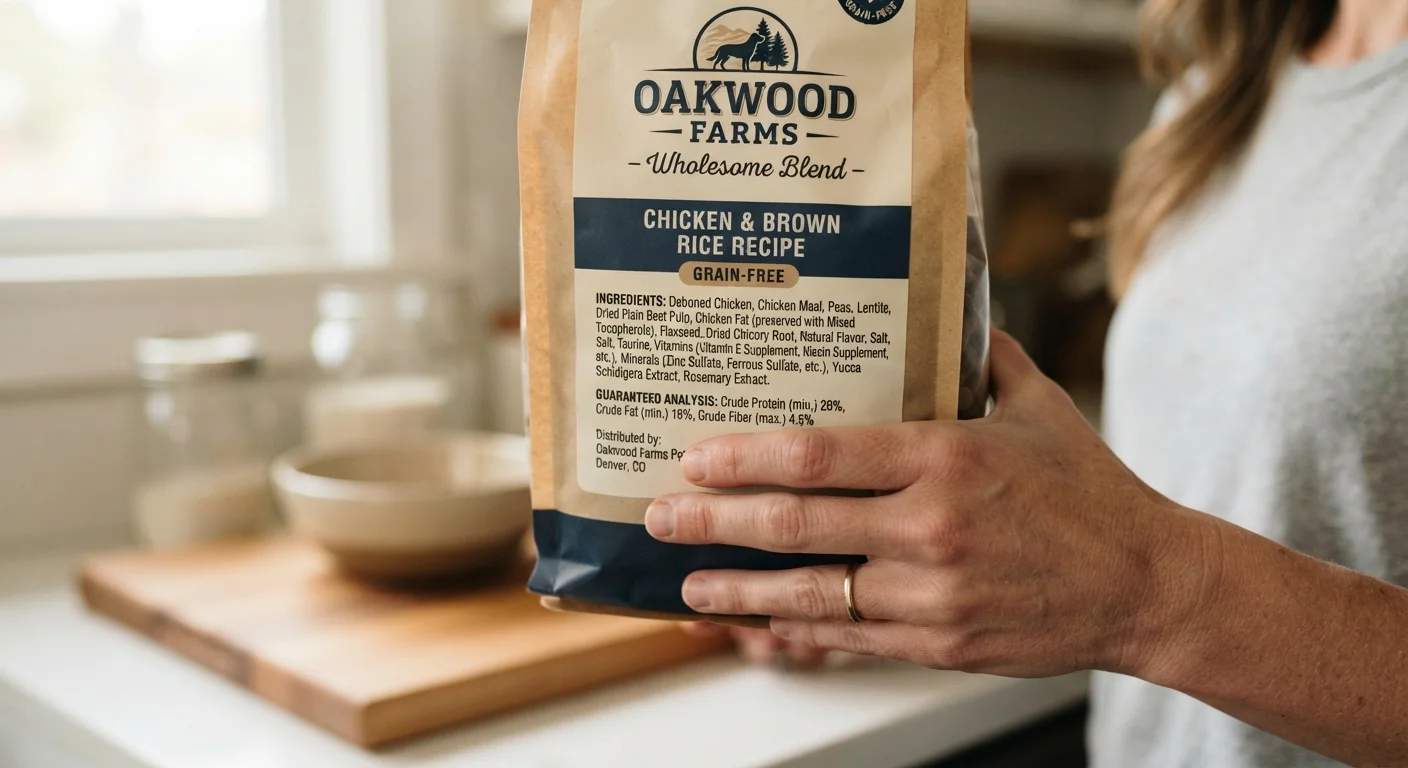
Every bag, can, or pouch of commercially sold dog food sold in the U.S. must carry an ingredient list ordered by pre-cooking weight, from heaviest to lightest. This single rule shapes everything you see on the label - and understanding it prevents a lot of common misreadings.
Whole meats like chicken or beef contain a large amount of water. When they appear first on a label, that's partly because their raw weight - water included - puts them at the top. After cooking removes much of that moisture, their contribution to the final product shrinks considerably. A dry ingredient like chicken meal, listed third or fourth, may actually deliver more usable protein in the finished food.
This doesn't mean whole meats are a bad sign - they still contribute nutrition and palatability. It means the first ingredient alone doesn't tell the complete nutritional story. Read the full list alongside the guaranteed analysis panel, which shows minimum crude protein and fat percentages and maximum fiber and moisture content.
The Guaranteed Analysis Panel
Alongside the ingredient list, every dog food must carry a guaranteed analysis panel showing minimum crude protein, minimum crude fat, maximum crude fiber, and maximum moisture. These percentages reflect the finished product and are a useful complement to reading the ingredient list. When comparing foods with different moisture levels - such as dry kibble vs. canned food - convert to a dry matter basis for an accurate comparison.
Protein Sources: Named vs. Generic
The quality and transparency of a dog food's protein sources varies significantly based on how specifically they're identified. Named protein sources - like 'deboned salmon,' 'turkey meal,' or 'lamb' - tell you exactly what animal the protein came from. Generic terms like 'meat meal,' 'poultry meal,' or 'animal by-product meal' are less specific and can include protein from varying species and parts without disclosure.
Named sources are generally preferred because they offer accountability and consistency. If your dog has a food sensitivity or allergy, knowing the exact protein source is also essential for an elimination diet - something a veterinarian can guide you through.
It's also worth understanding by-products. These are parts of an animal beyond skeletal muscle - including organ meats like liver and kidneys, which are nutrient-dense. 'Chicken by-products' is a named, regulated term; 'poultry by-products' is less specific. Neither is automatically inferior, but named sourcing gives you more information to work with.
Start With the First Five Ingredients
When evaluating a new dog food, focus first on the top five ingredients - they represent the largest share of what's in the bag. Look for at least one named animal protein source in that group. From there, scan for ingredient splitting and check the AAFCO statement before reading anything else on the packaging.
Fillers, Carbohydrates, and Ingredient Splitting
Carbohydrates are a common source of confusion on dog food labels. Ingredients like brown rice, sweet potato, peas, and oats are not inherently problematic - dogs can digest many carbohydrates effectively. The concern arises when carbs dominate the formula at the expense of protein, or when ingredient splitting is used to obscure how much of a particular ingredient is present.
Ingredient splitting means listing the same base ingredient in multiple forms - for instance, 'ground corn,' 'corn gluten meal,' and 'corn bran' as separate entries. Each appears modest on its own, but their combined presence could make corn the dominant ingredient in the food. Spotting splitting requires looking for repeat appearances of the same base ingredient across different processed forms.
The term 'filler' is often used loosely by pet owners to mean any non-meat ingredient. That's not a precise label - some plant-based ingredients contribute meaningful fiber, vitamins, and minerals. What matters is the overall nutritional profile, not whether any single ingredient sounds familiar. If you want to understand how different dietary approaches compare, our overview of raw diets vs. kibble covers the evidence in more depth.
~4,000
Commercial pet food products regulated by AAFCO guidelines in the U.S.
AAFCO sets the model regulations that states use to govern pet food labeling and nutritional standards across thousands of available products.
Top 5
Ingredients make up the majority of most kibble formulas
Pet nutrition experts commonly note that the first five ingredients typically represent the bulk of a dry dog food's composition by weight.
18% min.
Minimum crude protein required for adult dog food (AAFCO)
AAFCO's Dog Food Nutrient Profiles set a minimum of 18% crude protein (dry matter basis) for adult maintenance dog foods.
Preservatives, Additives, and What Regulations Actually Require
Dog food manufacturers use preservatives to extend shelf life and prevent fat from going rancid. Common synthetic options include BHA (butylated hydroxyanisole), BHT (butylated hydroxytoluene), and ethoxyquin. These are approved for use in pet food under current regulations, though some owners prefer to avoid them. Natural alternatives - most commonly mixed tocopherols (a form of vitamin E) - are widely used in place of synthetic preservatives, though they typically offer a shorter shelf life.
Added vitamins and minerals appear near the bottom of most ingredient lists and serve an important role in making the diet nutritionally complete. Long strings of scientific-sounding names in that section aren't a red flag - they're supplemented nutrients filling gaps that whole-food ingredients alone don't cover.
The most meaningful regulatory marker on any dog food package is the AAFCO nutritional adequacy statement. Look for language like: 'formulated to meet the nutritional levels established by the AAFCO Dog Food Nutrient Profiles for adult maintenance' - or a statement that feeding trials were conducted. Foods labeled 'for supplemental or intermittent feeding only' are not complete diets and shouldn't serve as a dog's sole nutrition source.
If you're navigating these labels for the first time alongside all the other decisions of new dog ownership, our guide on what first-time dog owners really need to know may also be helpful.
This article is for general educational purposes only and does not constitute veterinary or dietary advice. Always consult a licensed veterinarian before making significant changes to your dog's diet, especially if your dog has a health condition or known food sensitivities.
Frequently Asked Questions
'Meal' refers to an ingredient that has been rendered - cooked down and dried to remove moisture. 'Chicken meal,' for example, is concentrated chicken protein with most water removed. Because it's already dry, it can actually provide more protein per pound than whole chicken listed above it on the label.
Not necessarily. By-products include organ meats like liver, kidneys, and lungs - which are nutritionally rich parts of an animal. The key is whether the by-product is named (e.g., 'chicken by-products') versus generic ('poultry by-products'), which offers less sourcing transparency.
Ingredient splitting is when a manufacturer lists one ingredient under multiple sub-forms to push it lower on the list. For example, corn might appear as 'corn,' 'corn gluten meal,' and 'corn flour.' Combined, corn could actually be the top ingredient - a fact obscured by splitting.
The AAFCO nutritional adequacy statement tells you whether the food is formulated to meet minimum nutritional requirements for a specific life stage - such as 'adult maintenance' or 'all life stages.' It's one of the most meaningful regulatory markers on the package.
Artificial preservatives like BHA, BHT, and ethoxyquin are approved for use in pet food, but some owners prefer to avoid them due to ongoing debate about long-term effects. Natural preservatives like mixed tocopherols (vitamin E) are a commonly used alternative. Discuss concerns with your vet.
The first ingredient is significant, but it's not the whole story. Because ingredients are listed by pre-cooking weight, a moisture-heavy whole meat at the top may deliver less final protein than a dry meal ingredient listed third or fourth. Look at the full list - and the guaranteed analysis - together.
The content provided on our blog site traverses numerous categories, offering readers valuable and practical information. Readers can use the editorial team’s research and data to gain more insights into their topics of interest. However, they are requested not to treat the articles as conclusive. The website team cannot be held responsible for differences in data or inaccuracies found across other platforms. Please also note that the site might also miss out on various schemes and offers available that the readers may find more beneficial than the ones we cover.