

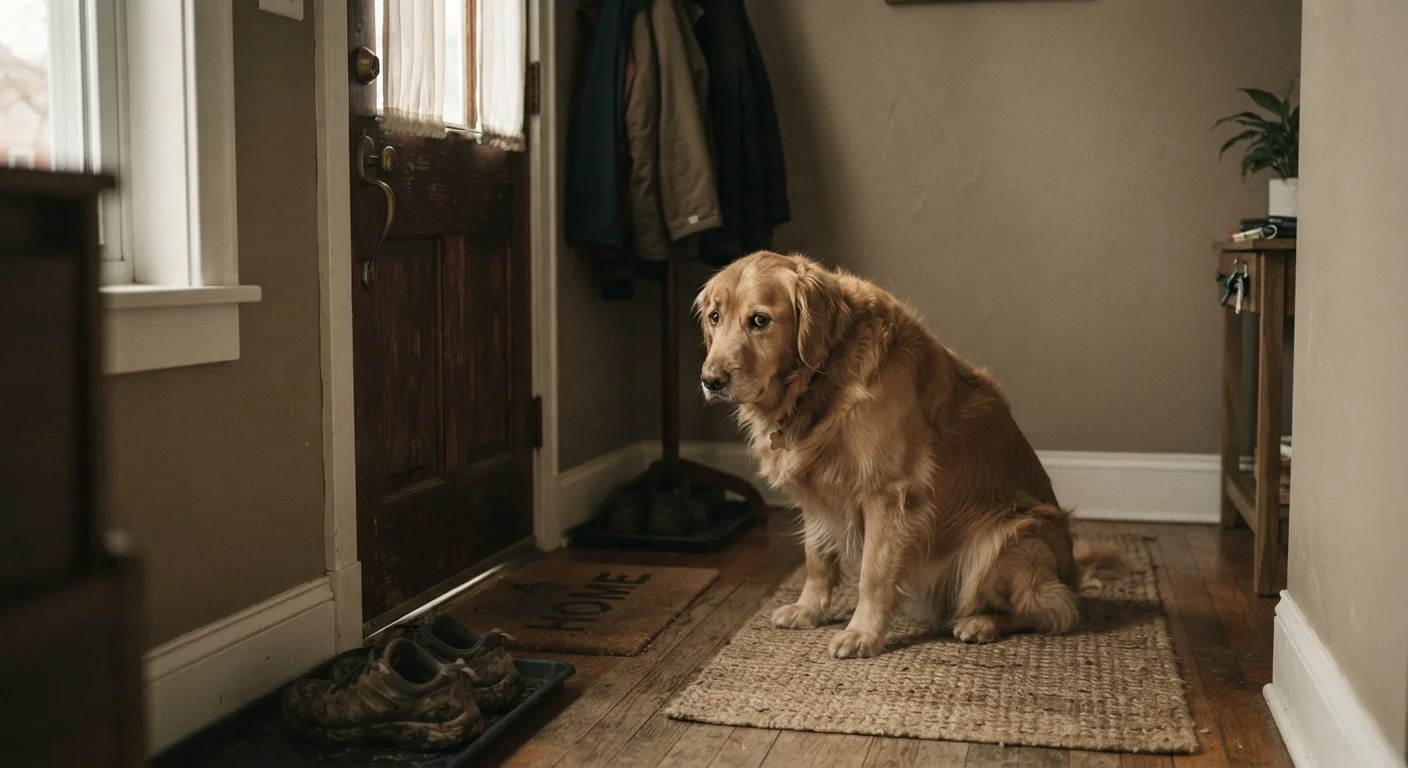
What Separation Anxiety Actually Is
Separation anxiety is a behavioral condition in which a dog experiences significant distress when left alone or separated from a primary attachment figure. It is not a training failure, a sign of a spoiled dog, or an attempt to manipulate owners. Veterinary behaviorists describe it as a genuine fear-based panic state - physiologically similar to how humans experience acute anxiety episodes.
This distinction matters because it shapes how the condition should be addressed. Dogs with separation anxiety are not choosing to misbehave; they are reacting to perceived threat. If you are bringing home a new dog, understanding this framework early can help you build healthy independence habits from the start.
Camera Check Before You Conclude
Before assuming your dog has separation anxiety, spend a week reviewing video footage from when you are away. Many owners discover their dog is calm for most of the day - which points to boredom or a specific trigger rather than true anxiety. This information also helps a behaviorist or vet make a more accurate assessment.
Recognizing the Signs
Separation anxiety typically appears within the first 30 minutes of an owner leaving. Common indicators include:
- Destructive behavior - chewing door frames, scratching exits, destroying household items, usually near entry points
- Vocalization - sustained barking, howling, or whining that neighbors frequently report
- Inappropriate elimination - urinating or defecating indoors despite being house-trained
- Excessive drooling or panting - signs of acute physiological stress
- Attempts to escape - sometimes resulting in self-injury
Owners often only notice the aftermath. Setting up a basic camera to observe your dog during absences is one of the most practical diagnostic steps you can take before assuming the cause.
~17%
Dogs estimated to have separation anxiety
Research published in veterinary behavioral literature suggests roughly 14-20% of pet dogs show some degree of separation-related distress.
30 min
Typical onset window after owner departs
Behavioral studies consistently find that peak distress in separation anxiety occurs within the first 30 minutes of an owner leaving.
It is worth noting that not all alone-time misbehavior is separation anxiety. Boredom, insufficient exercise, or inadequate mental stimulation can produce similar-looking behaviors - but the trigger and treatment differ meaningfully.
What Causes It
No single cause explains every case. Current understanding points to a combination of genetic predisposition, early life experiences, and environmental factors.
- Attachment style and early socialization
- Dogs that were not gradually habituated to alone time as puppies may never develop the coping skills to manage solitude. Hyper-attachment - following an owner from room to room - often precedes the condition.
- Major life changes
- A sudden shift in schedule (such as returning to office work after an extended period at home), a household move, or the loss of another pet or person can trigger onset.
- Genetics and breed tendencies
- Some breeds appear more predisposed, but the condition occurs across all breeds and mixed dogs. Individual temperament is a stronger predictor than breed alone.
- Prior trauma or rehoming
- Dogs with a history of shelter stays, multiple rehomings, or neglect are statistically more likely to develop anxiety-related conditions.
Rule Out Medical Causes First
Some medical conditions - including urinary tract infections, cognitive dysfunction in older dogs, and pain - can produce behaviors that look like separation anxiety. A veterinary exam before starting a behavioral program is not optional; it ensures you are treating the right problem. Your vet is also your first resource for evaluating whether medication should be part of the plan.
Evidence-Based Approaches That Help
Effective management almost always requires a structured, multi-pronged strategy. There is no quick fix, and approaches that ignore the anxiety component typically fail.
Graduated Desensitization
This is the most evidence-supported behavioral intervention. The process involves exposing the dog to departure cues - picking up keys, putting on shoes - without actually leaving, then very gradually extending the time the dog is alone. Progress must stay within the dog's tolerance threshold; pushing too fast sets the process back.
Pre-Departure Routine Changes
Because dogs associate specific cues with departure, disrupting those routines can reduce anticipatory anxiety. Picking up your keys and sitting back down, or varying when you put on your coat, can reduce the alarm value of those signals over time.
Environmental Enrichment
Food-stuffed toys, puzzle feeders, and calming audiovisual environments (specific playlists designed for dogs have shown some benefit in studies) can lower the baseline stress level during absences. A safe, well-designed indoor environment also reduces the chance of injury during panic episodes.
Medication as a Tool
For moderate-to-severe cases, veterinary-prescribed medication - most commonly fluoxetine or clomipramine, both FDA-approved for canine separation anxiety - can reduce anxiety enough to make behavioral training effective. Medication is not a substitute for training; it lowers the ceiling of distress so the dog can learn. Never source or dose medications without a licensed veterinarian's guidance.
Practice 'non-events' - leave for 10 seconds, return calmly, and repeat. The goal is for your departure to feel unremarkable, not dramatic.
Dogs learn to associate owner departures with distress partly through owner behavior; calm, low-ceremony exits reduce the emotional weight of the moment.
Provide a long-lasting food enrichment item (like a frozen stuffed toy) exclusively when you leave, then remove it when you return. This creates a positive association with your absence.
Counter-conditioning works by pairing the feared stimulus (being alone) with something the dog values highly, gradually shifting the emotional response.
When to Involve a Professional
If your dog's distress is severe, if self-injury is occurring, or if two to four weeks of consistent independent effort has not produced improvement, it is time to involve qualified help. Your first call should be to your veterinarian to rule out any underlying medical conditions and to discuss whether medication is appropriate.
Beyond your vet, a certified applied animal behaviorist (CAAB) or a veterinary behaviorist (Dip. ACVB) has the most rigorous training for cases like this. Certified professional dog trainers with a behavioral specialty can also be helpful for milder presentations, but verify credentials - the dog training industry is unregulated in the US, and experience levels vary enormously.
Avoid any trainer or protocol that relies on punishment or correction for anxiety-related behavior. Aversive methods are not only ineffective for fear-based conditions - they reliably make them worse.
This article provides general educational information about canine behavior and is not a substitute for personalized advice from a licensed veterinarian or certified animal behaviorist. If your dog is showing signs of distress, consult a qualified professional.
The content provided on our blog site traverses numerous categories, offering readers valuable and practical information. Readers can use the editorial team’s research and data to gain more insights into their topics of interest. However, they are requested not to treat the articles as conclusive. The website team cannot be held responsible for differences in data or inaccuracies found across other platforms. Please also note that the site might also miss out on various schemes and offers available that the readers may find more beneficial than the ones we cover.