

Summary
22 items · 20-40 minutes
Why Preparation Is the Most Important Part of At-Home Grooming
Most at-home grooming mishaps - nicked skin, a panicked dog, a flooded bathroom - trace back to poor preparation, not poor technique. Before you reach for a brush or nail clipper, the room you're working in, the tools you're using, and your dog's state of mind all need to be genuinely ready.
This checklist walks through every layer of that preparation, room by room and task by task. Whether you're new to dog ownership or a seasoned owner looking to tighten your routine, working through these items before each session will save you time, protect your dog, and make grooming far more manageable.
If you've ever thought about how a structured room-by-room approach applies in other contexts - like how a home interior audit helps you catch problems before committing to changes - the same logic applies here. Catch the gaps before the session starts.
Know Which Tasks Belong at the Vet
At-home grooming covers the outer coat, nails, ears (outer area only), and basic bathing. Cleaning inside the ear canal, expressing anal glands, removing deeply matted fur close to the skin, and any task involving a wound or skin condition should be handled by a licensed veterinarian or certified professional groomer. Attempting these at home without proper training can cause pain, infection, or serious injury.
What You'll Need: Tools and Supplies
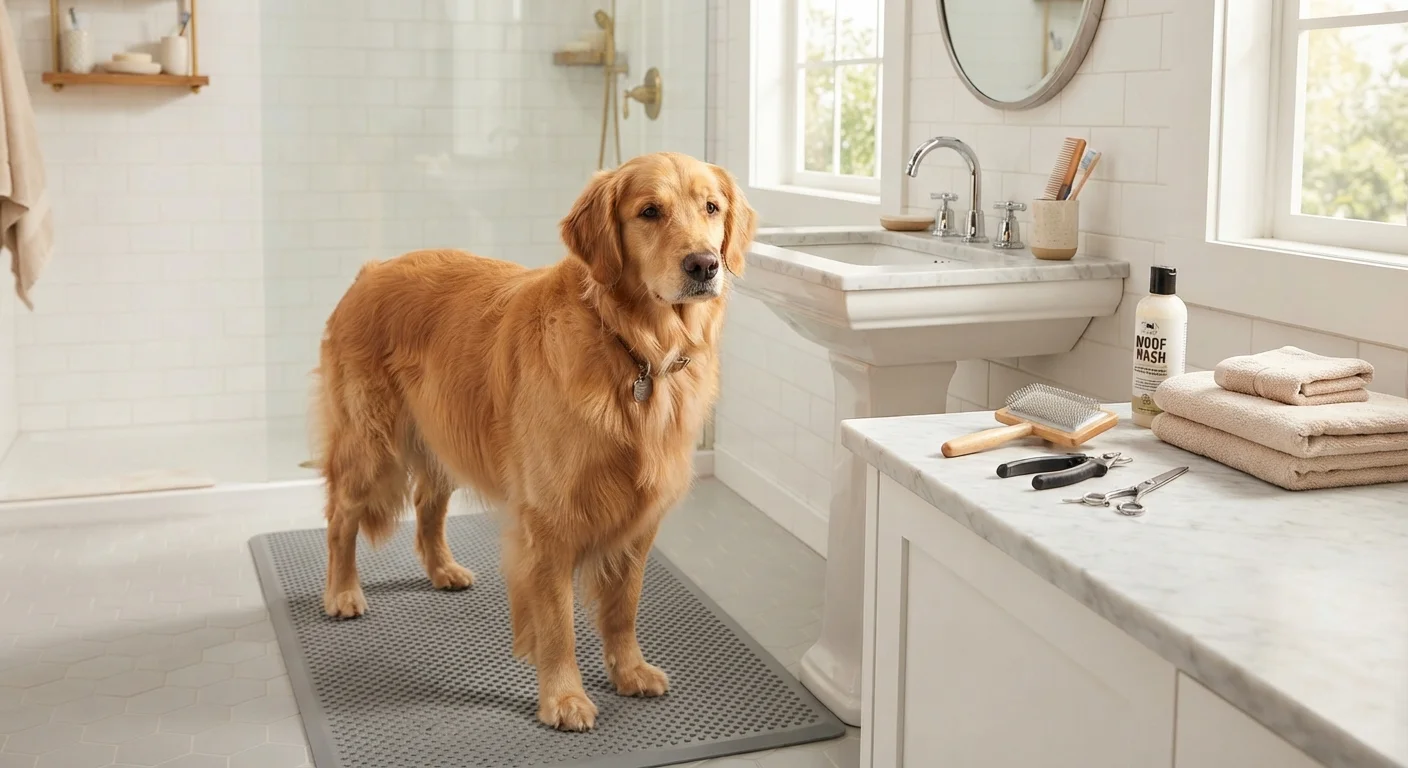
Gathering everything before your dog is in position is essential. Leaving to fetch a forgotten towel mid-bath invites accidents. Below are the core tools to have on hand - your exact kit will vary by your dog's coat type, size, and the tasks you're completing that session.
Slicker brush or bristle brush
Removes loose hair, detangles, and distributes coat oils - brush type should match your dog's coat length and texture.
Dog nail clippers or grinder
Trims nails to a safe length; the appropriate style depends on your dog's nail thickness and your comfort level.
Dog-formulated shampoo
Cleans the coat without disrupting the skin's natural pH; human shampoos are not suitable for dogs.
Styptic powder
Stops minor bleeding quickly if a nail is accidentally cut too short.
Non-slip bath mat
Keeps your dog stable and secure during bathing, reducing panic and the risk of slipping injuries.
Electric clippers (coat-appropriate blade)
Used for trimming longer coats; blade guard size must match the desired coat length.
Ear cleaning solution (vet-approved)
Gently loosens debris from the outer ear canal; always use a formula recommended by your veterinarian.
Dog-safe conditioner
Helps detangle and soften coats after bathing, particularly useful for long or curly breeds.
The Room-by-Room Preparation Checklist
Work through each group below before your grooming session begins. Items marked must are non-negotiable for safety and effectiveness. Should items are strongly recommended, and nice-to-have items improve the experience when you can include them.
Bathroom or Washing Area Setup
Grooming Station (Any Room)
Tools and Equipment Check
Your Dog's Readiness
Never Use Human Hair Products on Dogs
Human shampoos, conditioners, and especially medicated dandruff products are formulated for human skin pH (around 5.5) and can disrupt your dog's skin barrier, which sits closer to neutral (6.5-7.5). Repeated use can lead to dryness, irritation, and increased susceptibility to infection. Always use products specifically formulated for dogs, and ask your vet if your dog has any skin sensitivities.
For cat owners curious about similar at-home care routines, our guide on grooming your cat without a struggle covers species-specific techniques worth reading alongside this checklist.
This article provides general educational information for dog owners and is not a substitute for professional veterinary advice. Always consult your veterinarian if you have concerns about your dog's skin, coat, ears, or overall health before beginning any grooming routine.
The content provided on our blog site traverses numerous categories, offering readers valuable and practical information. Readers can use the editorial team’s research and data to gain more insights into their topics of interest. However, they are requested not to treat the articles as conclusive. The website team cannot be held responsible for differences in data or inaccuracies found across other platforms. Please also note that the site might also miss out on various schemes and offers available that the readers may find more beneficial than the ones we cover.