

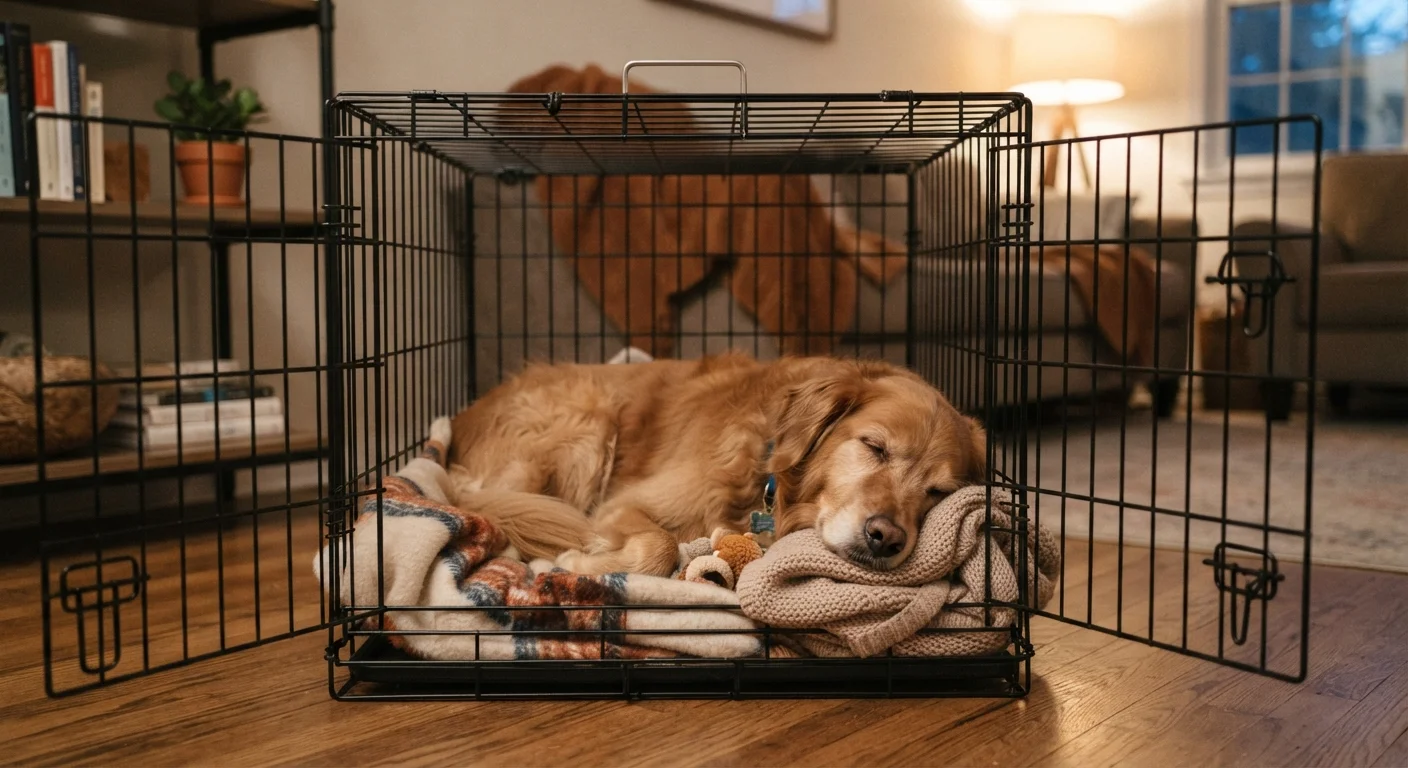
Why Crate Training Makes Sense
Many new dog owners react to the idea of crate training with skepticism - locking a dog in a box feels instinctively unkind. But the method is grounded in canine behavior, not convenience. Dogs are den animals by nature. In the wild, wolves and feral dogs seek out enclosed, sheltered spaces to rest, feel safe, and recover. A crate, when introduced correctly, mimics that instinct rather than fighting it.
Crate training also serves a practical function in early ownership. It helps establish a reliable routine, supports house-training by leveraging a dog's instinct not to soil their sleeping area, and provides a secure space when you can't supervise directly. If you're new to dog ownership, our guide for first-time dog owners covers how the crate fits into those critical early days at home.
Best Practices for Introducing the Crate
The way you introduce the crate determines whether your dog sees it as a retreat or a trap. Patience and positive reinforcement are non-negotiable.
Start with the crate door open and let curiosity do the work.
Forcing a dog into a crate on day one builds negative associations immediately. Allowing the dog to explore freely - sniffing, stepping in and out - lets them acclimate at their own pace without pressure.
Feed meals near or inside the crate to build positive association.
Pairing the crate with something a dog already values - food - creates a reliable positive connection. Repetition cements the association faster than treats alone.
Keep initial crate sessions short and gradually extend duration.
Dogs that are closed in too long before they're ready will vocalize, stress, and develop a negative association with the crate. Short, successful sessions build confidence incrementally.
Choose the right crate size - just large enough to stand, turn around, and lie down.
A crate that's too large reduces the natural instinct not to soil a sleeping space, which undermines house-training. A correctly sized crate feels den-like rather than cavernous.
Never use the crate as punishment.
If a dog is sent to the crate after being scolded, they associate the space with negative emotion. This erases the safety association you've worked to build and makes future crating stressful.
For owners also working on leash manners, a structured routine - crate time, walks, mental enrichment - tends to accelerate progress on all fronts. See our leash training guide for pairing these skills effectively.
Common Mistakes That Undermine the Method
Even well-intentioned owners can derail crate training with a few predictable errors.
Puppies and Adult Dogs Train Differently
Puppies have limited bladder control and should not be crated for more than their age in months plus one hour at a time - so a three-month-old puppy needs a break every four hours at most. Adult dogs that have never been crated may take longer to adjust than puppies raised with a crate from the start. Neither timeline is wrong; adjust expectations based on your individual dog's age and history.
One of the most frequent mistakes is leaving a dog crated for too long. Adult dogs generally shouldn't spend more than four to five hours in a crate at a stretch during the day; puppies need breaks every one to two hours. Exceeding these limits creates stress and can set back house-training progress significantly.
Another common misstep is using the crate as punishment. If the crate becomes associated with scolding or timeout, a dog will resist entering it and may develop anxiety around it entirely. The crate should always be a neutral-to-positive space.
Dogs also benefit from mental engagement outside the crate. A dog that is bored and under-stimulated will struggle to settle anywhere - our article on mental stimulation for dogs explains why physical exercise alone often isn't enough.
When the Crate Becomes a Choice
The goal of crate training isn't permanent confinement - it's building a dog that genuinely chooses the crate as a resting place. Many well-trained dogs will walk into their crate voluntarily throughout the day, nap there with the door open, and retreat to it when the household gets noisy or busy.
“The crate should be a place the dog chooses to go, not a place the owner sends them. When training is done well, that distinction becomes invisible - the dog simply gravitates there.”
— American Veterinary Society of Animal Behavior, Professional organization for veterinary behavior science
This level of comfort takes time and varies by dog. Anxious dogs or those with difficult histories may need additional patience, and in some cases, guidance from a certified professional dog trainer or veterinary behaviorist. That said, the vast majority of dogs - puppies and adults alike - can learn to view their crate as a safe, calm space when the process is handled humanely. Understanding where your dog spends time and how they feel in your home is part of a broader picture covered in our indoor vs. outdoor dogs guide.
This article is for general informational purposes only and does not constitute professional veterinary or behavioral advice. Consult a qualified veterinarian or certified animal behaviorist for guidance specific to your dog's needs.
The content provided on our blog site traverses numerous categories, offering readers valuable and practical information. Readers can use the editorial team’s research and data to gain more insights into their topics of interest. However, they are requested not to treat the articles as conclusive. The website team cannot be held responsible for differences in data or inaccuracies found across other platforms. Please also note that the site might also miss out on various schemes and offers available that the readers may find more beneficial than the ones we cover.