

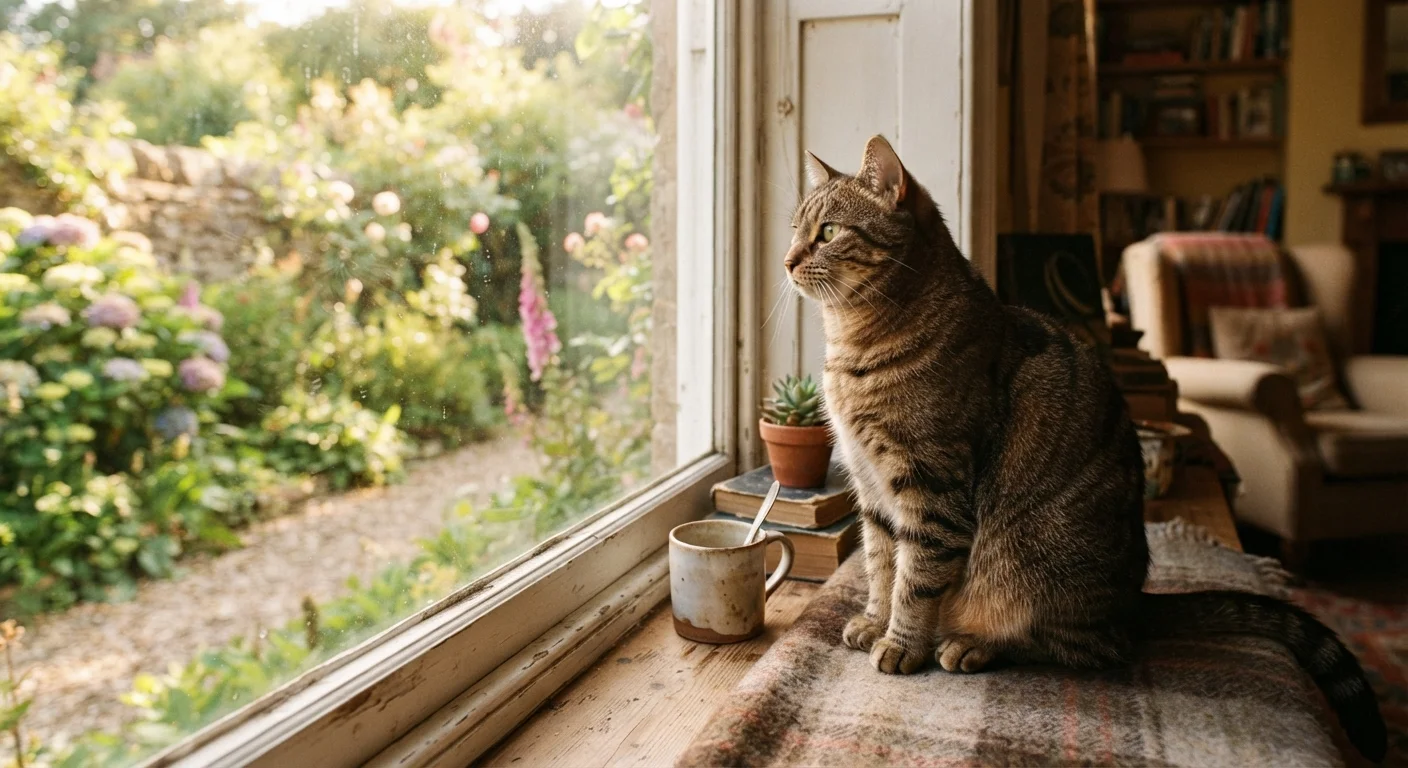
Option A
Indoor Cat
The protected, controlled environment choice.
Best for: Owners in urban or suburban areas who want to minimize injury, disease, and predation risks for their cat.
Option B
Outdoor Cat
The free-roaming, stimulation-rich lifestyle.
Best for: Cats in low-traffic rural settings where space, supervision, and low predation risk make outdoor access more practical.
What the Research Generally Shows About Lifespan
Veterinary and animal welfare organizations consistently cite a substantial lifespan gap between indoor and outdoor cats. Indoor cats commonly live into their mid-to-late teens, while cats with outdoor access have an estimated average lifespan that can be considerably shorter - some estimates suggest outdoor cats live roughly half as long on average, though the actual figures vary by study design, location, and population sampled.
The primary drivers of this gap are not mysterious. Outdoor cats face a cluster of hazards that indoor cats largely avoid: vehicle collisions, attacks from dogs or wildlife, exposure to infectious diseases such as feline immunodeficiency virus (FIV) and feline leukemia virus (FeLV), ingestion of toxins or poisoned prey, and hypothermia or hyperthermia in extreme weather. Each of these risks is real, and their cumulative effect over a cat's lifetime is significant.
That said, lifespan data captures averages - individual cats in well-managed outdoor environments with low traffic and attentive owners can live long, healthy lives. Context matters considerably.
10-15 yrs
Typical indoor cat lifespan
Veterinary sources commonly cite indoor cats living into their mid-to-late teens, with many reaching 15 or older with good preventive care.
~2-5 yrs
Estimated feral/outdoor-only cat lifespan
Studies on feral and free-roaming cat populations suggest dramatically shorter average lifespans due to cumulative environmental hazards.
~50%
Of outdoor cats affected by parasites annually
Veterinary parasitology surveys consistently show outdoor cats have substantially higher parasite burdens than exclusively indoor cats.
Health Risks Compared: Outdoor Hazards vs. Indoor Concerns
Outdoor cats are disproportionately exposed to parasites including fleas, ticks, ear mites, and intestinal worms. They also encounter infectious disease more frequently through contact with other cats, wildlife, or contaminated environments. Upper respiratory infections, abscesses from fighting, and wounds from predators are common reasons outdoor cats present at veterinary clinics.
Indoor cats are not risk-free, however. Without sufficient physical activity and mental engagement, they are more prone to obesity, which veterinarians consistently identify as one of the most common preventable health problems in domestic cats. See our guide to assessing your cat's body condition for more on this topic. Urinary tract disease, diabetes, and stress-related behaviors like over-grooming or inappropriate elimination can also appear in under-stimulated indoor cats.
| Criterion | Indoor Cat | Outdoor Cat |
|---|---|---|
| Average lifespan | Often 12-18+ years | Typically shorter; varies by environment |
| Injury risk | Low | High (traffic, predators, fights) |
| Infectious disease exposure | Low (FIV, FeLV, parasites) | Significantly higher |
| Obesity risk | Higher without enrichment | Lower due to activity levels |
| Behavioral stimulation | Requires deliberate enrichment | Naturally higher |
| Veterinary cost patterns | Typically lower emergency costs | More frequent acute care needs |
The takeaway is not that one lifestyle is universally safe - it is that each carries a distinct risk profile that can be managed with thoughtful care and regular veterinary attention. Our overview of routine veterinary care at each life stage explains what preventive health checks typically look like for cats of all ages.
Behavioral and Psychological Wellbeing
Cats are predatory animals with strong instincts for exploration, hunting, and territory. Outdoor access naturally satisfies many of these drives. Indoor cats who lack environmental enrichment may redirect these impulses into destructive behavior, excessive vocalization, or aggression.
The good news is that indoor environments can be meaningfully enriched. Climbing structures, window perches, puzzle feeders, regular interactive play, and even carefully managed outdoor time through a secured enclosure (sometimes called a "catio") can provide substantial stimulation. Our article on keeping an indoor cat mentally stimulated covers practical strategies in detail.
Cats that have lived outdoors their whole lives may find the transition to indoor-only living stressful. In these cases, a managed compromise - supervised outdoor sessions or an enclosed garden space - is often more humane than abrupt confinement.
The 'Catio' Option: A Middle Ground
A catio - an enclosed outdoor structure attached to the home or placed in a yard - allows cats to experience fresh air, sunlight, and sensory stimulation without free-roaming risks. They range from simple window boxes to large walk-in enclosures. For cats that crave outdoor access but live in high-risk areas, a well-built catio can meaningfully improve quality of life while keeping key hazards at bay.
Making the Decision for Your Cat
There is no single right answer that applies to every cat or every household. Veterinary organizations, including the American Veterinary Medical Association, generally recommend indoor living as the lower-risk default, particularly in urban and suburban settings. But responsible ownership means factoring in your cat's individual history, temperament, and circumstances.
Key questions to consider include: How busy is the traffic near your home? Has your cat ever lived outdoors? Does your cat show signs of stress indoors? Can you provide adequate enrichment if keeping them inside? If you share your home with an outdoor cat, are vaccinations, parasite prevention, and regular health checks current?
Whatever lifestyle you choose, maintaining a consistent preventive care schedule is one of the most impactful things you can do for your cat's long-term health. Cats are also often better observers of their own wellbeing than we give them credit for - behavioral changes are frequently the first sign that something needs attention.
This article provides general educational information about cat care and is not a substitute for advice from a licensed veterinarian familiar with your cat's individual health history.
The content provided on our blog site traverses numerous categories, offering readers valuable and practical information. Readers can use the editorial team’s research and data to gain more insights into their topics of interest. However, they are requested not to treat the articles as conclusive. The website team cannot be held responsible for differences in data or inaccuracies found across other platforms. Please also note that the site might also miss out on various schemes and offers available that the readers may find more beneficial than the ones we cover.