

Why Weight Is a Bigger Deal Than It Looks
Cats are expert at appearing comfortable even when something is wrong - and excess weight is no exception. A pleasantly round cat can look content, but veterinary research consistently links feline obesity to serious, life-shortening conditions. According to estimates from veterinary nutrition organizations, more than half of pet cats in the United States are overweight or obese, making it one of the most widespread preventable health issues in companion animals.
The consequences go beyond appearance. Excess body fat increases the risk of type 2 diabetes, osteoarthritis, urinary tract disease, and a dangerous liver condition called hepatic lipidosis (fatty liver disease). Overweight cats also tend to groom less effectively, which can lead to matted coats and skin irritation. For a deeper look at how lifestyle factors shape long-term cat health, see our article on indoor versus outdoor cat health.
59%
US pet cats estimated overweight or obese
According to Association for Pet Obesity Prevention survey data, a majority of domestic cats in the US exceed a healthy body condition score.
5×
Increased diabetes risk in obese cats
Veterinary nutrition literature indicates obese cats face substantially higher rates of type 2 diabetes compared to lean cats.
2-2.5 yrs
Potential reduction in lifespan
Some veterinary studies suggest significantly overweight cats may have a meaningfully shorter average lifespan than cats maintained at a healthy weight.
How Vets Assess Body Condition - and How You Can Too
Body weight in pounds or kilograms tells only part of the story. Veterinarians use a standardized Body Condition Score (BCS) - most commonly a 9-point scale - to evaluate whether a cat's fat-to-muscle ratio is healthy for its individual frame. A score of 4-5 out of 9 is considered ideal; scores of 6-7 indicate overweight, and 8-9 indicate obesity.
You can do a basic assessment at home using two simple checks:
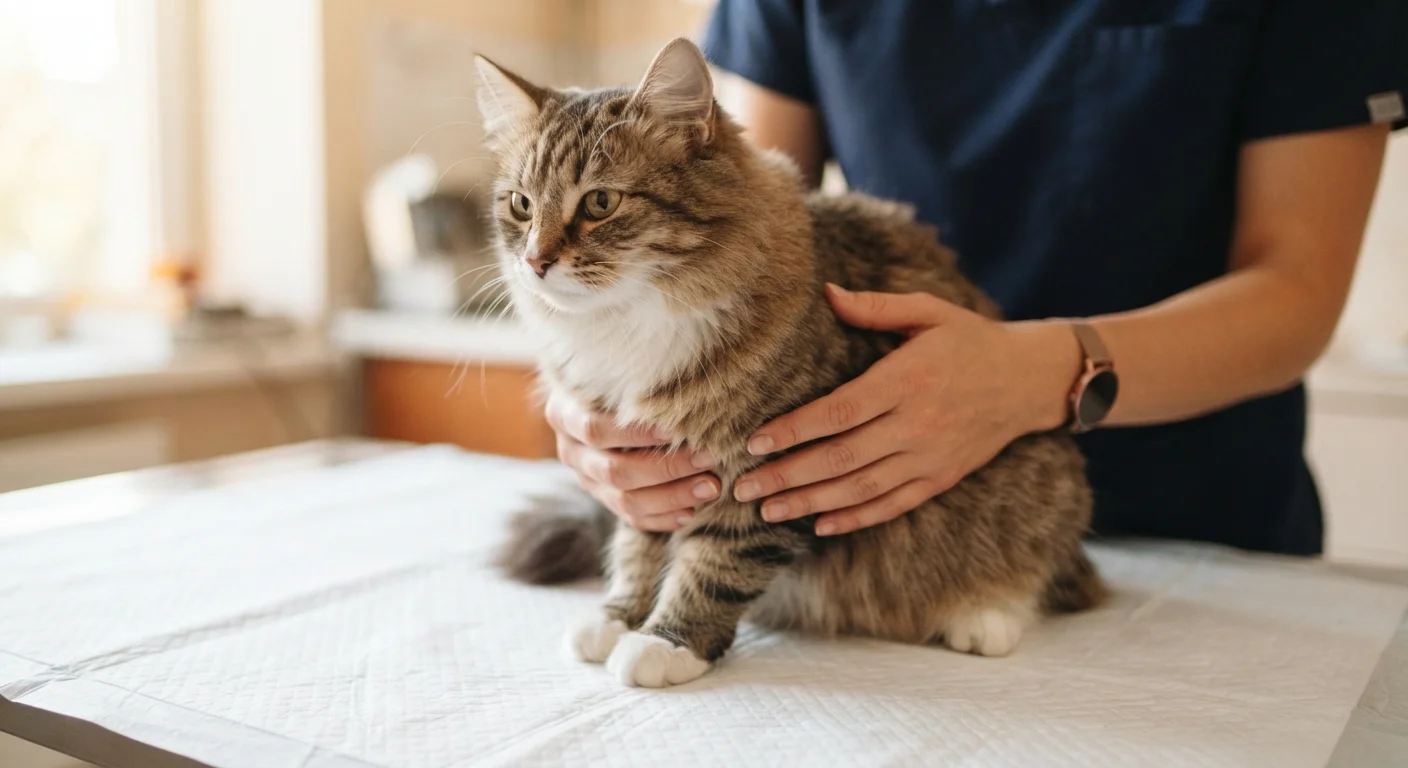
- Rib test: Place your hands on either side of your cat's chest and gently run your fingers along the ribs. You should feel each rib distinctly without pressing hard. If you have to press firmly, or cannot feel individual ribs, excess fat is likely present.
- Waist check: Look at your cat from above. There should be a visible narrowing behind the ribcage. Then look from the side - the belly should tuck upward slightly. A hanging belly or absent waist suggests extra weight.
These checks are a useful starting point, but they don't replace a veterinary assessment. A vet can also weigh your cat, track trends over time, and rule out underlying conditions like hypothyroidism that can contribute to weight gain.
Make Body Checks a Monthly Habit
Incorporate a quick rib-feel and waist-look into your regular grooming routine. Doing this monthly means you'll catch gradual weight changes before they become significant health problems. Pair it with a weigh-in using a home scale - simply weigh yourself holding your cat, then weigh yourself alone, and subtract.
Which Cats Are Most at Risk
Any cat can become overweight, but certain factors raise the risk considerably:
- Neutered cats have a lower metabolic rate following surgery, meaning they need fewer calories than intact cats of the same size.
- Indoor-only cats typically move less and have fewer environmental opportunities for natural exercise.
- Middle-aged cats (roughly 5-10 years) often become less active while retaining the same appetite and feeding routine.
- Free-fed cats - those with food available at all times - are more likely to overeat, especially with calorie-dense dry kibble.
If your cat fits several of these categories, it's worth discussing body condition at your next veterinary visit. As part of broader home health monitoring, you can incorporate a monthly weight and appearance check - our monthly cat care checklist includes reminders for exactly this kind of routine observation.
What to Do If Your Cat Needs to Lose Weight
Weight loss in cats must be approached carefully. Unlike dogs or humans, cats that lose weight too quickly are at serious risk of hepatic lipidosis - a life-threatening condition where fat accumulates in the liver. This means crash diets or abrupt, dramatic calorie cuts are genuinely dangerous and should never be attempted without veterinary supervision.
A vet-guided weight loss plan typically involves:
- Calculating a target calorie intake based on your cat's ideal body weight, not current weight.
- Switching to measured meals rather than free-feeding, using a kitchen scale or standardized measuring cup.
- Increasing activity through daily interactive play sessions - even 10-15 minutes with a wand toy or puzzle feeder can make a meaningful difference.
- Monitoring progress gradually, aiming for no more than 1-2% of body weight loss per week.
Dramatic behavioral or physical changes in your cat - reduced grooming, reluctance to jump, or signs of discomfort - may signal that excess weight is already affecting quality of life. Our guide on signs your cat may be in pain explains how to spot those subtle cues.
“Obesity is the most common preventable disease in cats. It shortens life and reduces quality of life - but with the right approach, it is also one of the most manageable.”
— Lisa M. Freeman, Professor of Clinical Nutrition, Cummings School of Veterinary Medicine at Tufts University
This article is for general informational purposes only and is not a substitute for veterinary advice. If you have concerns about your cat's weight or health, consult a licensed veterinarian.
Frequently Asked Questions
Run your fingers along your cat's sides - you should be able to feel individual ribs without pressing hard, and there should be a visible waist when viewed from above. If ribs are difficult to feel and the waist is absent or the belly sags, your cat may be carrying excess weight. This home check is a useful first step, but a vet can confirm using a standardized Body Condition Score.
There is no single correct number because healthy weight depends on breed, sex, and bone structure. A typical domestic shorthair may be healthy anywhere from 8 to 10 pounds, while larger breeds like Maine Coons can be healthy at 15 pounds or more. Your veterinarian is the best person to identify a healthy target weight for your specific cat.
Obese cats face significantly elevated risks of type 2 diabetes, osteoarthritis, hepatic lipidosis (fatty liver disease), urinary tract issues, and breathing difficulties. Excess weight also makes grooming harder, which can lead to skin and coat problems. Overall, obesity is associated with a shorter life expectancy in cats.
Weight loss in cats should always be gradual and supervised by a veterinarian. Rapid calorie restriction can trigger hepatic lipidosis, a serious liver condition. Your vet may recommend a measured feeding schedule, a prescription or lower-calorie diet, and increased activity through play. Avoid crash diets or making large food changes without professional guidance.
Indoor cats tend to be less active than outdoor cats, making them more prone to weight gain if their calorie intake isn't adjusted accordingly. Neutering also lowers metabolic rate, compounding the issue. Boredom, free-feeding (leaving food out all day), and calorie-dense treats are among the most common contributing factors.
Some breeds, including British Shorthairs and Ragdolls, have a reputation for being more prone to weight gain, though individual variation and lifestyle factors matter more than breed alone. Any cat that is neutered, kept exclusively indoors, or fed without portion control is at elevated risk regardless of breed.
The content provided on our blog site traverses numerous categories, offering readers valuable and practical information. Readers can use the editorial team’s research and data to gain more insights into their topics of interest. However, they are requested not to treat the articles as conclusive. The website team cannot be held responsible for differences in data or inaccuracies found across other platforms. Please also note that the site might also miss out on various schemes and offers available that the readers may find more beneficial than the ones we cover.