

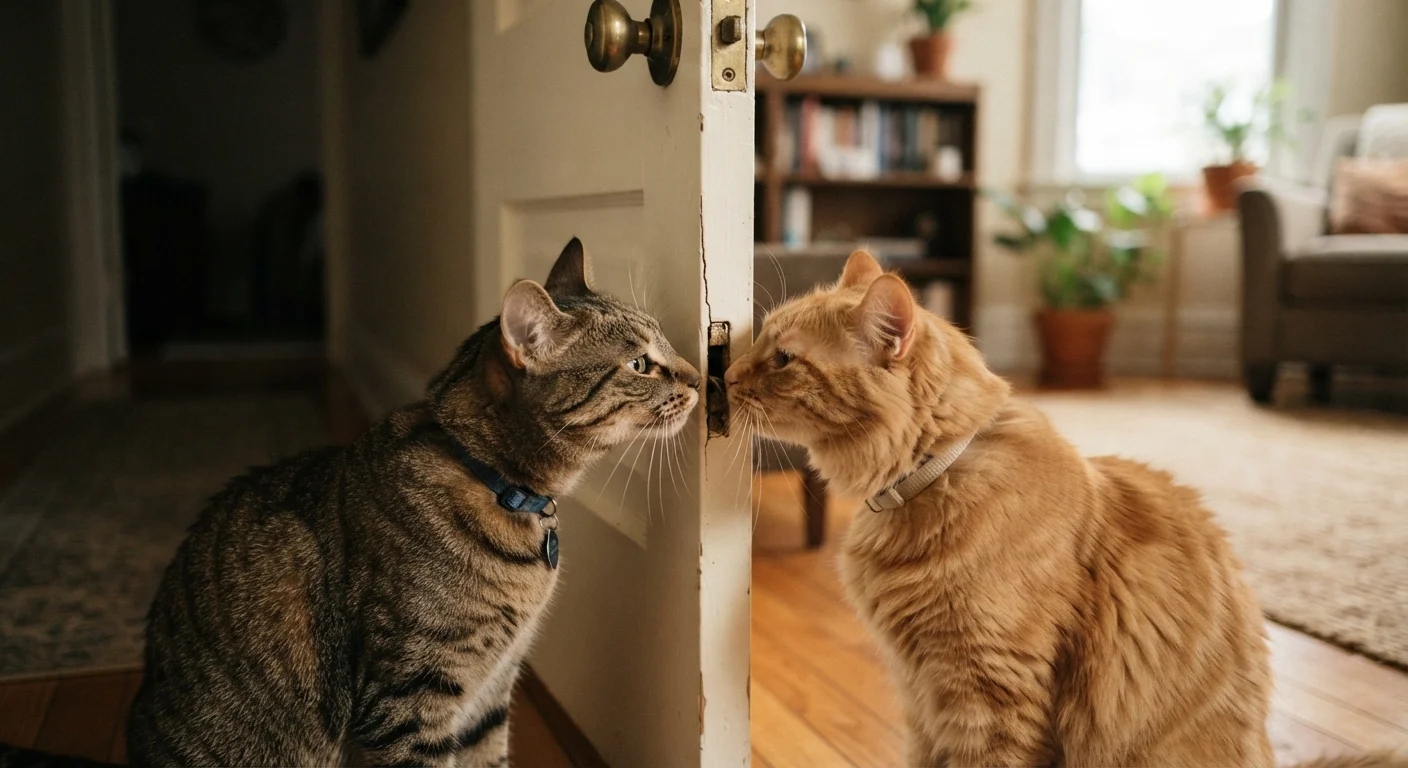
Why Cat Introductions Require a Deliberate Approach
Unlike dogs, cats are solitary hunters by evolutionary design. They don't instinctively welcome unfamiliar animals into their space - instead, they treat shared territory as a finite resource worth defending. When a new cat enters the home without any structured transition, the resident cat typically responds with hissing, hiding, chasing, or prolonged stress behaviors that can persist for months.
Understanding this hardwired response is the foundation of a successful introduction. The goal isn't to force friendliness - it's to allow both cats to process each other's presence gradually, in a way that feels manageable rather than threatening. For a broader look at what cat ownership entails, see everything cat ownership involves that new owners often don't anticipate.
What you will need
What You'll Need Before You Begin
Preparation before the new cat arrives makes the entire process smoother. Gathering supplies and setting up a dedicated space ahead of time reduces the need for rushed decisions once both cats are in the home.
Separate room for the new cat
Provides the newcomer with a safe base and prevents immediate territory overlap with the resident cat.
Extra litter box
Ensures each cat has dedicated toilet space, reducing competition and stress-related avoidance.
Feliway or similar synthetic feline pheromone diffuser
May help reduce anxiety in both cats during the adjustment period - ask your vet whether it suits your situation.
Soft cloth or sockette for scent transfer
Used to rub gently on one cat and place near the other, facilitating gradual scent familiarity.
Baby gate or door gap tool
Allows visual contact and scent exchange while preventing physical access during early introduction stages.
Step-by-Step Introduction Process
Follow these steps in order. Resist skipping ahead - even if both cats seem calm, moving too quickly is the most common reason introductions fail.
Set Up a Safe Base Room for the New Cat
Before bringing your new cat home, prepare a separate room with everything they need: food, water, a litter box, bedding, and hiding spots. Keep this room off-limits to the resident cat entirely. The new cat needs time to decompress from the transition - rushing them out into the full home adds stress on top of stress. See our companion guide on bringing a cat home for the first time for a detailed setup checklist.
Begin Scent Swapping
After two to three days, begin exchanging scents between the cats using a soft cloth. Rub it gently along the new cat's cheeks and chin, then place it near - not under - the resident cat's food bowl. Do the same in reverse. Repeat daily. You're building a scent association between the unfamiliar cat and something positive before the cats ever lay eyes on each other.
Allow Scent Investigation Under the Door
Once both cats are eating and behaving normally near the scent cloths, let them investigate each other under the closed door. You may see paw swipes or hear hissing - this is normal. Monitor these sessions but don't interfere unless one cat becomes highly distressed. Continue feeding both cats near the door (on their respective sides) to reinforce that the other cat's presence predicts something good.
Introduce Visual Contact With a Barrier
Once both cats are relaxed near the door, crack it open slightly using a door stopper or install a baby gate with a visual gap. Allow brief visual exposure - a few minutes at a time - while both cats are eating or engaged with a toy. Do not force them to look at each other. End each session on a calm note, before any tension escalates.
Conduct Supervised Face-to-Face Meetings
When both cats show relaxed body language during barrier sessions - loose posture, slow blinking, willingness to eat - open the door for brief, supervised visits. Stay calm and present, but let the cats set the pace. Provide multiple escape routes and elevated spaces so neither cat feels cornered. End sessions before any escalation occurs and gradually extend the duration over several days.
Transition to Shared Space
Once supervised meetings are consistently calm, allow the new cat increasing access to the rest of the home. Maintain the separate safe room as a retreat option for at least several more weeks. Continue providing separate feeding stations and litter boxes - these should remain permanent fixtures in a multi-cat home.
Calm Owners Help Calm Cats
Cats are highly sensitive to human emotional cues. If you hover anxiously during introduction sessions, your cats pick up on that tension. Try to be present but relaxed - sit nearby, read a book, or engage each cat gently with a wand toy rather than watching them intently for signs of trouble.
Don't Rush the Timeline
The single most common mistake in cat introductions is moving too quickly. Even if both cats seem tolerant, skipping stages can set up a pattern of low-grade tension that's hard to reverse. A few extra days at any stage costs nothing compared to months of inter-cat conflict.
Managing Setbacks and Long-Term Coexistence
Even a well-managed introduction can hit rough patches. A hiss or a swat during a supervised meeting doesn't mean failure - it means the cats need more time at an earlier stage. Return to scent-swapping or barrier interactions without frustration.
Long-term harmony depends on maintaining adequate resources. Veterinary behaviorists generally recommend one litter box per cat plus one extra. Crowded or shared boxes are among the most overlooked sources of inter-cat tension - see our guide on litter box problems most cat owners overlook for what to watch for. Similarly, feeding stations in separate areas prevent mealtime competition that can undermine an otherwise peaceful relationship.
If aggression escalates - especially if either cat stops eating, hides continuously, or sustains injuries - consult a veterinarian or a certified animal behaviorist. Some cats benefit from short-term environmental management strategies that a professional can tailor to your specific household.
Seek Help for Persistent Aggression
If one cat is actively hunting, cornering, or injuring the other - or if either cat has stopped eating for more than 24 hours - contact your veterinarian promptly. Severe inter-cat aggression sometimes has medical or behavioral components that require professional assessment. Do not wait and hope it resolves on its own.
The content provided on our blog site traverses numerous categories, offering readers valuable and practical information. Readers can use the editorial team’s research and data to gain more insights into their topics of interest. However, they are requested not to treat the articles as conclusive. The website team cannot be held responsible for differences in data or inaccuracies found across other platforms. Please also note that the site might also miss out on various schemes and offers available that the readers may find more beneficial than the ones we cover.