

Our Verdict
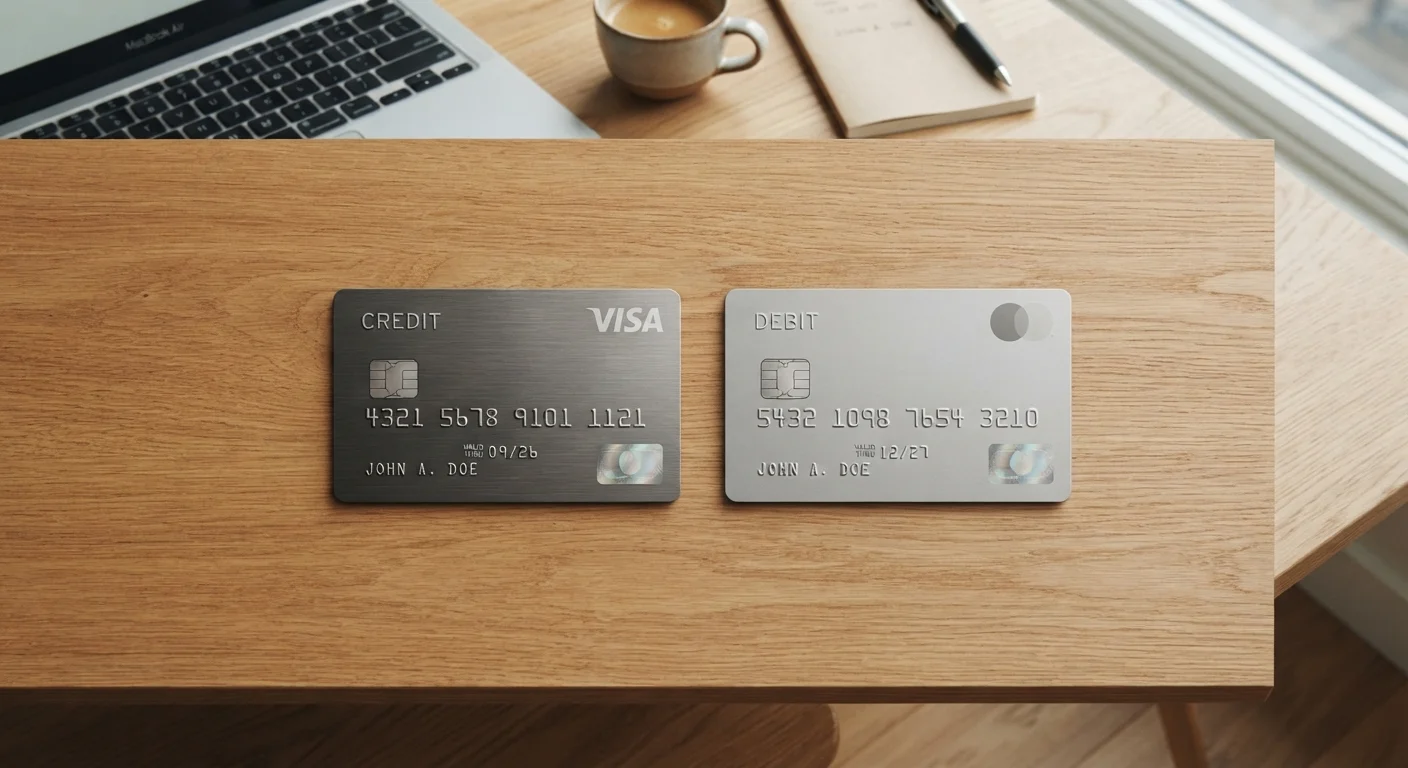
Credit cards offer broader consumer protections and credit-building potential, but only benefit you financially if you pay the balance in full each month. Debit cards keep spending tied to money you already have, reducing the risk of debt - but offer less recourse when things go wrong. Most financially healthy households benefit from using both strategically.
| Best for | Recommended |
|---|---|
| Those who pay their balance in full each month | Credit Card |
| Those managing tight budgets or working to avoid debt | Debit Card |
| Anyone building or repairing their credit history | Credit Card |
| Everyday small purchases where simplicity matters most | Debit Card |
Where the Money Actually Comes From
The fundamental difference is straightforward: a debit card pulls money directly from your checking account at the moment of purchase. A credit card, by contrast, lets you borrow from a credit line extended by the card issuer - with the expectation you'll repay it later.
That timing difference has real consequences. With a debit card, overspending can trigger overdraft fees or a declined transaction. With a credit card, overspending can quietly accumulate into a balance that grows with interest. Understanding this distinction is step one to using either card wisely.
Fraud Protection: A Significant Legal Difference
Federal law treats these two card types differently when fraud occurs, and the gap matters.
Under the Electronic Fund Transfer Act (EFTA), your liability for unauthorized debit card transactions depends heavily on how quickly you report the loss. Report a lost or stolen card before any unauthorized charges and your liability is $0. Wait more than two business days after learning of the loss and liability can climb to $500. Wait more than 60 days after your statement is sent and you may be responsible for the full amount.
Credit cards are governed by the Fair Credit Billing Act (FCBA), which caps your liability for unauthorized charges at $50 - and many issuers voluntarily offer $0 liability as standard policy. Crucially, because credit card transactions involve borrowed money rather than your own funds, fraudulent charges don't immediately drain your bank account while a dispute is being resolved.
Debit Card Fraud Can Hit Your Bank Account Immediately
When a debit card is compromised, the fraudulent charges come directly out of your available funds - which can affect your ability to pay rent, buy groceries, or cover other bills while the dispute is resolved. Banks typically investigate within 10 business days, but your money may be inaccessible during that period. This is one reason many financial educators suggest using a credit card for online purchases specifically.
This protection gap is especially relevant when shopping online or traveling, where card skimming and data breaches are more common risks.
Impact on Your Credit Score
Debit cards have zero effect on your credit score. They don't appear on your credit report because no borrowing is involved. That's not a flaw - it's just how the system works.
Credit cards, on the other hand, directly affect your credit profile in several ways:
- Payment history (the largest factor in most credit scoring models) is built by paying your bill on time each month.
- Credit utilization - the ratio of your balance to your credit limit - affects your score. Keeping this below 30% is generally advisable, though lower is better.
- Opening a new account creates a hard inquiry and lowers the average age of your accounts, which can temporarily dip your score.
For anyone working to establish or improve credit, a credit card used responsibly is one of the most accessible tools available. If credit card debt is already a concern, see our article on why minimum payments keep you in debt longer than you think before relying on minimum monthly payments.
Pay in Full to Get the Benefits Without the Costs
The most straightforward way to use a credit card to your advantage is to pay the statement balance in full every month. You get the fraud protections and credit-building benefits while paying zero interest. Setting up autopay for the full balance - not just the minimum - is one way to make this habit automatic.
Costs: Interest, Fees, and the Real Price of Convenience
Debit cards are largely cost-free at the point of use - no interest because you're spending your own money. The main costs to watch are overdraft fees (if your bank charges them) and out-of-network ATM fees.
Credit cards introduce interest as a core cost. The average credit card APR (annual percentage rate) in the U.S. has been above 20% in recent years, according to Federal Reserve data. Carry a balance from month to month and that rate compounds against you fast. For context, a $1,000 balance at 22% APR, with only minimum payments made, can take years to pay off and cost hundreds of dollars in interest - details explored in our piece on minimum payments and long-term debt costs.
Annual fees, foreign transaction fees, and late payment fees are other credit card costs worth reading the fine print on before applying.
| Feature | Credit Card | Debit Card | |
|---|---|---|---|
| Money source | Borrowed credit line | Your bank account balance | |
| Fraud liability limit | $50 (often $0 in practice) | Up to full amount if delayed | |
| Effect on credit score | Yes - positive or negative | None | |
| Risk of interest charges | High if balance carried | None | |
| Overdraft risk | No (unless linked account) | Yes, if funds run low | |
| Typical annual fee | $0-$500+ depending on card | Usually none | |
| Best for building credit | Yes | No |
Which Card Fits Which Situation?
The honest answer is that most people benefit from both - used intentionally. A credit card can handle larger purchases, travel bookings, and situations where fraud protection matters most. A debit card works well for everyday spending when you want a hard limit tied to real available funds.
If you're currently navigating debt or working to stabilize your finances, it may be worth reading about whether to build an emergency fund or pay down debt first before leaning heavily on a credit card. Building a financial cushion can reduce the temptation to carry a card balance when unexpected expenses arise.
This article is for general informational purposes only and does not constitute financial or legal advice. For guidance specific to your situation, consider speaking with a licensed financial professional.
The content provided on our blog site traverses numerous categories, offering readers valuable and practical information. Readers can use the editorial team’s research and data to gain more insights into their topics of interest. However, they are requested not to treat the articles as conclusive. The website team cannot be held responsible for differences in data or inaccuracies found across other platforms. Please also note that the site might also miss out on various schemes and offers available that the readers may find more beneficial than the ones we cover.