

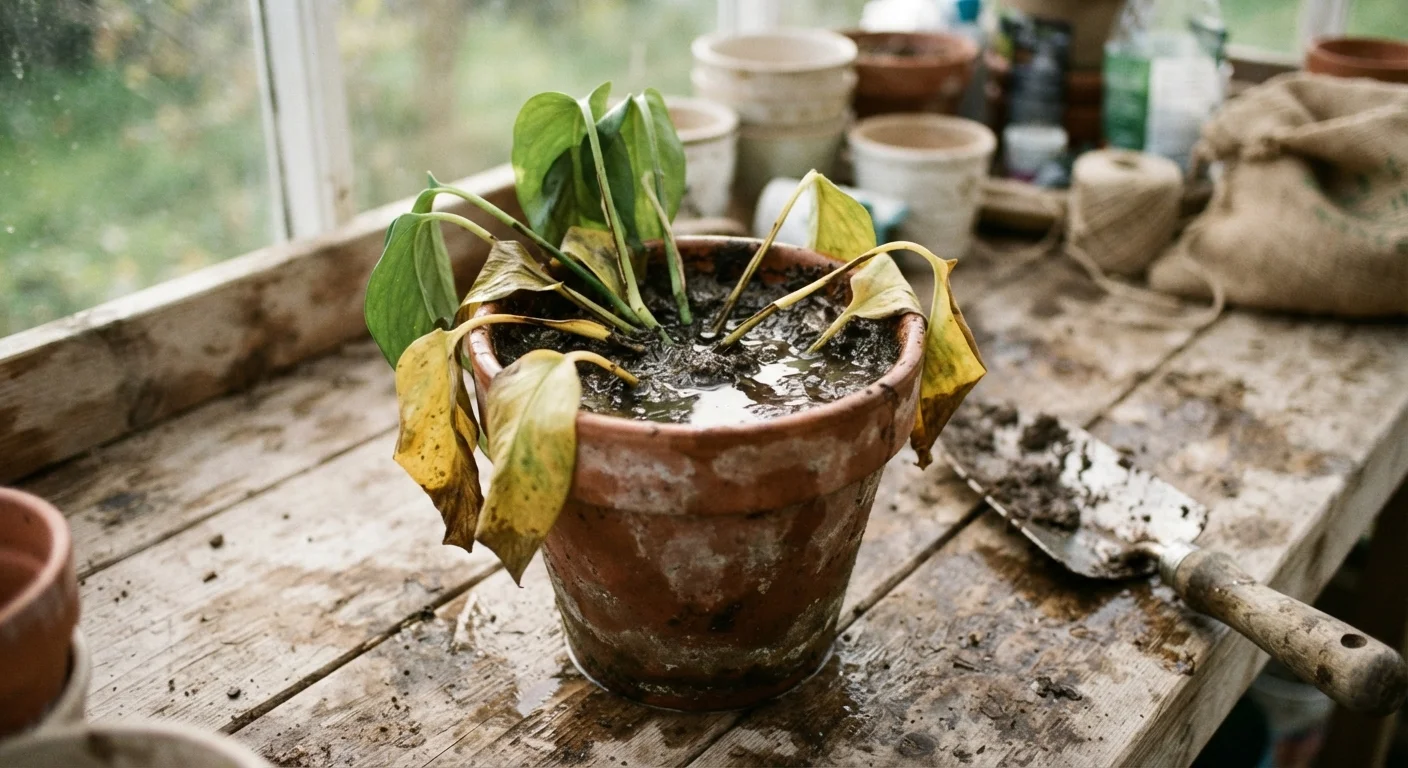
Why Overwatering Is So Easy to Do
Caring instincts are often the root of the problem. When a plant looks stressed, the natural impulse is to give it more attention - and for many gardeners, that means more water. The result is a cycle where well-meaning care accelerates decline rather than reversing it.
Overwatering doesn't always mean drenching a plant daily. It can be as subtle as watering slightly too often relative to how quickly that plant's soil dries out. Factors like pot material (terracotta dries faster than glazed ceramic), room humidity, seasonal light levels, and the plant's own growth stage all influence how much moisture it actually needs at any given time.
If you also grow plants indoors, understanding those species-specific needs is essential - our guide to which plants thrive in which interior conditions is a useful companion resource.
Fixed Watering Schedules Can Mislead You
Watering on a rigid calendar - every Monday and Thursday, for example - ignores the actual conditions your plants are experiencing. A cool, overcast week means soil stays moist far longer than a hot, dry one. Always check soil moisture before reaching for the watering can, especially during seasonal transitions.
How to Spot the Signs Before Damage Sets In
The symptoms of overwatering and underwatering can look deceptively similar - wilting, yellowing, and leaf drop appear in both cases. The key difference is the soil. Underwatered soil is dry, crumbly, and pulling away from pot edges. Overwatered soil is persistently damp, compacted, or even emitting a slightly musty odour, which may indicate early fungal activity.
Other red flags include:
- Yellow leaves across multiple parts of the plant, not just the oldest lower leaves
- Soft, mushy stems near the soil line
- Visible mould or algae on the soil surface
- Standing water in saucers that doesn't drain within an hour of watering
Root Rot Can Kill Quickly
When roots sit in waterlogged soil for extended periods, they suffocate and begin to decay - a condition called root rot. By the time visible symptoms appear above soil level, the damage is often already significant. If you suspect root rot, act promptly: remove the plant from its container, trim any blackened or mushy roots with clean shears, and repot into fresh, well-draining soil.
Catching these signs early - before roots are heavily compromised - gives the plant a much better chance of recovery.
Common Mistakes and How to Avoid Them
Most overwatering problems stem from a handful of recurring habits. Understanding why these mistakes happen makes them easier to break.
Watering on a fixed schedule regardless of actual soil conditions.
Why it happens: Routines feel reliable, and gardening advice often gives schedule examples that readers treat as universal rules rather than rough starting points.
Interpreting wilting or yellowing leaves as a sign the plant needs more water.
Why it happens: Wilting is the most intuitive distress signal, so the instinct is to water immediately - but overwatered roots struggle to deliver moisture even when the soil is wet, producing the same wilted appearance as drought.
Using pots or planting spots without adequate drainage.
Why it happens: Decorative containers often lack drainage holes, and garden beds in low-lying areas naturally collect runoff - two situations many gardeners don't evaluate before planting.
Using the same watering approach for all plants across all seasons.
Why it happens: It's convenient to treat the whole garden or windowsill uniformly, but water needs vary dramatically by species, pot material, light level, and time of year.
Assuming more water compensates for other stressors like poor light or heat.
Why it happens: Water feels like the most adjustable variable, so gardeners often increase it when a plant looks unhealthy, even when the real problem is insufficient light, compacted soil, or root-bound conditions.
Improving your watering practice pairs well with getting other inputs right. Just as overwatering stems from a 'more is better' assumption, the same thinking leads gardeners astray with fertiliser - see common fertiliser myths debunked for a clearer picture of balanced plant nutrition.
Building Better Watering Habits for the Long Term
The simplest and most reliable practice is soil-first watering: check before you water, every time. A moisture meter (an inexpensive garden tool) removes any guesswork, particularly for indoor plants in opaque containers.
Seasonal adjustment matters too. As daylight shortens and temperatures drop, most plants slow their growth and require considerably less water. Preparing your garden for winter includes helpful guidance on scaling back care routines appropriately.
Finally, revisit your soil and drainage setup. Well-structured soil - with adequate organic matter and, for containers, a quality potting mix designed for drainage - does much of the work for you by preventing water from pooling around roots in the first place. Getting these fundamentals right means your plants are more resilient, and correcting overwatering becomes a matter of small adjustments rather than emergency rescue.
#1
Leading cause of houseplant death
Overwatering is consistently cited by horticulturists and extension services as the single most common reason houseplants fail in indoor settings.
~50%
Of container plants suffer drainage issues
Many commonly sold decorative pots lack adequate drainage holes, leaving plants vulnerable to waterlogging without any change in watering frequency.
The content provided on our blog site traverses numerous categories, offering readers valuable and practical information. Readers can use the editorial team’s research and data to gain more insights into their topics of interest. However, they are requested not to treat the articles as conclusive. The website team cannot be held responsible for differences in data or inaccuracies found across other platforms. Please also note that the site might also miss out on various schemes and offers available that the readers may find more beneficial than the ones we cover.