

Start here
What Are Micronutrients?
Next
Key Vitamins and What They Do
Then
Essential Minerals Your Body Relies On
Apply it
Getting Micronutrients From Food
Watch out
When Deficiencies Happen and What to Watch For
What Are Micronutrients?
Nutrition is often discussed in terms of macronutrients - carbohydrates, proteins, and fats - but a quieter category does equally critical work. Micronutrients are the vitamins and minerals your body needs in relatively small amounts to function properly. Unlike macronutrients, which the body converts into energy, micronutrients act as essential enablers: they help build bones, support the immune system, convert food into usable fuel, and regulate hundreds of chemical reactions every day.
The key word is essential. Your body cannot synthesize most vitamins and minerals in meaningful quantities, which means you must obtain them consistently through diet. See our overview of macronutrients for context on how these two categories work together.
Micronutrient
A vitamin or mineral the body needs in small amounts to function properly. Unlike macronutrients, micronutrients don't provide calories but are essential for countless biological processes.
Fat-soluble vitamin
Vitamins (A, D, E, K) that dissolve in fat and are stored in the body's fatty tissues and liver. Because they accumulate, consuming very high amounts - usually through supplements - can be harmful.
Water-soluble vitamin
Vitamins (C and the B vitamins) that dissolve in water and are not stored in significant quantities. Excess amounts are generally excreted in urine, so they need regular dietary replenishment.
Trace mineral
A mineral the body needs in very small amounts, such as iron, zinc, or selenium. Even though the quantities are tiny, a shortfall can still cause significant health problems.
Bioavailability
How much of a nutrient from food or a supplement the body can actually absorb and use. The same nutrient can have very different bioavailability depending on the food source and what else is eaten alongside it.
Dietary Reference Intake (DRI)
A set of scientifically established values used to plan and assess how much of each nutrient people should consume. These figures, developed by health authorities, include recommendations based on age, sex, and life stage.
Key Vitamins and What They Do
Vitamins are divided into two categories based on how the body handles them:
- Fat-soluble vitamins (A, D, E, K) are stored in fatty tissue and the liver. Because they accumulate, excess intake - typically from high-dose supplements - can become harmful over time.
- Water-soluble vitamins (B vitamins and vitamin C) are not stored in large amounts; excess is generally excreted in urine. This also means they need to be replenished more regularly through food.
Highlights Worth Knowing
- Vitamin D supports calcium absorption and bone health. The skin can produce it through sun exposure, but many people in northern climates or with limited outdoor time fall short.
- Vitamin C is essential for collagen production, wound healing, and immune function. It is abundant in citrus fruits, bell peppers, and strawberries.
- B12 supports nerve function and red blood cell production. It is found almost exclusively in animal products, making it a particular concern for plant-based eaters. See our guide for plant-based diets for more detail.
- Folate (B9) is critical during early pregnancy for preventing neural tube defects. It is found in dark leafy greens, legumes, and fortified grains.
Eat the Rainbow for Broader Coverage
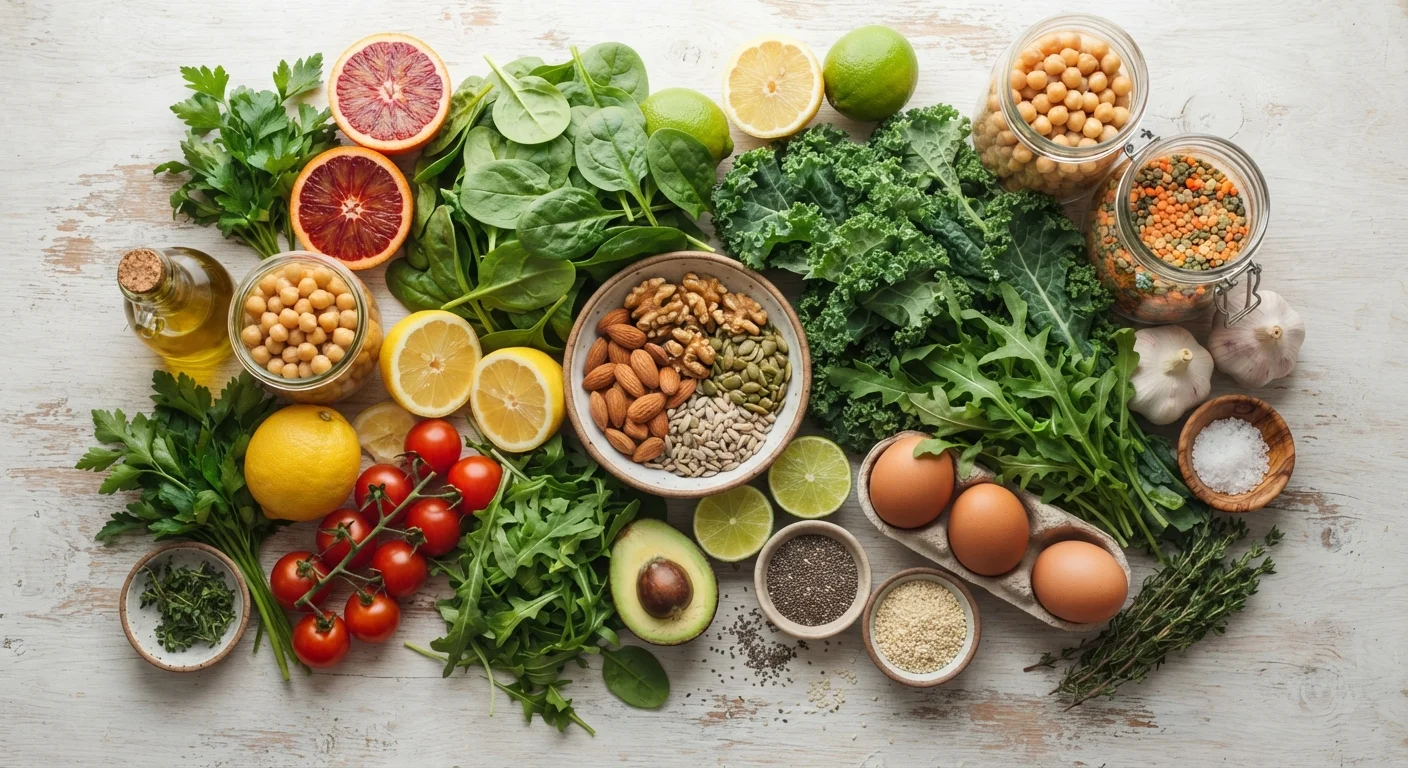
No single food supplies every vitamin your body needs. Aiming for a wide variety of colors across fruits and vegetables each week is one of the simplest, most evidence-supported ways to cover your vitamin bases. Think dark leafy greens for folate and K, orange and red produce for beta-carotene (a vitamin A precursor), and citrus for vitamin C.
Essential Minerals Your Body Relies On
Minerals are inorganic elements absorbed from soil and water - and then from the plants and animals that absorb them. They are grouped as macrominerals (needed in larger amounts, such as calcium and magnesium) and trace minerals (needed in smaller amounts, such as iron, zinc, and selenium).
Key Minerals at a Glance
| Mineral | Primary Role | Food Sources |
|---|---|---|
| Calcium | Bone and teeth structure, muscle contraction | Dairy, fortified plant milks, leafy greens |
| Iron | Oxygen transport in red blood cells | Red meat, lentils, spinach, fortified cereals |
| Magnesium | Enzyme function, nerve signaling, energy production | Nuts, seeds, whole grains, dark chocolate |
| Zinc | Immune defense, wound healing, cell growth | Shellfish, meat, legumes, pumpkin seeds |
| Potassium | Blood pressure regulation, muscle function | Bananas, potatoes, beans, avocado |
Absorption Is Not Just About Intake
Consuming a mineral-rich food doesn't guarantee your body will absorb all of it. Factors like gut health, other foods eaten at the same time, and certain medications can all affect how well minerals are absorbed. For example, calcium and iron compete for the same absorption pathways, so very high doses of one can reduce uptake of the other.
Getting Micronutrients From Food
The most reliable and well-tolerated way to meet micronutrient needs for most people is through a varied, whole-food diet. Processed foods can be calorie-dense but nutrient-light, while whole foods deliver vitamins and minerals alongside fiber, phytonutrients, and beneficial compounds that interact synergistically in the body. Speaking of fiber - it also plays a role in how well nutrients are absorbed; our article on dietary fibre explains why.
Practical strategies for maximizing micronutrient intake include:
- Eat a wide variety of colors. Different pigments in fruits and vegetables signal different nutrient profiles.
- Pair iron-rich plant foods with vitamin C. This combination significantly improves iron absorption from non-meat sources.
- Don't over-boil vegetables. Steaming, roasting, or eating some vegetables raw preserves more water-soluble vitamins.
- Include healthy fats with fat-soluble vitamins. Vitamins A, D, E, and K require fat for absorption, so a drizzle of olive oil on your salad genuinely helps.
Micronutrient needs also shift across life stages. Our guide to nutrition across the decades covers how requirements evolve from childhood into older adulthood.
USDA FoodData Central
A free, searchable database from the US Department of Agriculture that lets you look up the nutrient content - including vitamins and minerals - of thousands of foods. Useful for understanding where specific micronutrients come from in your diet.
NIH Office of Dietary Supplements: Fact Sheets
The National Institutes of Health publishes evidence-based fact sheets on individual vitamins and minerals, covering functions, food sources, recommended intakes, and health considerations. A reliable starting point for deeper research.
When Deficiencies Happen and What to Watch For
Deficiencies can develop gradually and often produce vague, easy-to-dismiss symptoms at first. Fatigue, brittle nails, poor wound healing, or frequent infections can all have micronutrient roots - but they can also reflect many other conditions. This is why self-diagnosing a deficiency is unreliable, and why professional testing matters before reaching for supplements.
Some groups face higher risk:
- Older adults - absorption efficiency declines with age, particularly for B12 and vitamin D.
- Pregnant people - demand for folate, iron, and other nutrients increases significantly.
- People following restrictive diets - vegan and vegetarian patterns can leave gaps in B12, iron, zinc, and omega-3s if not carefully planned.
- People with digestive conditions - Crohn's disease, celiac disease, and other gut disorders can impair nutrient absorption broadly.
Don't Self-Prescribe High-Dose Supplements
More is not always better when it comes to micronutrients. Fat-soluble vitamins can accumulate to toxic levels, and excessive iron or zinc supplementation can interfere with the absorption of other minerals. If you suspect a deficiency, ask a healthcare provider to test your levels rather than starting high-dose supplements on your own.
This article is general health information and is not a substitute for personalized medical advice. If you are concerned about nutrient deficiencies or are considering supplements, consult a qualified healthcare professional before making changes to your diet or supplement routine.
Frequently Asked Questions
Vitamins are organic compounds made by plants or animals, while minerals are inorganic elements found in soil and water. Both are classified as micronutrients because the body needs them in small amounts but cannot produce enough on its own. Each group plays distinct and overlapping roles in supporting body functions.
For most healthy adults eating a varied, balanced diet, food alone can meet micronutrient needs. Certain groups - including pregnant people, older adults, and those with restrictive diets - may have gaps that are difficult to fill through food. A healthcare provider can assess whether supplementation is warranted for your situation.
According to nutrition surveys, vitamin D, calcium, potassium, and dietary fiber are among the most under-consumed nutrients in the US population. Iron deficiency is also common, particularly among women of childbearing age. A healthcare provider can run blood tests to identify personal deficiencies.
Yes. Fat-soluble vitamins (A, D, E, K) can accumulate in the body and reach toxic levels if taken in excess, usually through high-dose supplements rather than food. Most water-soluble vitamins are excreted when consumed in excess, but very high supplemental doses can still cause problems. Always consult a healthcare professional before starting any supplement.
Yes, cooking can reduce certain nutrients - water-soluble vitamins like C and B vitamins are especially heat- and water-sensitive. Steaming and roasting generally preserve more nutrients than boiling. Fat-soluble vitamins are more stable under heat, and some nutrients (like lycopene in tomatoes) actually become more bioavailable after cooking.
Speak with a qualified healthcare provider rather than self-diagnosing or self-supplementing. A blood test can confirm whether a deficiency exists and guide an appropriate response. Identifying the root cause - whether dietary, digestive, or medical - is essential for effective treatment.
The content provided on our blog site traverses numerous categories, offering readers valuable and practical information. Readers can use the editorial team’s research and data to gain more insights into their topics of interest. However, they are requested not to treat the articles as conclusive. The website team cannot be held responsible for differences in data or inaccuracies found across other platforms. Please also note that the site might also miss out on various schemes and offers available that the readers may find more beneficial than the ones we cover.