

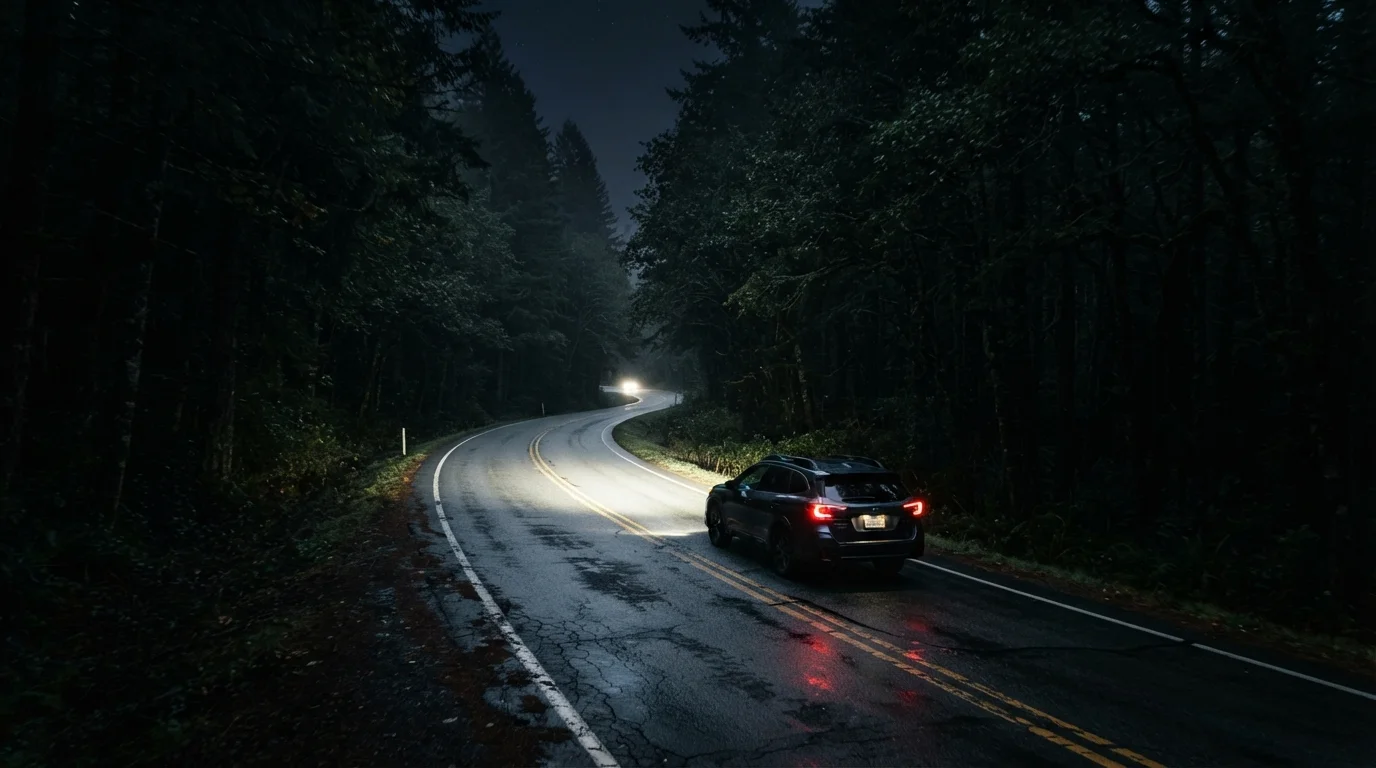
Why Night Driving Is a Fundamentally Different Task
Darkness doesn't just reduce how far you can see - it changes what you can see, how quickly hazards register, and how your brain processes the road ahead. According to the National Highway Traffic Safety Administration (NHTSA), roughly half of all traffic fatalities occur at night, despite far fewer vehicles on the road during those hours. The math is stark: driving after dark carries a disproportionately higher risk per mile than daytime travel.
The core challenge is that human vision is optimized for daylight. At night, peripheral vision degrades, depth perception becomes less reliable, and color contrast - which helps identify road markings, pedestrians, and animals - diminishes significantly. These aren't minor inconveniences; they alter the fundamental inputs your brain uses to make split-second decisions.
~50%
Of fatal crashes occur at night
According to NHTSA data, roughly half of all US traffic fatalities happen after dark, despite significantly lower traffic volumes.
3x
Higher fatality rate per mile at night
Research from the AAA Foundation for Traffic Safety suggests nighttime driving carries a fatality rate approximately three times higher per mile than daytime driving.
Understanding this difference is step one. The practices below address it directly.
Best Practices for Safer Night Driving
Safe night driving isn't about a single habit - it's a cluster of adjustments that together shrink your exposure to risk. The following practices are grounded in driver safety research and real-world experience.
Reduce your speed to match your actual sight distance
Headlights on most vehicles illuminate roughly 160-250 feet ahead on low beam, but stopping distances at highway speeds can exceed that range. Driving faster than your headlights allow is sometimes called 'over-driving your headlights' - it means you can't stop in time for a hazard you can just barely see. Slowing down closes that gap.
Use high beams deliberately - and switch off promptly
High beams can more than double your visible range on dark roads, dramatically improving hazard detection. Most drivers underuse them on genuinely dark rural roads. However, leaving them on when oncoming traffic approaches is both dangerous and illegal in most US states - it causes temporary blindness for approaching drivers.
Increase your following distance significantly
At night, you have less time to process what the vehicle ahead is doing, and your reaction time may be slightly slower due to visual strain or mild fatigue. The standard two-second following distance is a daytime minimum - at night, three to four seconds provides a more realistic safety buffer.
Dim your dashboard and interior lighting
Bright instrument panels and interior screens adapt your eyes to light - reducing their sensitivity to what's happening outside the vehicle. Lowering dashboard brightness helps your eyes maintain better dark adaptation, which improves your ability to detect movement and low-contrast objects on the road.
Watch the road edges and verges, not just the center
Pedestrians, cyclists, and animals are most likely to enter the road from the sides. At night, they may have no reflective gear or lighting. Scanning the margins of your headlight beam - not just the lane ahead - gives you earlier warning of anything entering your path.
It's also worth building your hazard perception skills specifically for low-light conditions. Reading the road further ahead - a fence line that suggests a bend, a dip where deer commonly cross - gives you more time to respond when your visual range is already shortened.
Your Vehicle's Role: Maintenance That Matters After Dark
No amount of driver skill compensates for poor equipment. Several maintenance items have an outsized effect on night driving safety.
- Headlight aim: Misaligned headlights - even slightly - can point light into oncoming drivers' eyes or away from the road. A qualified mechanic can check and adjust aim during routine service.
- Lens clarity: Oxidized or yellowed headlight lenses can reduce light output dramatically. Restoration or replacement restores meaningful illumination.
- Wiper blades and washer fluid: Smeared windshields scatter oncoming headlights into glare. Fresh wiper blades and a clean screen make a measurable difference.
- Tire condition: Stopping distances are already extended at night due to slower hazard recognition. Worn tires make this worse. Check tread depth and inflation regularly.
For a broader look at keeping your vehicle road-ready, the Car Maintenance hub covers essential upkeep in plain terms.
Check Your Headlights Before Winter Nights
Shorter daylight hours in fall and winter mean you're far more likely to drive in darkness - sometimes on your daily commute. It's worth having headlight aim and bulb condition checked as part of a seasonal vehicle inspection. A qualified mechanic can identify issues you might not notice until they've already compromised your visibility.
Managing Fatigue and Knowing When Not to Drive
Fatigue and darkness are a particularly dangerous combination. The body's circadian rhythm creates natural dips in alertness in the early morning hours and mid-afternoon - the overnight window is the more dangerous of the two for drivers.
“Drowsiness is the last thing you remember before falling asleep at the wheel. By the time most drivers recognize they're impaired by fatigue, their reaction time and judgment have already been compromised for some time.”
— AAA Foundation for Traffic Safety, US road safety research organization
Early signs of driving fatigue include difficulty keeping your eyes focused, missing exits or signs you just passed, drifting within your lane, and a vague feeling of unreality. These aren't minor inconveniences to push through - they're signals to pull over safely, take a break, or stop for the night.
Caffeine can delay fatigue temporarily, but it isn't a substitute for rest. If you're on a long overnight trip, brief power naps of 15-20 minutes at a rest area are more effective than any stimulant. And if you're travelling with passengers, a passenger's alertness can help monitor your state - though the social dynamics of group travel introduce their own pressures, as explored in our article on driving with passengers.
The content provided on our blog site traverses numerous categories, offering readers valuable and practical information. Readers can use the editorial team’s research and data to gain more insights into their topics of interest. However, they are requested not to treat the articles as conclusive. The website team cannot be held responsible for differences in data or inaccuracies found across other platforms. Please also note that the site might also miss out on various schemes and offers available that the readers may find more beneficial than the ones we cover.