

Our Verdict
Driving in a foreign country demands respect for both the legal framework and the informal culture of the road. Traffic direction and signage conventions represent the steepest learning curve, while core safety habits - checking mirrors, maintaining safe following distance, and staying alert - transfer directly. Preparation before you travel is what separates a stressful experience from a confident one.
| Best for | Recommended |
|---|---|
| Drivers visiting countries with left-hand traffic (UK, Australia, Japan) | Allow extra acclimatization time and consider starting in low-traffic areas |
| Travelers renting vehicles in countries with unfamiliar signage systems | Study local sign conventions in advance and use a GPS as backup reference |
| Road-trippers crossing multiple countries in one journey | Research each country's rules individually and carry an IDP throughout |
| Drivers nervous about aggressive or chaotic local driving cultures | Observe local traffic flow before driving, and prioritize patience over assertiveness |
The Biggest Adjustment: Which Side of the Road
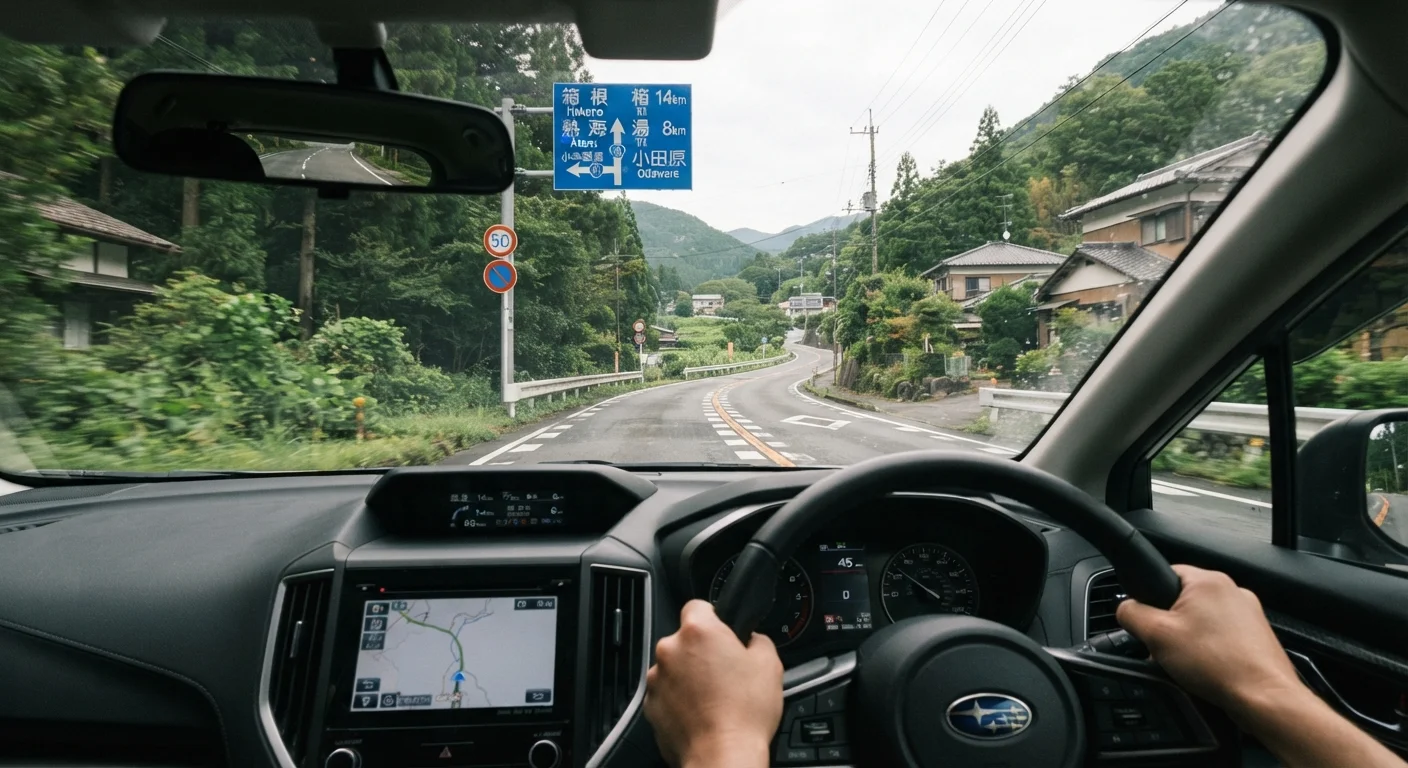
For US drivers, the most disorienting shift when driving overseas is often the simplest: which side of the road vehicles travel on. Approximately 75 countries - including the United Kingdom, Australia, Japan, and much of southern Africa - drive on the left. This reversal affects far more than just lane position. It changes where the steering wheel sits, how you scan intersections, which way you look before turning, and how roundabouts flow.
Switching sides is manageable with deliberate practice, but the riskiest moments tend to occur at low-traffic junctions and after parking stops - when your instincts override your intentions. Giving yourself extra time on quieter roads at the start of a trip significantly reduces that risk.
| United States | United Kingdom | Australia | France | Japan | |
|---|---|---|---|---|---|
| Traffic side | Right | Left | Left | Right | Left |
| Speed unit | mph | mph | km/h | km/h | km/h |
| Sign system | MUTCD | Vienna-based | Vienna-based | Vienna Convention | Vienna-based |
| Roundabout priority | Entering yields | Circulating has priority | Circulating has priority | Varies by marking | Circulating has priority |
| Horn use culture | Moderate | Rare | Rare | Moderate | Very rare |
| IDP commonly required | N/A (issuing country) | Recommended abroad | Recommended abroad | Recommended abroad | Required for visitors |
For a broader look at how driving behaviors translate across unfamiliar environments, see our guide on motorway driving confidence - many of the principles apply when adapting to foreign expressways.
Signs, Signals, and Speed Limits
Many countries are signatories to the Vienna Convention on Road Signs and Signals, which standardizes a large portion of international signage using shapes and colors rather than text. Triangular signs generally indicate warnings, circular signs impose restrictions, and rectangular signs provide information - this logic holds across much of Europe and beyond. However, the US uses its own sign conventions under the Manual on Uniform Traffic Control Devices (MUTCD), which differs in meaningful ways.
Speed limits present a separate challenge. Most of the world uses kilometers per hour (km/h), not miles per hour (mph). A 100 km/h limit is approximately 62 mph - a distinction that matters enormously if you misread it as mph. Rental vehicles in metric countries typically display both units, but confirming this before driving is worth the effort.
Study Before You Drive
Download or print the official highway code or road rules summary for your destination country before you travel. Many national transport authorities publish these in English. Even a 30-minute review of local sign conventions and priority rules can prevent serious confusion on your first day behind the wheel.
Our companion article on commonly misread road signs provides a useful foundation before traveling - many of those misinterpretations become more likely in unfamiliar environments.
Right-of-Way, Roundabouts, and Unwritten Rules
Right-of-way rules vary in ways that aren't always obvious from signage. In France, the traditional priorité à droite (priority to the right) rule means vehicles approaching from the right may have the right of way at unmarked intersections - a convention that catches many visitors off guard. Roundabout priority also differs: in the UK, traffic already on the roundabout has priority; in some other countries, entering traffic does.
Beyond written rules, driving culture shapes how roads actually function. Horn use is neutral or communicative in parts of South Asia and the Middle East, while in Scandinavia and Japan it's considered aggressive and is rarely used. Lane discipline, pedestrian priority at crosswalks, and the informal signaling between drivers all differ significantly across borders.
Understanding these unwritten norms is as important as knowing the legal rules. Our article on cultural etiquette across borders offers helpful context on how local customs affect everyday interactions - including on the road.
What Stays the Same: Core Safety Habits That Transfer
Despite the differences, foundational safe driving practices are universal. Maintaining a safe following distance, checking mirrors regularly, signaling before changing lanes, and adjusting speed for weather or road conditions apply everywhere. Fatigue management matters equally on foreign roads - perhaps more so, given the added cognitive load of navigating unfamiliar environments.
Fatigue Multiplies in Unfamiliar Conditions
Navigating an unfamiliar road system demands significantly more mental effort than driving a familiar route - even at lower speeds. This cognitive load accelerates fatigue. Plan shorter daily driving distances when abroad, schedule more frequent rest stops, and be particularly cautious about driving after a long international flight. Night driving overseas adds further risk and is best avoided until you're comfortable with local conditions.
Vehicle preparation is another constant. Before any extended drive in an unfamiliar country, the same pre-trip checks that apply at home remain essential. Our guide on pre-journey vehicle checks covers the items that matter most, from tyre condition to fluid levels.
Finally, documentation matters across borders. Most countries accept a valid US driver's license, but many also require an International Driving Permit (IDP). An IDP is an official translation of your license recognized in over 150 countries. Always verify the entry requirements for your specific destination through official government sources before traveling, as requirements can change and vary by purpose of visit.
The content provided on our blog site traverses numerous categories, offering readers valuable and practical information. Readers can use the editorial team’s research and data to gain more insights into their topics of interest. However, they are requested not to treat the articles as conclusive. The website team cannot be held responsible for differences in data or inaccuracies found across other platforms. Please also note that the site might also miss out on various schemes and offers available that the readers may find more beneficial than the ones we cover.